Teddy Found Refuge at a Church With Only His Stuffed Bear
Reader Theme:
Font Size:
24px
Teddy is safe tonight, and his little brown bear is still beside him.
For everyone who has been asking about the dog who appeared outside the church, that is the first update we wanted to share.
He is no longer being left outside overnight.
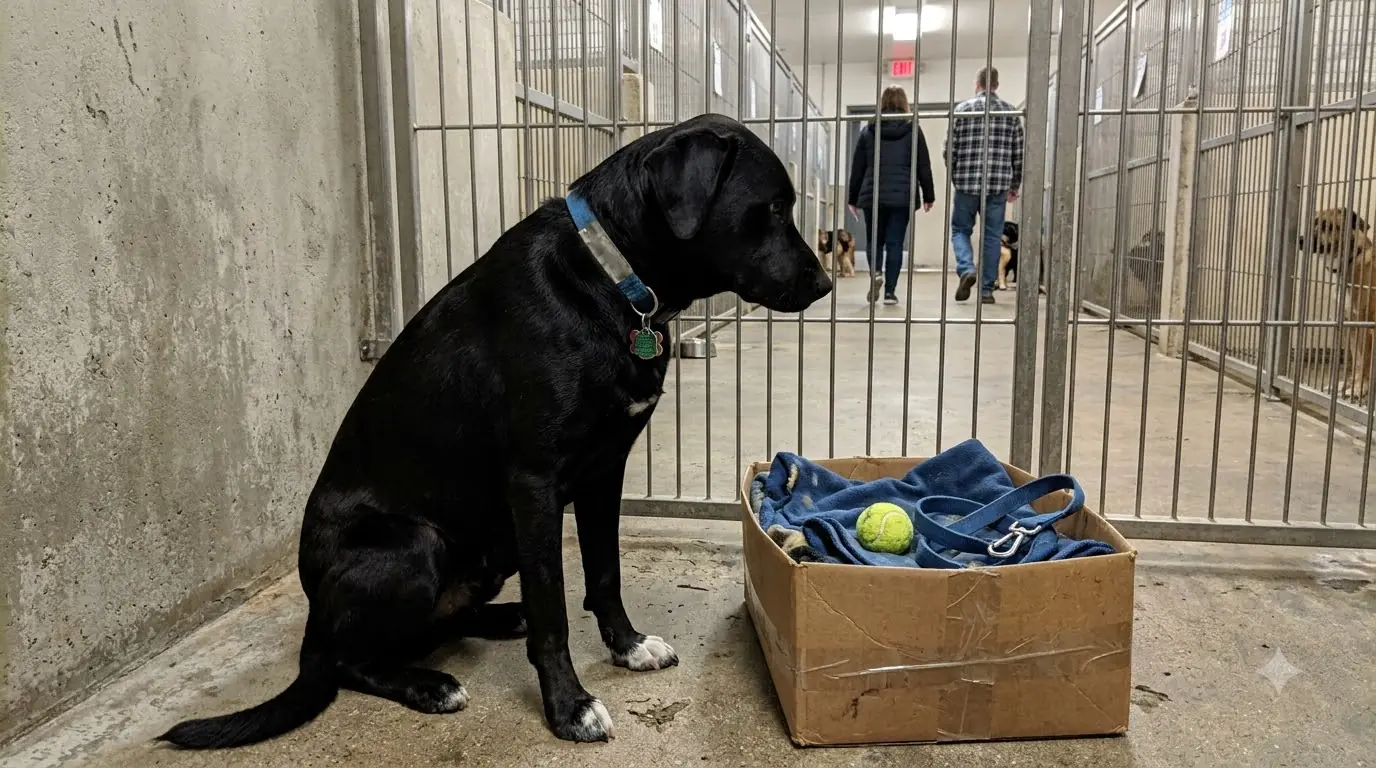
After church members gained enough of his trust to handle him safely, Teddy was brought into our care for a complete veterinary examination and a proper place to recover while we tried to learn more about where he came from.
No reliable owner information was immediately available, and we cannot know exactly what Teddy experienced before he appeared at the church.
What we do know is that he seemed remarkably attached to one possession.
The stuffed bear.
It is old.
The fur is flattened in places, one ear is slightly worn, and it has clearly been carried around many times.
We do not know whether Teddy had the toy before he arrived or whether someone at the church gave it to him during his first days there.
But once it became his, he treated it differently from his other toys.
He carries it carefully.
He sleeps beside it.
When moved into an unfamiliar room, Teddy often checks where the bear is before settling.
For that reason, nobody has taken it away from him.
It goes wherever Teddy goes.
His first veterinary examination was reassuring overall.
Teddy was mildly underweight and needed routine preventive care, but we found no evidence of a major injury. His paw pads showed ordinary wear consistent with spending significant time outdoors, and his coat needed cleaning and basic care.
His heart and lungs sounded normal.
His mobility was comfortable.
His appetite was also encouraging.
During his first evening, Teddy seemed too distracted to finish an entire meal. He ate a little, walked away, checked the room, and returned later.
By the following morning, he was considerably more interested.
Now he usually finishes his meals.
We are keeping his portions appropriate while allowing his body condition to improve gradually.
Fresh water is always available, and his hydration is normal.
Physically, Teddy has given our veterinary team few reasons for concern.
Emotionally, however, he needed time.
The first few nights indoors were difficult for him.
Teddy did not panic or become destructive. Instead, he seemed to listen constantly.
A door closed somewhere in the building.
His head came up.
Footsteps passed.
His ears moved.
Someone entered the room.
Teddy immediately watched.
It was as though he had learned that people could disappear, so he needed to pay attention whenever one appeared.
His stuffed bear seemed to help during those moments.
On his second night, a caregiver found Teddy sleeping with his chin resting directly across the toy.
She quietly placed another blanket nearby and left him undisturbed.
The following morning, Teddy and the bear were in almost exactly the same position.
Since then, his sleeping has improved considerably.
He still prefers having the bear close, but his body looks more relaxed.
He stretches out.
He sleeps on his side.
Sometimes a familiar volunteer can enter the room without immediately waking him.
Those small changes matter to us.
A dog does not need to understand the word “safe” to begin experiencing what safety feels like.
Predictable meals help.
Familiar voices help.
A comfortable bed helps.
And sometimes, apparently, an old stuffed bear helps too.
Teddy has also become much more affectionate.
Initially, he allowed brief contact but remained cautious. If someone stroked his shoulder, he accepted it for several seconds and then stepped away.
Now he frequently makes the decision himself.
A volunteer sits down.
Teddy approaches.
He sniffs their hands.
Then he moves closer.
Sometimes he leans against a knee.
Other times he sits nearby with the bear between his paws.
And then there is the little paw wave.
We first noticed it after Teddy had become comfortable with several regular caregivers.
When he wants attention and someone is standing just beyond his reach, he occasionally lifts one front paw.
The paw moves gently through the air.
Once.
Twice.
Sometimes three times.
Then he puts it down.
There is nothing trained or theatrical about it. It appears to be one of Teddy's natural ways of seeking interaction.
The first time one of our volunteers saw it, she walked closer and crouched beside him.
Teddy's tail immediately began wagging.
She rubbed his chest.
He leaned forward.
Then, after receiving the attention he wanted, Teddy picked up his bear and settled beside her.
It has become difficult for our volunteers to walk past him without stopping.
His playful side is beginning to emerge too.
For several days, Teddy showed little interest in toys other than his bear.
We offered balls.
Rope toys.
Soft squeaky toys.
He investigated them briefly and returned to the bear.
Recently, that has started changing.
He will chase a soft ball several feet.
He has begun engaging in short games with volunteers.
Sometimes he performs a small play bow before bouncing sideways.
His tail moves much more freely now.
But when playtime ends, Teddy still frequently returns to his old companion.
The bear remains different.
Perhaps familiarity is the reason.
For a dog whose surroundings changed suddenly, having one object that remains exactly where he left it may provide a simple kind of consistency.
We do not need to assign a complicated human meaning to that behavior to recognize how much Teddy seems to value the toy.
The church remains important to his story too.
Before Teddy entered rescue care, people there gave him something he desperately needed: time.
They did not force him inside.
They did not surround him.
They offered food.
Water.
Shelter from bad weather.
Then they waited.
Eventually Teddy approached them.
The church became the first place where he seemed willing to remain for an extended period.
He learned familiar faces.
He learned that people would gently pet him.
He learned that someone would return with another bowl of food.
For a stray dog, those simple routines can mean everything.
But everyone involved understood that a church entrance could not become Teddy's permanent home.
He needed veterinary care.
He needed reliable shelter.
And ultimately, he needed a family.
That is what we are working toward now.
Teddy is gradually being introduced to the ordinary experiences he may encounter in a home.
Walking on leash.
Resting indoors while people move around.
Hearing household noises.
Waiting calmly before doors open.
Accepting handling around his paws and ears.
Being alone for short, appropriate periods without believing that everyone has disappeared permanently.
He is learning well.
Food helps.
Gentle praise helps even more.
His greatest challenge remains uncertainty around people leaving.
If a familiar volunteer stands and walks toward the door, Teddy sometimes gets up and follows.
He does not always demand attention.
Sometimes he simply stands there watching.
When the person returns, the tail starts.
We are working on this gradually by building predictable routines and teaching Teddy that departures are temporary.
Nobody makes a dramatic goodbye.
Nobody makes a dramatic return.
People simply leave.
Then they come back.
Each repetition gives Teddy another opportunity to learn.
His progress has been encouraging.
Yesterday, a volunteer spent nearly an hour with him.
Teddy played briefly, accepted some gentle affection, and eventually settled with his bear.
The volunteer stood and left the room.
Teddy lifted his head.
But he did not follow.
A few minutes later, she returned.
Teddy was still lying there.
His tail thumped against the blanket when he saw her.
That was a very good moment.
His next steps are straightforward.
We will continue monitoring his weight while keeping his nutrition consistent. Routine veterinary care will continue, along with age-appropriate preventive treatment.
We will also continue working on confidence, leash manners, basic cues, and comfortable periods of independence.
After that, Teddy needs what the church could never permanently provide.
His own person.
We hope his future adopter understands that Teddy may need patience at first.
A dog who has experienced instability does not necessarily walk into a house and immediately understand that it belongs to him.
He may follow someone from room to room.
He may sleep lightly.
He may carry that old bear everywhere.
He may watch the front door.
That is okay.
Trust can develop slowly.
What matters is what happens the next morning.
The same person gets up.
Breakfast appears.
The same hand reaches down.
Teddy receives another gentle touch.
Then another day begins.
Eventually, those ordinary days become a life.
We often think about the video taken outside the church.
At first, the camera is relatively close.
Teddy sits with his brown stuffed bear beside him.
His eyes follow the person filming.
His tail moves gently.
Then one front paw comes up.
A tiny wave.
Another.
Then one more.
As the camera moves farther away, Teddy becomes smaller within the scene.
You see the church.
The steps.
The place where he had been spending his days.
And this one dog sitting there beside the only little possession he seemed determined to keep.
There is something important in that wider view.
The church gave Teddy refuge.
The bear gave him familiarity.
But neither can give him what he ultimately needs.
A church cannot wake up every morning and call his name.
A stuffed animal cannot clip on his leash.
It cannot take him on walks, fill his bowl, rub his ears, or reassure him simply by coming home every evening.
Teddy needs a person for those things.
Until that person finds him, we will be here.
His meals will arrive.
His bed will remain warm.
His veterinary needs will be handled.
Someone will stop when that little paw rises into the air.
And his brown bear will stay right beside him.
Teddy has already found somewhere safe enough to stop running.
Now we hope he finds something even better:
a home where he never has to wonder whether he belongs again.
News in the same category
Grace and Hope Found Refuge Together at a Neighborhood Church
Grace and Hope Found Refuge Together at a Neighborhood Church

Black Belt Brothers Picked the Wrong Man to Threaten — Then My Daughter’s Dad Reacted on Instinct

Undercover Black CEO Walks Into His Store as a Customer — What an Employee Does Leaves Him Stunned
Black Belt Brothers Picked the Wrong Man to Threaten — Then My Daughter’s Dad Reacted on Instinct

An Undefeated Black Belt Humiliated a Waiter — Unaware He Was Once a Legendary Elite Instructor

5 Bullies Tried to Intimidate a Single Dad in the Park — Until His MMA Champion Background Came to Light
5 Bullies Thought the Single Dad Was an Easy Target — Unaware of His MMA Champion Past
5 Bullies Picked on a Single Dad in the Park — Then They Learned He Was an MMA Champion
5 Bullies Cornered a Single Dad at the Park — Never Knowing He Was a Former MMA Champion
5 Bullies Surrounded a Single Dad in the Park — Unaware He Was an MMA Champion

Black Belts Called Her Weak in Training — Then She Knocked Them Out in Seconds

He Treated Her Like Dirt on Her Own Land — Until Someone Rode Through the Gate
The Sheriff Humiliated the “Old Outsider” in Front of Everyone — Then Dragged Him Out of His Seat

He Cornered the “Weak Office Guy” in an Empty Garage — Then Threw the First Punch

They Saw the Biker Vest and Treated Her Like a Criminal — Before She Even Spoke

They Treated the “White Belt” Like a Joke — Until She Finally Stopped Taking It