The Blind Dog Who Refused to Let Go of His Tattered Stuffed Lamb
Reader Theme:
Font Size:
24px
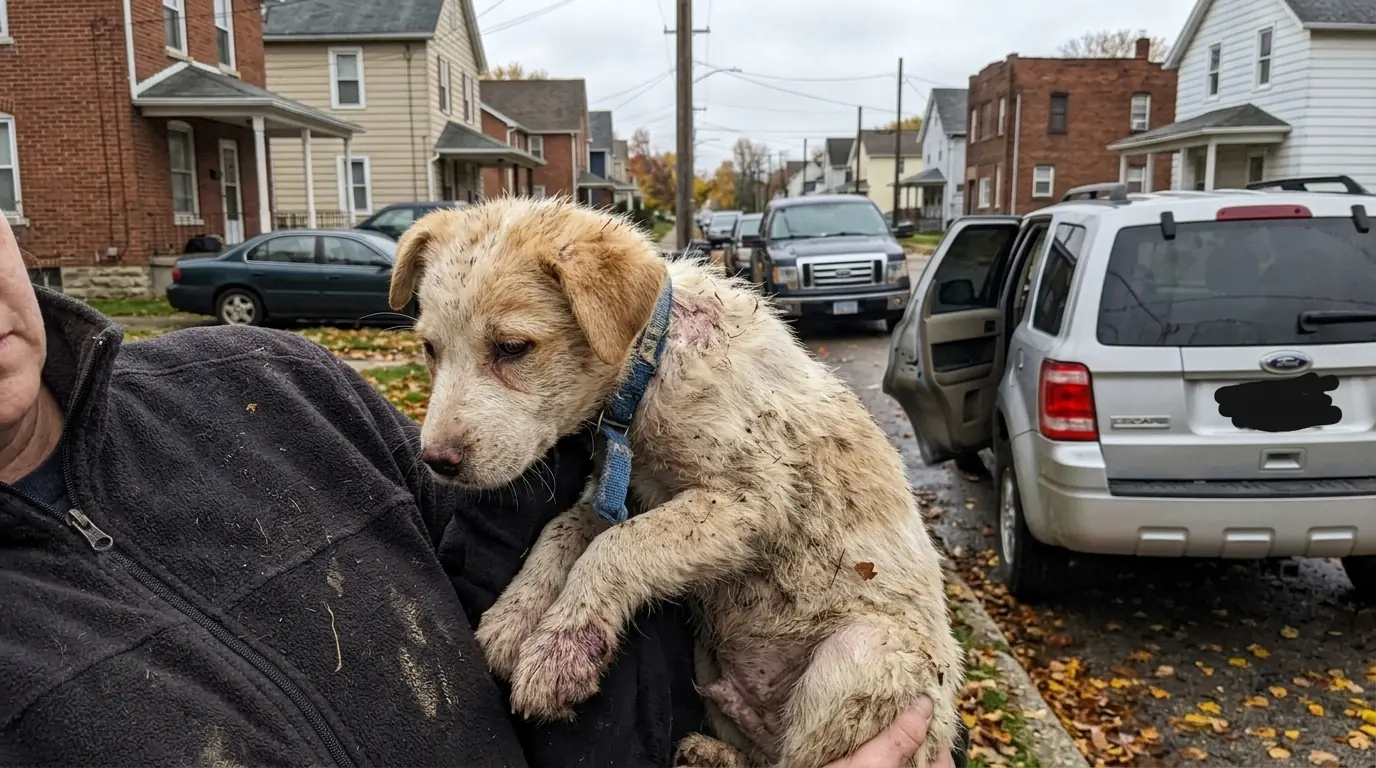
The blind dog was carrying a tattered stuffed lamb when animal control found him wandering beside a busy road. Even after arriving at the shelter, he refused to release it, gripping the toy whenever unfamiliar footsteps or voices frightened him.
Staff named him Murphy and placed the lamb beside him during his medical examination. He could not see the hands reaching toward him, but the moment his nose touched its worn fabric, his trembling eased. No one knew where the toy came from—or why it seemed to be the only thing in the world Murphy still trusted.
Then, while carefully cleaning the stuffed animal, a caregiver discovered something hidden beneath one of its torn seams.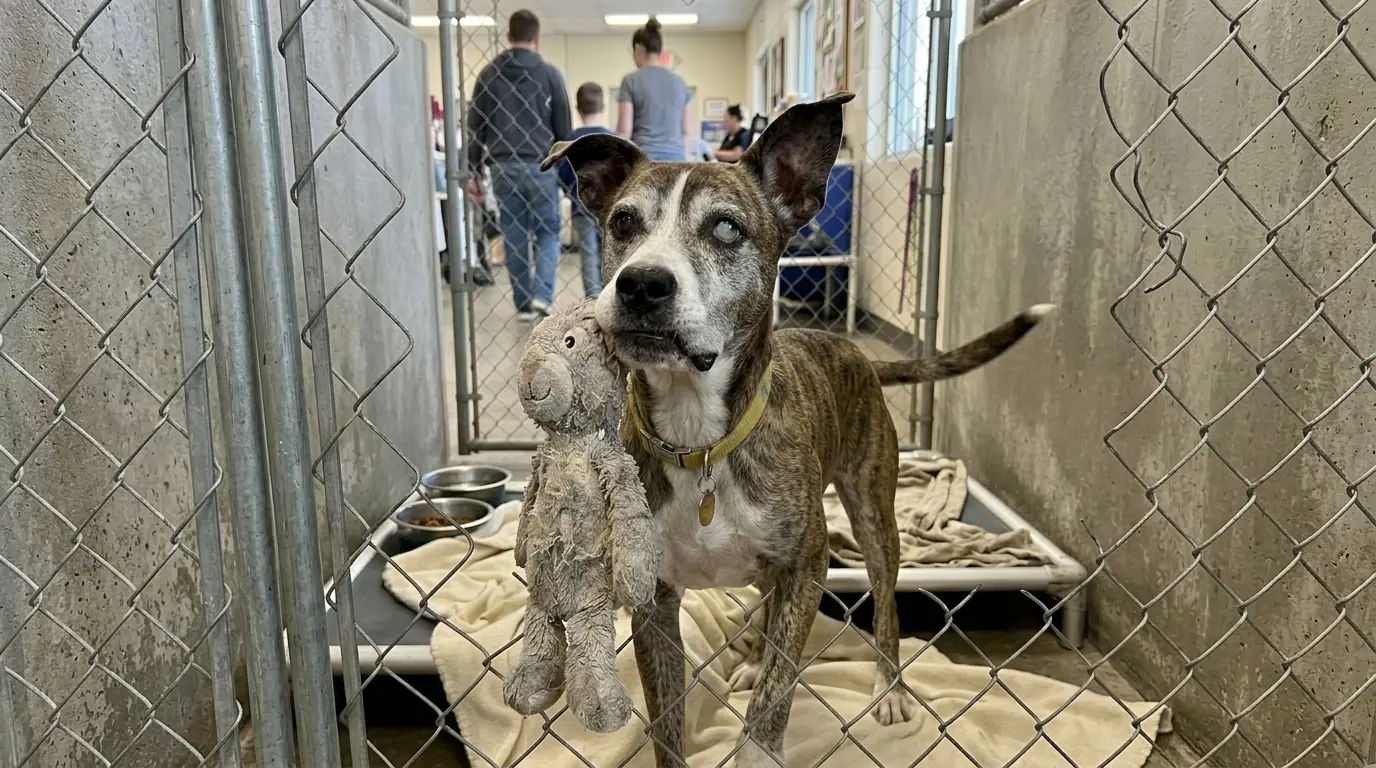
Murphy arrived at the shelter with no microchip and no information about where he had lived before being found.
A motorist had first noticed him moving slowly along the edge of a road. Instead of walking in a straight line, the brindle dog repeatedly bumped against the curb and stopped whenever a vehicle passed. A worn stuffed lamb hung from his mouth throughout the rescue.
When the animal control officer approached, Murphy immediately froze.
He could hear someone coming but could not see where the person was. His body stiffened, and he tightened his grip on the toy. Rather than reaching for him, the officer sat several feet away and spoke softly until Murphy began following the sound of her voice.
He eventually allowed her to place a leash around his neck. When she opened the vehicle, however, Murphy refused to move until the stuffed lamb was lifted with him.
At the shelter, a veterinary examination confirmed that Murphy had lost nearly all of his vision. One eye was clouded by a mature cataract, while the other showed signs of severe damage that had likely developed over a long period. He could distinguish changes in light, but he could not reliably see people, doorways, or objects in front of him.
He was also underweight, dehydrated, and covered with several small abrasions. His nails were worn unevenly, suggesting that he had spent considerable time walking across hard surfaces.
Nothing explained how long he had been alone.
Throughout the examination, Murphy kept the stuffed lamb pressed beneath his chin. Whenever the veterinarian needed him to change position, a technician moved the toy first and allowed him to find it with his nose.
Without it, Murphy became restless and searched the table frantically. Once the lamb was returned, he settled almost immediately.
The toy itself was in poor condition. Much of its fur had worn away, one leg was partially detached, and several seams had opened. Staff worried that Murphy might swallow the loose stuffing, but taking the lamb from him caused so much distress that they decided to repair it instead.
A caregiver sat outside his kennel and stitched the damaged areas by hand while Murphy listened from his bed. She kept the toy close enough for him to smell and touch with his nose.
While repairing a torn seam near its chest, she felt something hard beneath the remaining stuffing.
Inside was a small plastic heart that had once produced a recorded heartbeat when squeezed. The mechanism no longer worked, but the discovery offered a possible explanation for Murphy’s attachment. The lamb may once have comforted him with a steady sound—or it may simply have carried the familiar scent of someone or somewhere he had lost.
No one can know for certain.
The shelter found no identification inside the toy, and local missing-dog reports have not yet led to Murphy’s family. Staff have shared his photograph and contacted nearby veterinary clinics, but no one has come forward.
For now, the stuffed lamb remains with him.
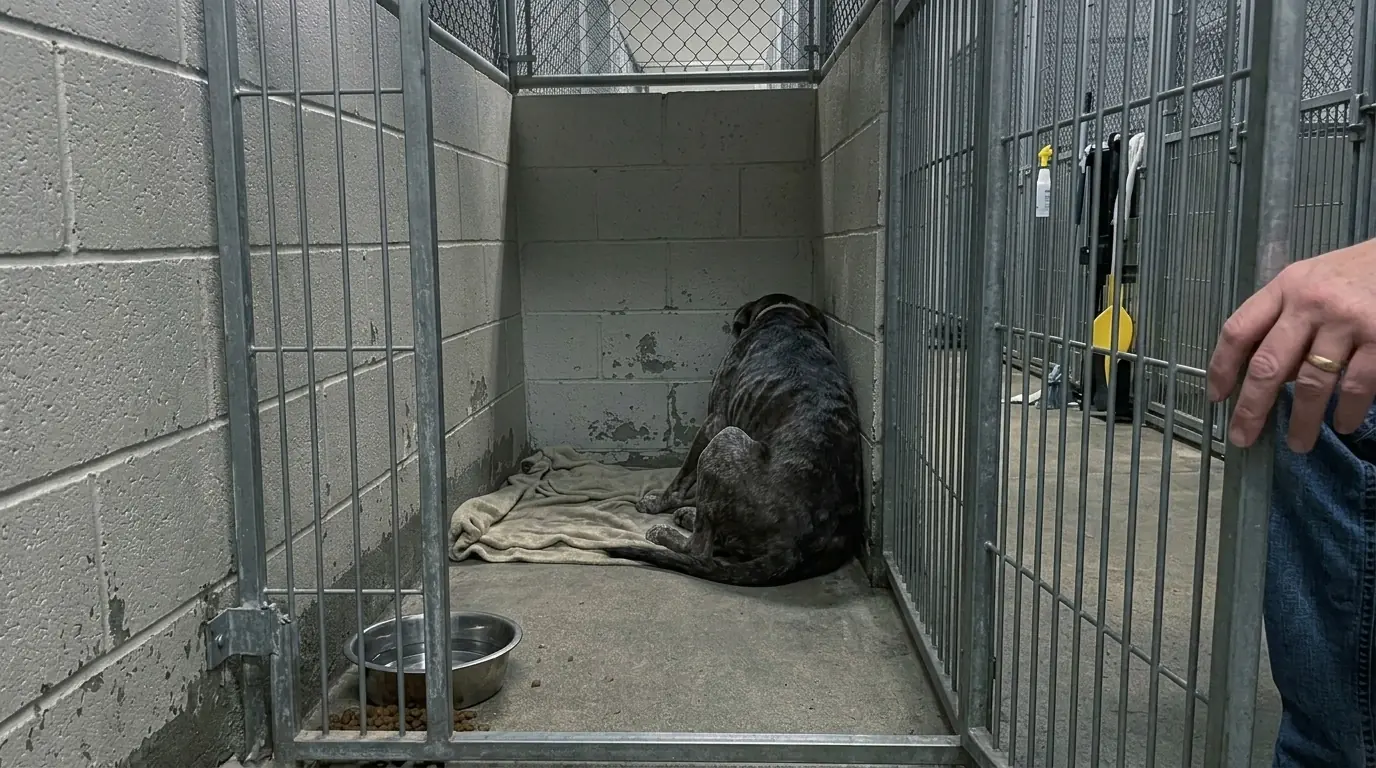
Murphy is staying in a quiet kennel away from the busiest part of the shelter. Caregivers announce themselves before touching him and tap gently beside his bowls so he can locate food and water. The furniture and bedding remain in the same positions, allowing him to build a mental map of the space.
During his first night, Murphy stood near the gate and whimpered whenever voices disappeared from the corridor. He eventually carried the lamb to the rear of his kennel, placed it on the blanket, and curled his body around it.
By the third day, he had learned the short route between his bed and water bowl.
He still startles at sudden sounds, but he has begun responding to his regular caregiver’s voice. When she enters in the morning, Murphy lifts his head, finds the stuffed lamb, and carries it toward the gate before allowing her to attach his leash.
His outdoor walks take place in a small enclosed yard. The caregiver uses the same verbal cues each time, warning him before steps and guiding him around obstacles. Murphy moves cautiously, but his confidence is slowly growing.
A veterinary ophthalmologist will determine whether surgery could restore useful vision in his clouded eye. The damage in the other eye is believed to be permanent, and any treatment will depend on whether Murphy is healthy enough for the procedure.
His future does not depend entirely on regaining his sight. Blind dogs can adapt well when their environment is predictable and the people around them communicate consistently. Murphy is already showing that he can learn new routes by scent, sound, and touch.
What remains unknown is the story of the lamb.
Perhaps it was given to him by a former owner. Perhaps he found it during the time he wandered alone. Perhaps the old heartbeat mechanism once helped him sleep after darkness became permanent.
The shelter may never discover the answer.
What they do know is that Murphy carried the toy through whatever happened before his rescue, and he still searches for it whenever the world around him feels unfamiliar.
No one plans to take it away.
The little lamb has been cleaned, repaired, and made safe enough to remain in his kennel. When Murphy eventually moves into a foster or adoptive home, it will travel with him—the one familiar thing that guided a frightened blind dog into the next chapter of his life.
News in the same category
A Mother Dog Shielded Her Five Puppies Through a Violent Rainstorm
Bingo Celebrates His First Birthday After Spending an Entire Year at the Shelter
Sam Still Sleeps on the Blanket Left Behind When His Family Moved Away
Big Bear bald eagle Jackie's fight for survival continues as mystery illness remains unknown
Toby’s Recovery After Being Found Exhausted on a Street Corner
Bailey’s Recovery After Being Rescued Last From a House Fire
Charlie’s Daily Walk to His Former Owner’s Grave
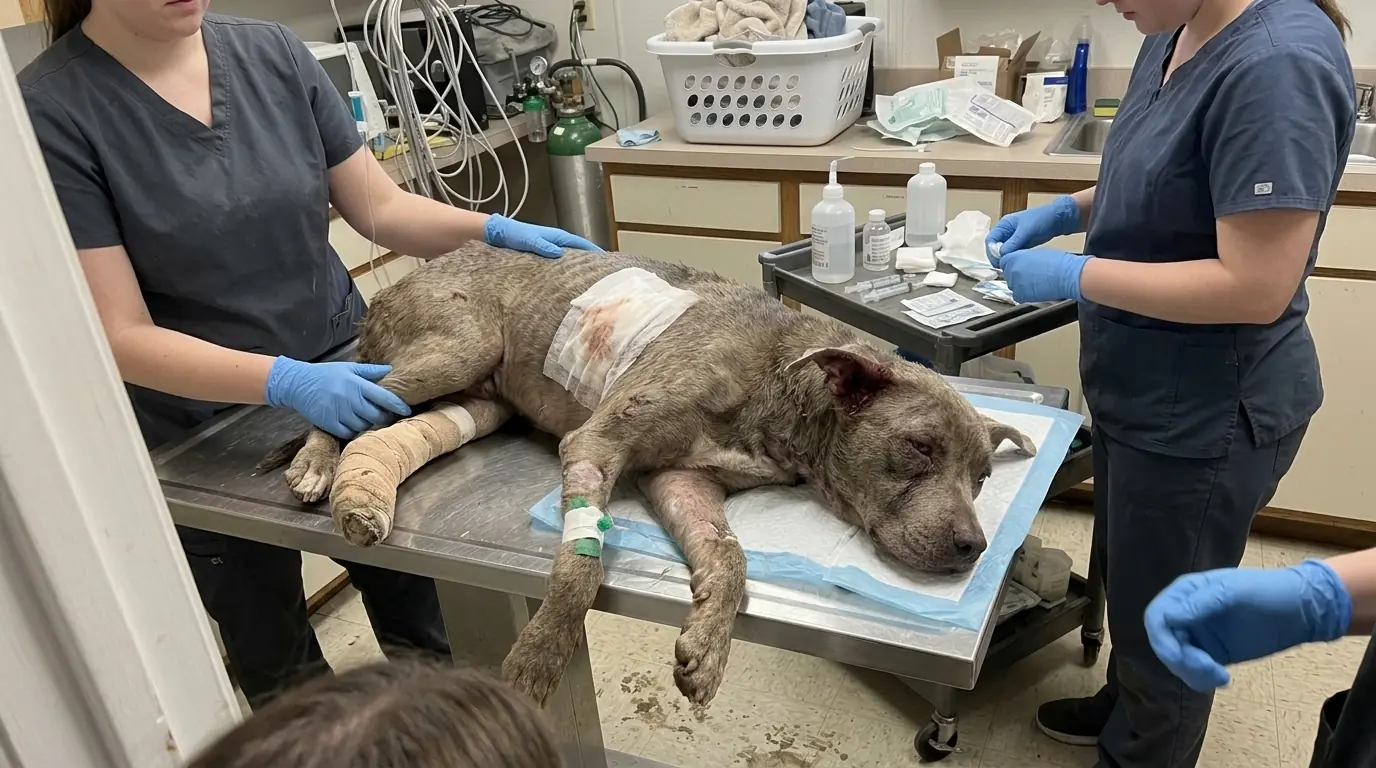
Bruno’s First 30 Days of Healing After His Rescue
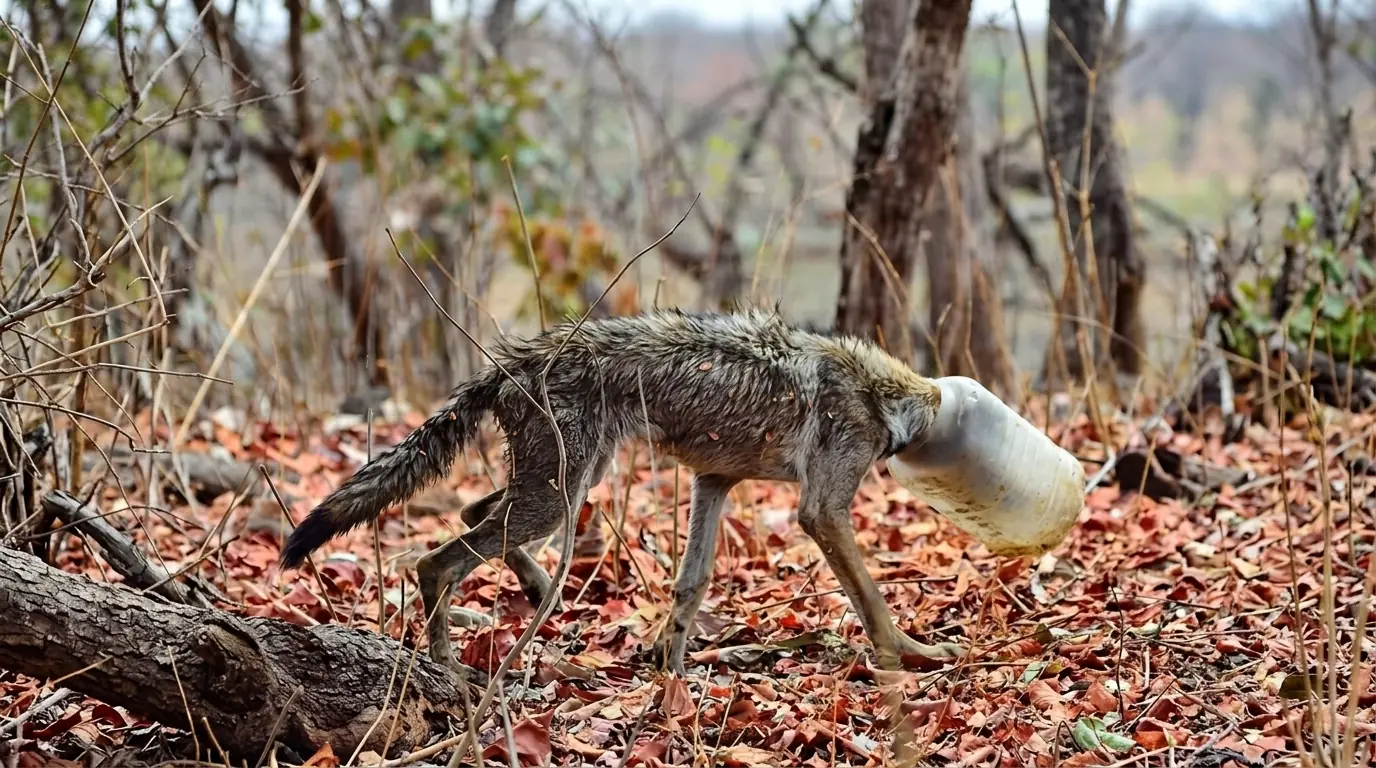
🚨 BREAKING: Wild Coyote Found With Plastic Container Trapped Over Its Head — Dramatic Rescue Highlights the Growing Cost of Human Waste
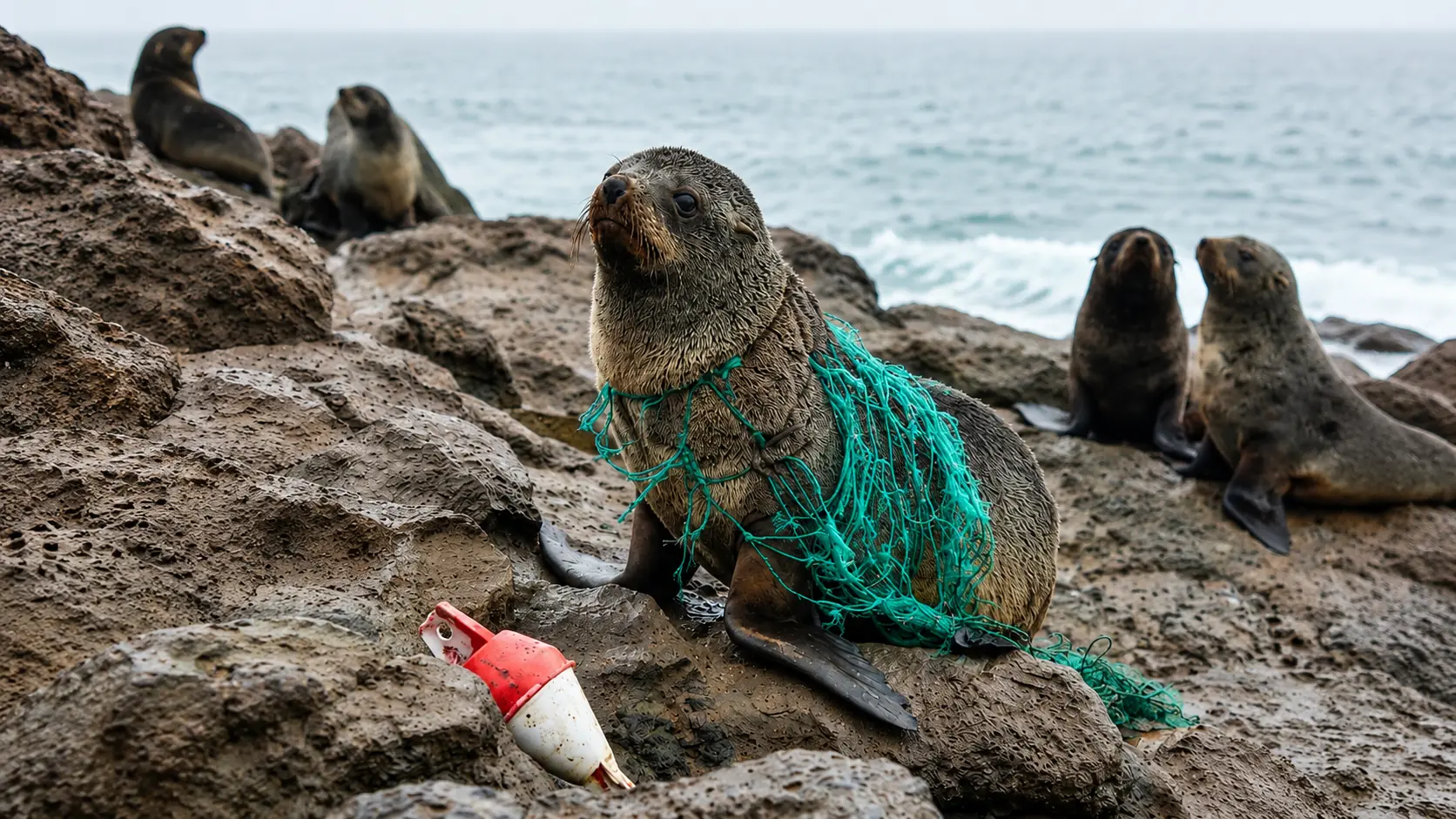
BREAKING: Young Seal Found Entangled in Fishing Net — Rescue Team's Rapid Response Sparks Hope for Marine Life
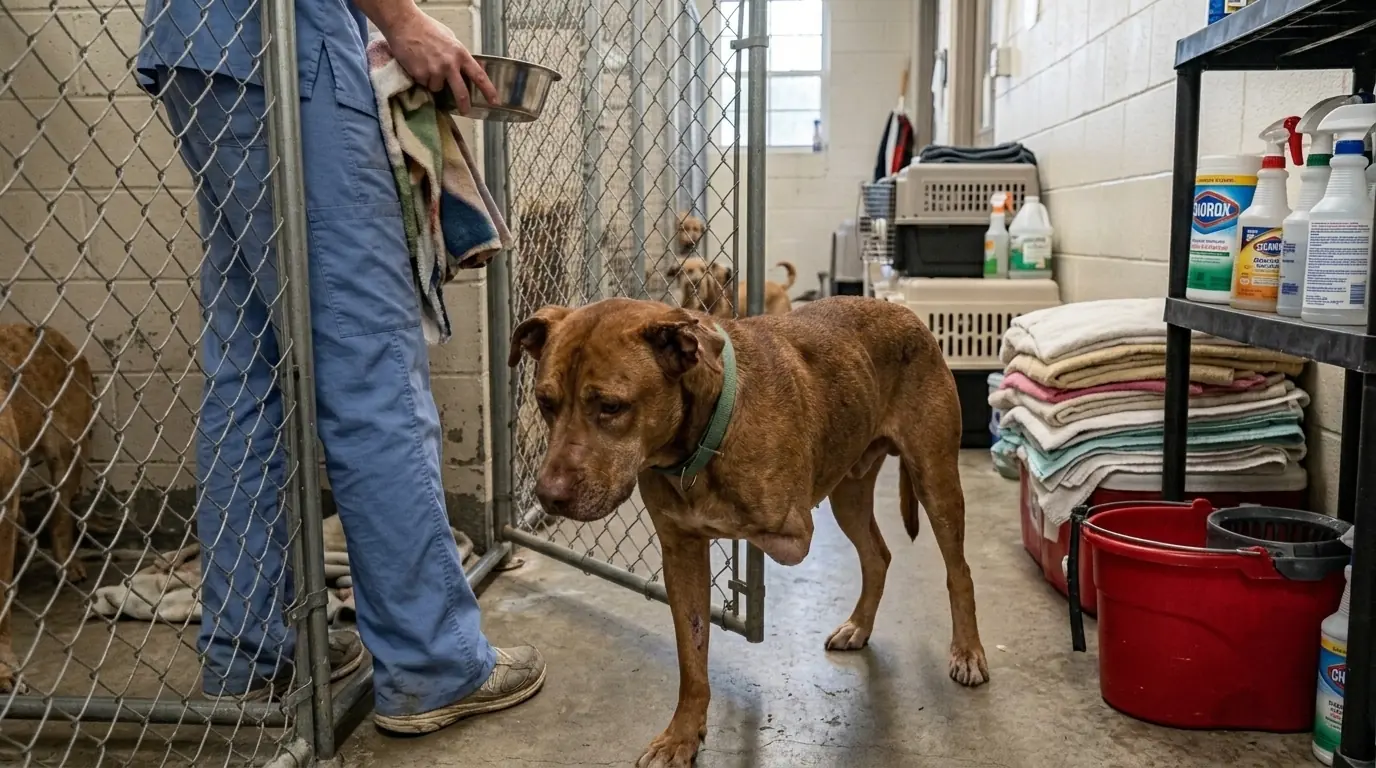
Cooper’s Recovery After Arriving at the Shelter on Three Legs
Pip’s Recovery After Being Rescued From a Storm Drain
Sadie’s First Days After Being Found in a Waste Collection Yard
Walter’s Recovery After Being Found Beside a Rainy Highway
Murphy’s First Days at the Shelter After Arriving Covered in Mud
Milo’s Quiet Life at the Shelter After Losing His Owner