They Mocked the Four-Star Pin in His Pocket — Then Put Him in Handcuffs
The officer picked up the small silver star between two fingers, turned it toward the light, and smirked. This real, or did you buy this online? Marcus Reeves said nothing. He stood at the front counter of the precinct with his hands loosely folded, the same posture he'd held through rooms far colder than this one. Around him, the lobby smelled of burnt coffee and printer toner, fluorescent light humming over a checkered floor scuffed pale near the door.
He'd come in for one reason only, his wife's wedding ring stolen from his glove box two nights ago, recovered at a pawn shop across town that wouldn't release it without a police case number. That was all. A ring, a number. 15 minutes, in and out. He hadn't planned on anyone seeing the duffel tag clipped to his jacket zipper, or the small four-star pin tucked in his breast pocket, the one Elaine had given him the morning of his change-of-command ceremony.
The last thing she'd pinned to his chest before the cancer took the rest of the years they planned on. He didn't wear it. He carried it. There was a difference, though nobody behind that counter seemed interested in learning it. "Let me see that," the younger officer said and reached for it before Marcus had finished setting his information down, plucking the pin off the counter like it was a coin he'd found on the sidewalk.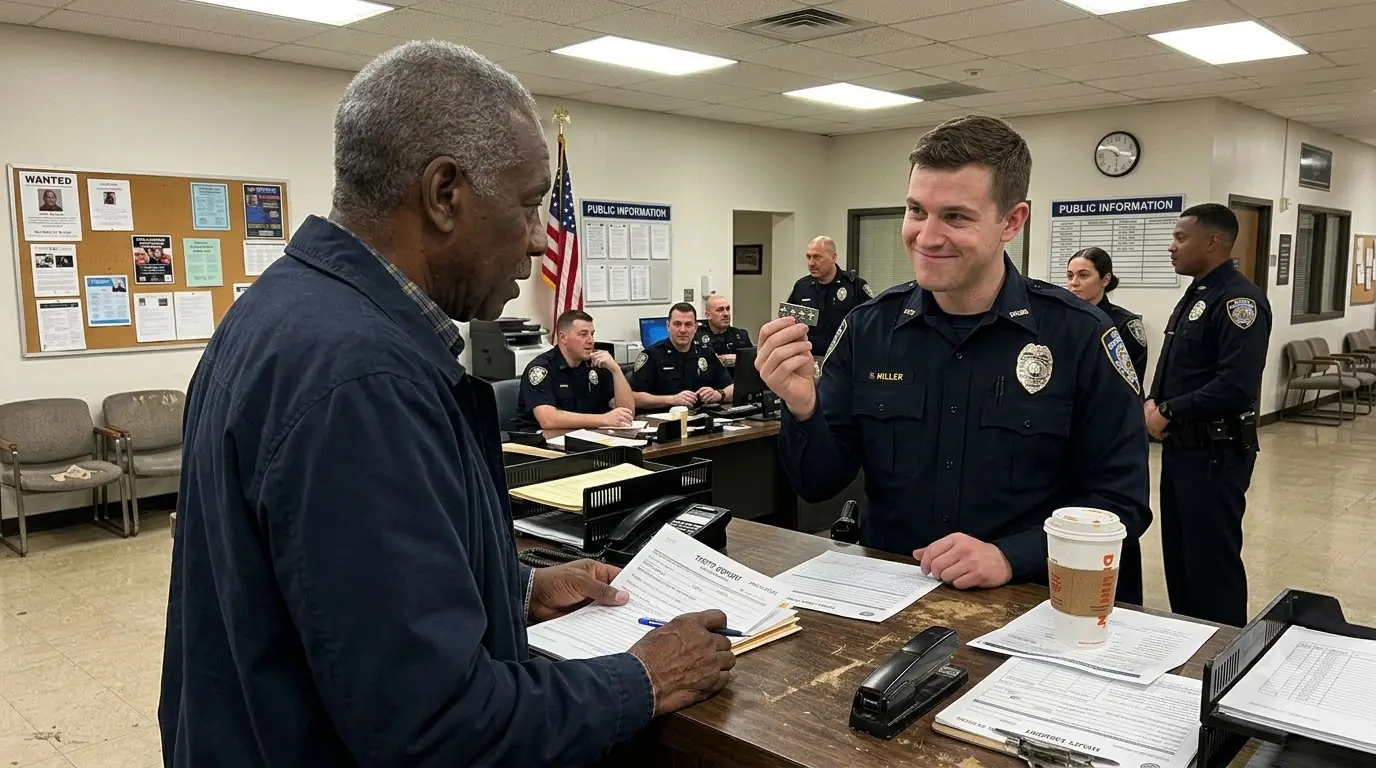
"That belonged to my wife," Marcus said. Quiet. Not a warning, just a fact you thought might matter to someone. It didn't. The officer, Reyes according to the tag on his chest, held it up toward his partner and grinned.
"Says four stars. You believe this?" He said it the way a man says something he already knows the answer to, already decided before he'd asked the question. Two other officers wandered over from a nearby desk, drawn by his tone more than his words, and a small half-circle formed around the counter, the kind that gathers without anyone quite meaning together. Marcus had seen this particular formation before in different uniforms, different countries, different decades. People rarely came together to hear an explanation.
They came together to watch someone be wrong. You military? Reyes asked, not really asking. I was. What branch?
Army. Reyes turned the pin over once more, then set it down harder than he needed to. The small metal clink of it against the counter, oddly loud in the quiet lobby. Funny. Most vets I know don't walk around with four stars in their pocket like it's a poker chip.
A short laugh went through the half-circle, more reflex than humor, the kind of laugh that needs an audience to survive. Marcus kept his hands where they were. He'd learned a long time ago that dignity wasn't something you defended loudly. You simply didn't let go of it, and you let the room notice on its own time, if it noticed at all. I'm only here about the ring, he said.
The case number. That's all I need. Nobody answered that directly. Instead, a woman behind the counter, Officer Dunbar, sergeant stripes on her sleeve, leaned over to see what the fuss was about, glanced at the pin, then at Marcus, then back at the pin. Her expression settling into something between curiosity and suspicion, the kind that forms fast and hardens faster.
Sir, is this yours? She asked, holding it up. Yes. You have paperwork? Discharge papers, ID, anything showing rank?
Marcus had his license, his concealed carry permit, expired two years now, no longer relevant to anything. A folded photograph of Elaine at a ceremony you no longer attended in memory without some ache attached to it. He had none of that with him today because he hadn't expected to need to prove who he was in order to recover something that was already his. "No," he said, "I wasn't expecting to need it. I only came in about the ring." Dunbar's expression didn't soften.
If anything, the absence of paperwork seemed to confirm something she'd already begun believing the moment Reyes laughed. She set the pin down beside his license, lined the two up like evidence, and looked at him the way people look at something they've already decided is a problem. "Sir," she said, "I'm going to need you to explain exactly where you got this." Marcus looked at the pin sitting under the fluorescent light, small and silver and entirely undeserving of the weight the room had just placed on it. And for the first time since walking through the door, something tightened behind his calm. Not fear, not anger, something closer to a memory surfacing at the wrong moment.
Elaine's hand steady pinning it to his collar, the last steady thing she'd ever done. "I got it," he said slowly. "The same place every general gets one." The room went quiet in a way that wasn't relief. Reyes turned the pin over once more, studying the four small stars stamped into the metal like he expected them to look different up close. "This isn't real," he said, mostly to Dunbar.
"Nobody walks around with four stars in their pocket unless they bought it off some replica site." "I didn't buy it," Marcus said. "Then where's your ID?" Dunbar held her hand out, not unkindly, just procedurally. Military ID, retirement card, anything with your rank on it. I don't have it with me. You don't have it with you, she repeated, and something in her tone shifted from curiosity to the beginning of certainty.
So, you're telling us you're a general, but you can't show us anything that says so. I'm telling you it's mine. I'm not asking you to take my word as proof of rank. I only came in about the ring. Are you claiming to be a general or not?
Marcus held her eyes for a moment before answering, because he understood that whatever he said next would be the sentence she carried into every decision that followed. Yes. The lobby had gone quieter around them, the earlier laughter thinning into something more attentive. Reyes glanced at his partner, and whatever amusement had been on his face a minute ago had started to harden into something more serious, the particular seriousness of a man who believes he's stumbled onto more than he expected. Sergeant, Reyes said, you understand what we're looking at here.
Guy's got no ID, no papers, carrying rank insignia he can't account for, and he's admitting to the claim. That's not somebody playing dress-up. That's impersonation, plain and simple, and it's federal. Dunbar didn't laugh. She looked at the pin sitting between them on the counter, then at Marcus, weighing something Marcus couldn't read from her face.
I'm going to hold onto this while we sort out who you are, she said, and picked it up. That belonged to my wife, Marcus said. She's gone now. It's the only thing of hers I still carry. Dunbar's hand paused over the evidence bag, just briefly, and for a moment Marcus thought she might set it back down.
Then she opened the bag instead. I understand that matters to you, but right now I've got a man in my lobby claiming a rank he can't prove, and I have to treat this like what it looks like. The clasp sealed with a soft click. I'm sorry. I'll log it carefully.
You'll get it back once this is settled, one way or another. It's already settled, Marcus said. I told you the truth. Then it'll be easy to confirm. Reyes stepped around the counter, his expression composed now, none of the earlier grin left in it.
Sir, I need you to turn around for me. For what? We're detaining you while we verify your identity. You understand, if everything checks out, you walk out of here in an hour with an apology and your property back. If it doesn't, this gets a lot more serious.
I've done nothing but ask for a case number for a stolen ring. And instead, we found a man carrying general's insignia with no way to back it up. Dunbar said, not unkindly, but without doubt in her voice either. I have to take that seriously. I'd be failing at my job if I didn't.
Marcus turned without being asked twice, his hands drifting behind his back before Reyes reached for them, because he had decided years ago that dignity didn't require resistance to prove itself. The cuffs closed cold around his wrists. Near the entrance, a woman who'd been waiting to file a noise complaint had her phone raised, angled low, filming without quite admitting to herself that she was filming. An older man by the vending machine looked away. Nobody said anything.
Reyes walked him toward the back hallway, one hand light on his elbow, his voice lower now, almost apologetic in its procedural flatness. This is just protocol, nothing personal. I understand. Marcus said, and meant it more than Reyes expected him to. Just before the door swung shut behind them, Marcus stopped to look back toward the counter, where Dunbar stood with the sealed bag still in her hand.
"I'd like my one phone call." he said, "when you're ready to allow it. Standard procedure. You'll get it. It's a specific number. Ask for the Pentagon's recall verification desk and tell them Marcus Reeves is requesting identity confirmation." Dunbar frowned, the number obviously unfamiliar, nothing about it matching the kind of call she was used to processing.
"That's not something I can just look up." "It'll ring." Marcus said. "Someone will answer." The door closed behind him. Dunbar stood there a moment longer than the moment required, turning the sealed bag over once in her hand, the four small stars catching the light through cloudy plastic, and for reasons she didn't examine too closely, she didn't file the paperwork right away. The interrogation room held a table, two chairs, and a camera blinking steadily in the corner, its small red light indifferent to everything happening beneath it. Marcus sat with his hands folded on the table, still cuffed, waiting the way he'd waited in briefing rooms before missions that hadn't gone the way anyone hoped.
Detective Aaron Voss came in carrying a manila folder that had nothing in it yet, and set it down like it already held something incriminating. He was younger than Dunbar, the kind of young that mistakes suspicion for instinct. "Mr. Reeves." Voss said, sitting. "Let's start simple. Where'd the pin come from?" "I already told the sergeant.
My wife gave it to me." "Your wife give you the duffel tag, too?" "No." "That's mine." "22 years of service, if you want the record to reflect that." Voss opened the folder, found it empty, closed it again. "See, that's the part I'm stuck on. We run vets through here all the time. Most of them, if they served, they've got the paperwork memorized. DD-214, discharge date, unit number.
You're giving me a pin and a tag and asking me to take your word. I'm not asking you to take my word. I'm telling you it'll check out if you look. We're looking. Voss said it like a warning, not a promise.
Down the hall, Dunbar sat at her terminal and typed Marcus's name and date of birth into the federal record system. The kind of routine check she'd run a thousand times without incident. The cursor blinked. She waited for the usual scroll of information. Address history, prior contacts, nothing interesting.
But instead, the screen froze for a moment, then returned the single line of red text. Access restricted. DOD recall roster. Local clearance insufficient. She stared at it, assuming she'd fat-fingered something, and ran it again, typing more carefully this time.
The result came back identical, the screen locking her out entirely and forcing her back to the login page. She called over Grady, the department's IT contact, a heavyset man who mostly fixed printer jams and reset passwords. He leaned over her shoulder, squinted at the frozen error, and shook his head. "Never seen that code," Grady said. "That's not a glitch message.
Glitches don't specify an agency." "So, what is it?" "Means his file's sealed somewhere above what we can touch. County can't pull it. State probably can't, either." He straightened up, uneasy in a way that didn't suit him. "You sure this guy is just some vet with a fake medal?" "I don't know what he is," Dunbar said, and for the first time that afternoon, she meant it honestly. Back in the interrogation room, Voss tried a different angle, tapping his pen against the table in a rhythm that was starting to grate on its own repetition.
Let's talk about the ring you say got stolen. Convenient story, showing up here with a theft claim and a general's insignia on the same day. The ring isn't a story. It's my wife's wedding ring. It was stolen from my truck two nights ago, and the pawn shop that recovered it needs a case number before they'll release it back to me.
That's the entire reason I walked in here. And the pin just happened to be in your pocket. I've carried it every day for 11 years. It wasn't something I planned to bring up. Your officer noticed it.
Voss leaned back, unconvinced, and was about to say something else when the door opened and Dunbar stepped in. Her expression different than it had been an hour earlier, not softer, just less certain. Can I take you outside? She said to Voss, and he followed her into the hallway, leaving Marcus alone with the blinking camera and the low hum of the fluorescent lights. Systems locking me out, Dunbar said, keeping her voice down.
Twice now. Not a normal error. Grady says it's a federal seal. Could be a glitch on their end. Could be, or it's exactly what he told us to expect when I asked him for his ID.
She glanced back through the small window in the door at Marcus sitting motionless, hands still folded, watching nothing in particular. He hasn't raised his voice once, hasn't asked for a lawyer, hasn't asked us to apologize. He's just been waiting this whole time, like he already knows how it ends. That's not evidence of anything. No, Dunbar admitted.
But it's not nothing either. They stood there another moment, neither of them saying what they were both starting to feel, until a sound reached them from down the corridor, muffled, insistent, coming from Captain Renner's office at the far end of the building. A phone was ringing. Not the department's main line, which rang constantly and meant nothing. This one was different, older, a landline kept in the corner of Renner's office that hadn't made a sound in longer than either of them could remember.
Dunbar had walked past that phone for 2 years without once hearing it ring. Voss looked toward the sound, then back at her. That's not our line. I know. Then whose is it?
Neither of them moved for a moment, both aware without saying so that whatever was about to happen next was no longer something they controlled. Captain Renner picked up the receiver on the fourth ring, more out of reflex than curiosity, and said the department's name the way he'd said it a thousand times before, answering a thousand ordinary calls. The voice on the other end was calm, unhurried, and asked him to confirm his own name and badge number before saying anything further. Excuse me? Sir, this is the Pentagon's personnel recall verification desk.
I need you to confirm your identity before I can proceed. Renner sat up straighter without meaning to. This some kind of joke? No, sir. We received a request approximately 11 minutes ago from your facility requesting confirmation of a Marcus Reeves currently in your custody.
I need to verify his status with you directly. Renner set down his coffee. Hold on. He walked to his office door and called down the hallway for Dunbar, who arrived with Voss a step behind her, both of them still carrying the uneasy look they'd had since the landline started ringing. Somebody's on the line asking about Reeves.
Renner said, holding the receiver out like it might be hot. Says they're the Pentagon. Dunbar took it, identified herself, and listened. The voice on the other end asked a short series of questions. Was Marcus Reeves currently detained?
Was he in good health? Had any of his personal effects been confiscated? Dunbar answered each one honestly, hearing her own answers differently as she said them out loud. The pin sitting in an evidence bag suddenly sounding less like procedure and more like a mistake she couldn't yet measure the size of. "I'm going to transfer you." the voice said.
"Please remain on the line." There was a pause filled with a faint electronic hum. And then a second voice came on, older, unhurried in a different way, the unhurried of someone who's never once needed to raise his voice to be heard. "This is Colonel Whitfield, Army Personnel Command. Am I speaking with the officer holding General Reeves?" Dunbar felt the word land before she understood why it mattered so much. General, not a claim, not an insignia in a plastic bag.
A title spoken plainly by a man reading it off some file she didn't have access to. "Yes, sir. Sergeant Dunbar." "General Reeves is on the department's advisory recall roster, which means his status remains active regardless of retirement, and any detention involving him triggers an immediate verification protocol on our end. That's the flag your system hit. It isn't a malfunction." Dunbar looked at Voss, who had gone very still.
"We didn't know that, sir. He didn't have identification on him." "I understand. I'd ask you to release him immediately and treat him with the courtesy his rank requires while we finalize confirmation on our end." "Understood, sir. Right away." "One more thing, Sergeant. The Colonel's tone didn't change, but something in it settled more heavily.
I'd suggest you locate anything belonging to him that was taken into evidence. General Reeves mentioned a pin. I'd have that ready when he's released." The line went dead. Dunbar stood holding the receiver a moment longer than she needed to, the dial tone humming faintly against her ear. And when she finally set it down, Renner was already reaching for his own computer, pulling up the same restricted file that had locked out Grady an hour earlier.
This time, it didn't lock him out. It opened. Photographs, service records, deployment histories redacted in long black bars, a citation for actions during an operation Renner had never heard of, dated more than a decade back, followed by a promotion history that ended in four stars. The face in the photograph, younger, unmistakably the same steady eyes as the man sitting quietly down the hall. Oh, God.
Renner said quietly. And it wasn't performance. Voss leaned over his shoulder to look, and went pale in a way that had nothing to do with fluorescent lighting. We put him in cuffs, Voss said. I know.
We bagged his wife's pin like it was Voss stopped himself. The sentence too heavy to finish out loud. Down the hall, Reyes appeared in the doorway, having heard enough of the conversation to understand something had changed without yet understanding what. Get him out of the cuffs, Renner said. Now.
And somebody find that evidence bag. The station had gone quiet in a way it hadn't been quiet all afternoon. Officers pausing mid-conversation near their desks, sensing the shift before anyone explained it to them. Renner's phone rang again almost immediately, and this time he answered it standing, his hand not quite steady. This is Lieutenant General Ashford, the voice said without preamble.
I'm calling to confirm that General Reeves has been released and that his personal effects have been returned. I'll also be informing you that a liaison team is en route to your location to conduct a formal review of the circumstances leading to his detention. Understood, sir. When should we expect them? 12 minutes.
The line clicked dead. Renner looked up at Dunbar, at Voss, at Reyes standing frozen in the doorway. And for the first time all day, none of them said anything at all. Reyes had the cuffs off before Renner finished giving the order. His hands came steady in a way that had nothing to do with the metal.
Marcus rubbed his wrists once, briefly, then let his hands rest at his sides the same way they had all afternoon. No different now than they'd been in the lobby 3 hours earlier. Dunbar came in carrying the evidence bag herself, not sending an officer to do it. She set it on the table and opened the clasp with both hands, careful now, in a way she hadn't been when she'd sealed it. "I'm sorry." She said, placing the pin into his palm.
"I should have listened before I decided what I was looking at." Marcus closed his hand around it. "You did your job the way you understood it. That's not nothing. It's just not enough, either." He said it without heat, the same way he'd said everything else that day, and somehow that made it land harder than if he'd raised his voice. 12 minutes later, headlights swept across the parking lot outside.
Two black sedans pulling in with a discipline that made the ordinary patrol cars beside them look borrowed. Lieutenant General Ashford came through the glass doors first, uniform pressed, expression composed. And every officer within sight of the lobby straightened without being told to. Ashford didn't raise his voice. He didn't need to.
"Where is General Reeves?" Renner led him back personally, apologizing before he'd finished forming the sentence. And when the door opened, Marcus stood. And Ashford rendered a salute so precise, it seemed to still the whole hallway. Marcus returned it, quieter, less rehearsed, a gesture between two men who'd earned the right to skip the formality and chose not to. Ashford turned to the officers gathered near the hallway, Reyes, Voss, Dunbar, a dozen others drawn by the sound of the sedans, and said only, "Every officer present will render honors to General Reeves, effective now." Hands rose across the station, uncertain at first, then steady.
Reyes held his the longest, his jaw tight, the same hand that had reached for the pin 3 hours earlier now raised in the opposite direction. Marcus lifted his own hand briefly in return, then let it drop, uninterested in prolonging a moment that had already cost more than it should have. "There will be a full review," Ashford said to Renner directly now. "Personnel conduct, detention procedure, evidence handling, I'd expect your department to cooperate fully." "Understood, sir." "And General," Ashford said, turning back to Marcus. "The department would like to discuss appropriate action against the officers involved." Marcus was quiet a moment, looking past Ashford toward Dunbar, who hadn't moved from where she stood, and toward Reyes, whose earlier confidence had drained into something closer to shame.
"No charges," Marcus said. "No terminations." "Sir, with respect, what happened here?" "I know what happened here. I was in the room for it." He turned the pin over once in his palm, the small stars catching the light the same way they had on the counter hours before. "I don't want their careers. I want this department to understand what almost happened and to make sure it doesn't happen to the next person who walks in without a badge to explain who they are." Ashford studied him, then nodded once, the kind of nod that closed a matter rather than argued it further.
In the weeks that followed, the department instituted mandatory bias and de-escalation training and Renner insisted, over some resistance from the city, that it carry Elaine Reeves's name, not Marcus's rank, not his service record, but hers, the woman whose pin had started all of it. Dunbar sat in the first session herself in the front row, taking notes she didn't need to take. Reyes stayed on the force. Nobody forced him to apologize twice, but he did, once quietly on a Tuesday when Marcus came by to sign paperwork closing out the incident file. He said only, "I judged you before I asked you anything real." And Marcus said, "Then ask me something real now." And they talked for 11 minutes about nothing important, which turned out to matter more than either of them expected.
Marcus never gave the interview reporters wanted. He gave one, brief, to a local paper and used most of it to talk about the ring recovered from the pawn shop the same week, cleaned and re-sized and sitting now on a small dish on his dresser, exactly where Elaine had kept it before she got sick. On a Sunday months later, Marcus stood on the sideline of a youth football field coaching a team of 12-year-olds who had no idea what rank it once held, whistle in one hand, clipboard in the other. A boy asked him once why he never talked about the army.
And Marcus said only, "Because the stars never did the work. The people wearing them did." And left it there, the way he left most things, without needing anyone to agree. He drove home that evening in the same faded green truck, windows down, the pin resting in the cup holder where he'd started keeping it since the day it came back to him. No longer something he needed to hide or explain. Just something he carried, the way he always had, quietly and on his own terms.
END
Tags:
News in the same category
The Black Belt Shoved the Limping Handyman — Then He Stopped Walking Away
She Called Police to Tow His Mustang — Then the Officers Looked at Him Twice

She Stormed Into the Hotel Demanding the Vault Keys — Then Her “Court Order” Hit the Table
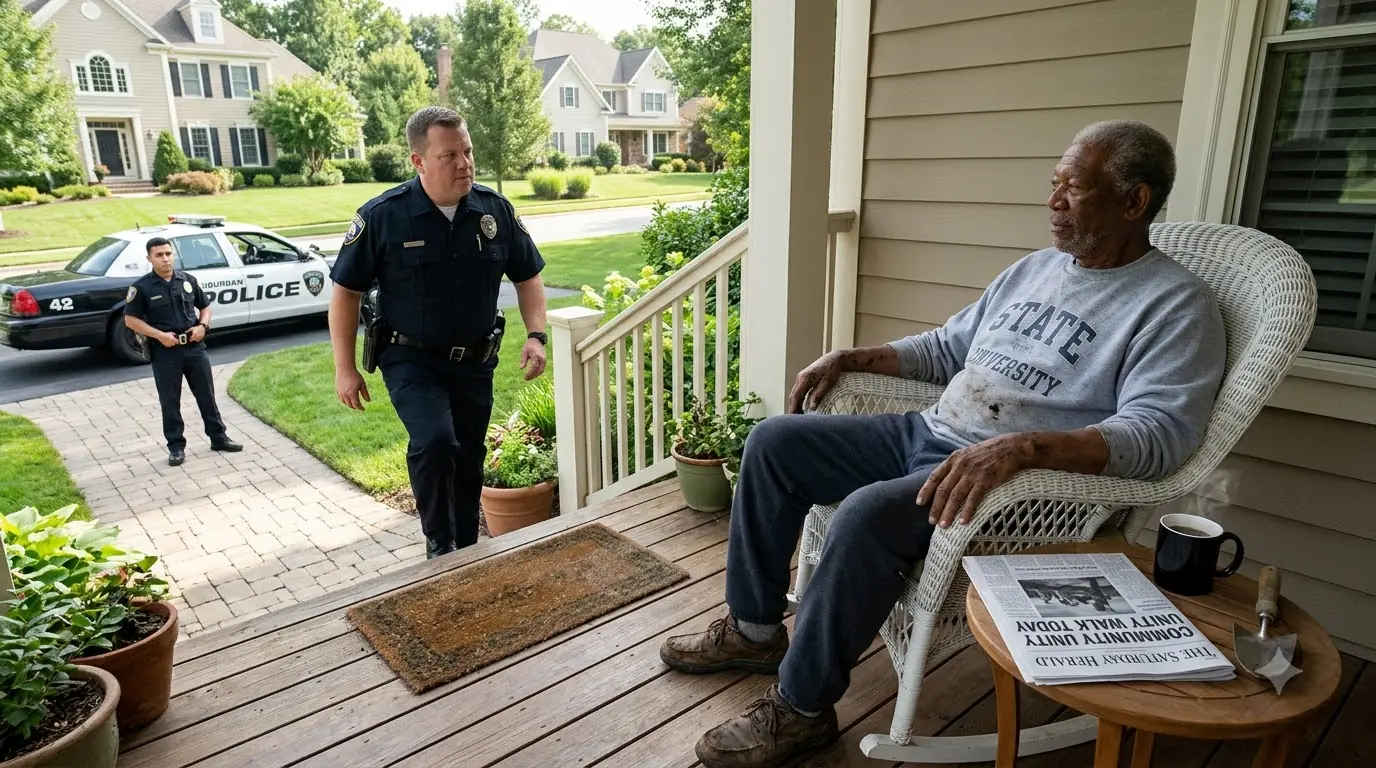
He Was Drinking Coffee on His Own Porch — Then the Officer Put Him in Cuffs
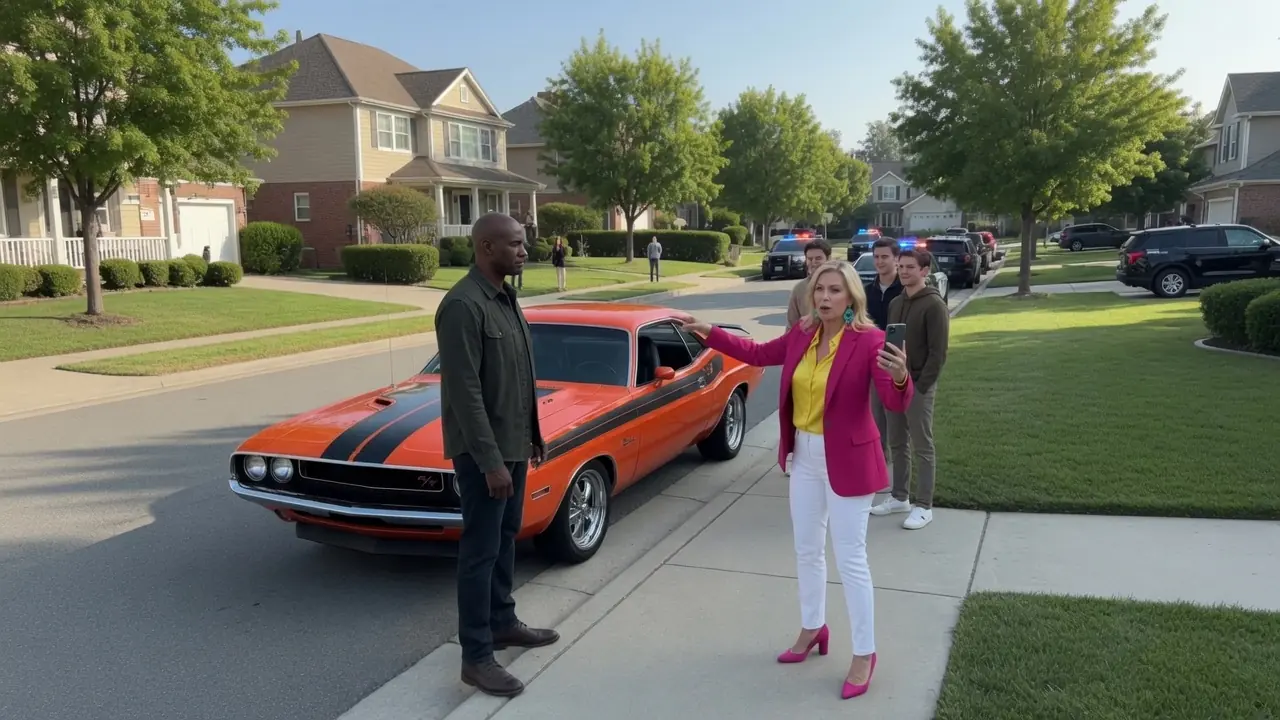
She Called the Police Over His Mustang — Then Pointed at Him and Screamed “Thief”

The Black Belt Humiliated the New Girl — Then She Dropped the Pads

HOA Shut Down My Pool — They Never Expected My Next Move
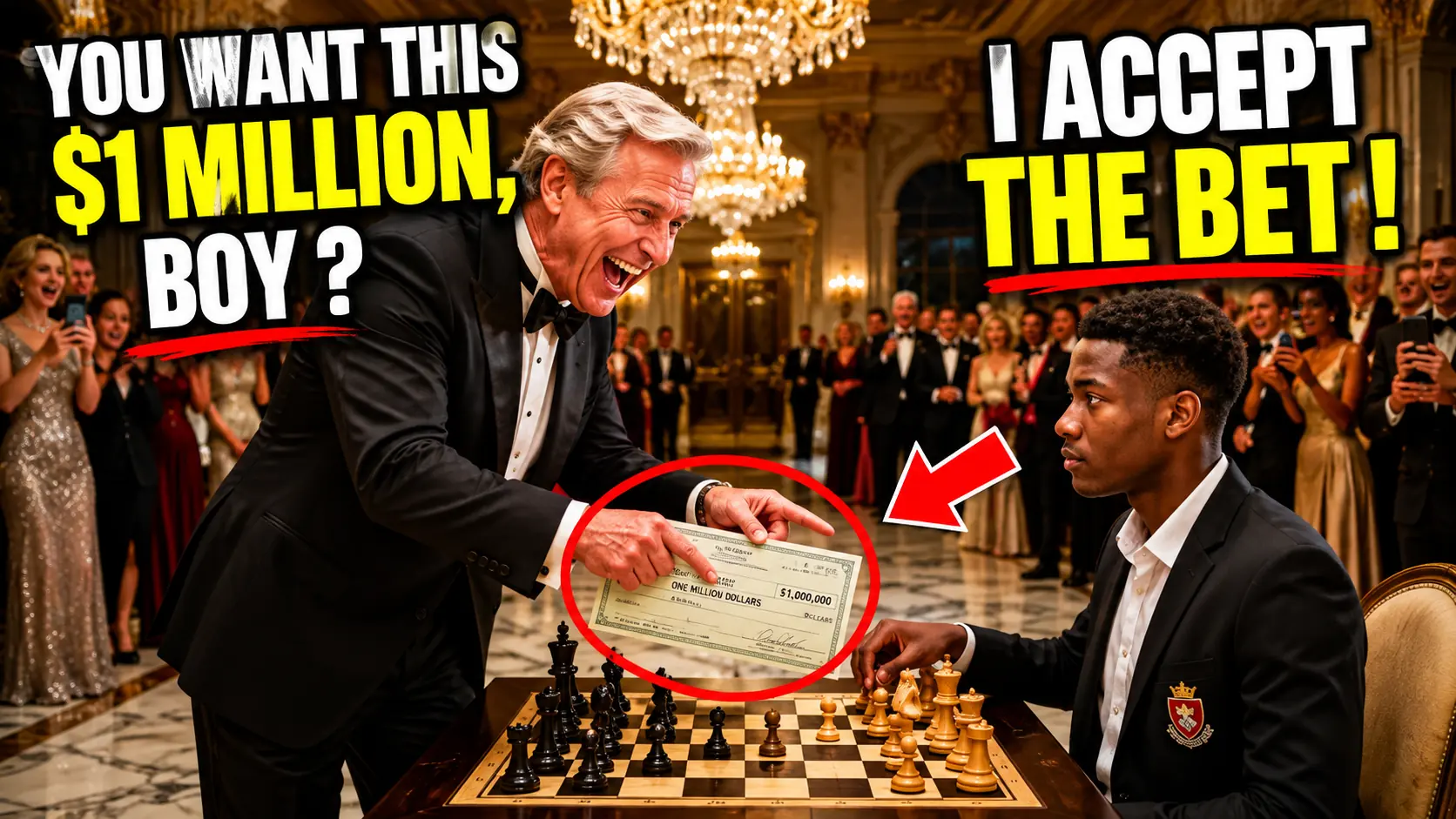
A Billionaire Mocked a Maid's Son and Bet $1 Million at Chess — Biggest Mistake of His Life
A Billionaire Mocked a Maid's Son and Bet $1 Million at Chess — Biggest Mistake of His Life
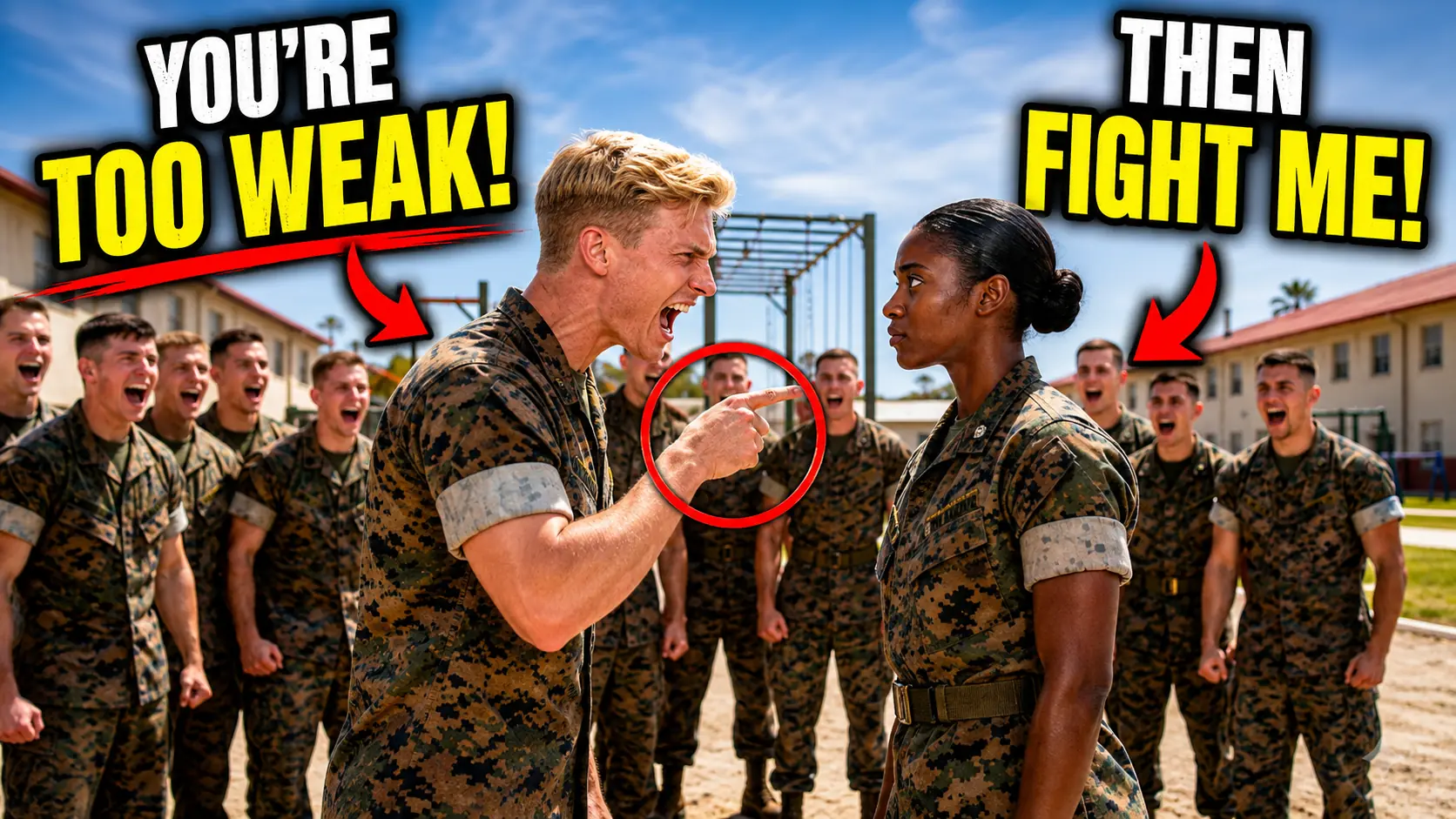
"She's Too Weak," 12 Marines Mocked a Black Single Mom — Then Everything Changed

HOA Ordered Me to Fix the Cracks in My Sidewalk — So I Turned Them Into a Neighborhood Attraction
HOA Thought They Could Control My Backyard — Then I Turned the Tables

Karen Called the Cops for Me Loitering on My Porch, So I Hired a PI to Dig Up Her Old Warrants!
A Billionaire Bet $1 Million a Maid's Son Couldn't Beat Him at Chess — Then Everything Changed

The Pilots Collapsed Mid-Flight — A Poor Black Kid Did the Unthinkable
12 Marines Laughed at a Black Single Mom — Minutes Later, Nobody Was Laughing
HOA Ordered Me to Fix the Cracks in My Sidewalk — So I Turned Them Into a Neighborhood Attraction