CHAPTER 2: Two Cops Harassed a Woman at a Gas Station — Then They Found Out Who She Really Was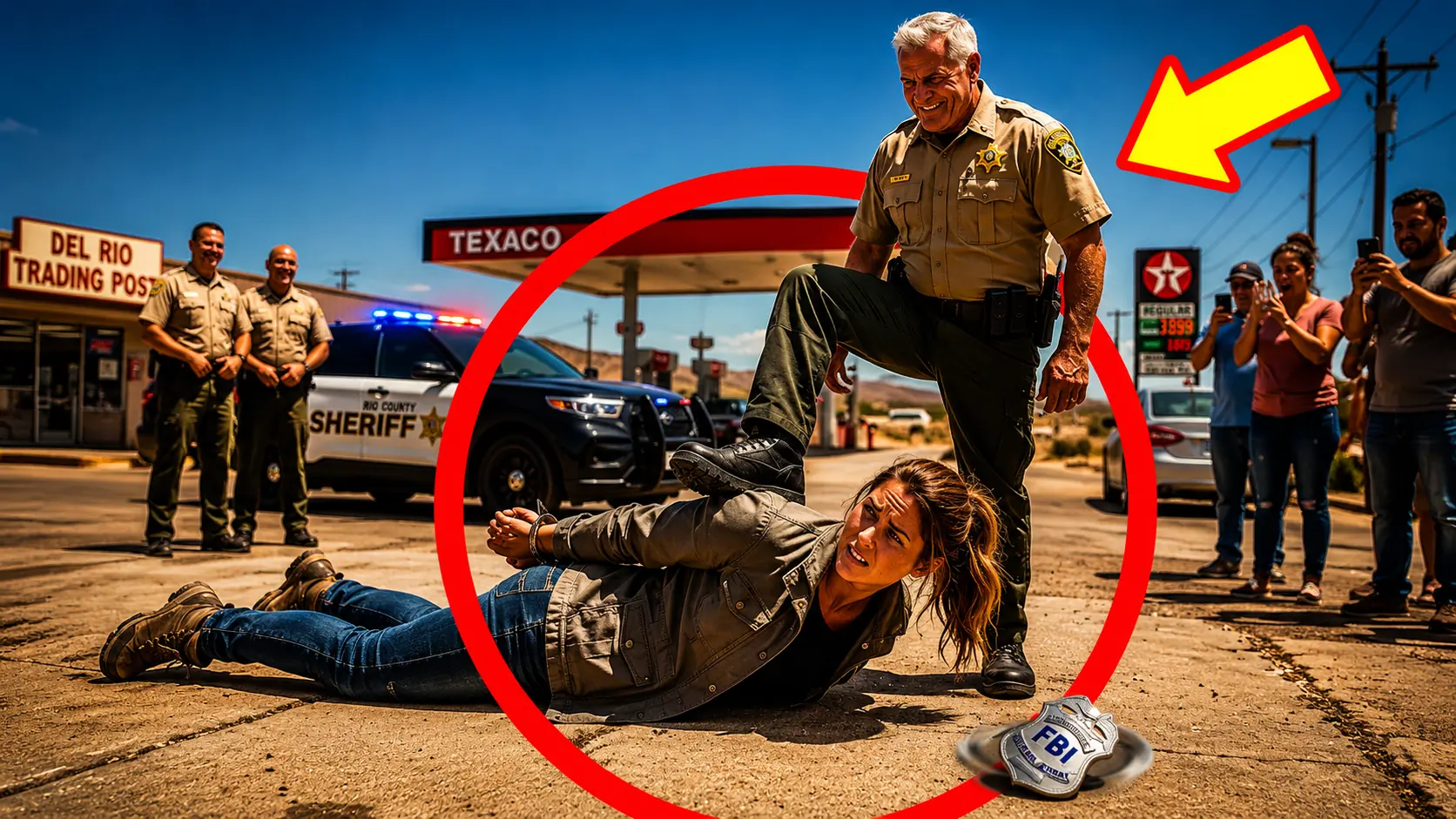
Brennan again. “Speaking of business, next group arrives Tuesday. Fifteen people. That’s five thousand each.”
Cortez: “Seventy-five thousand. Split two ways. Thirty-seven five a piece. I’ll make the deposit Wednesday night. Usual account. Cayman.”
“Yes. Same routing number as last time.”
Brooklyn felt her heart racing. This was it. Direct admission: money laundering, extortion, conspiracy, all recorded, all timestamped. She checked her phone. The primary transmission was still active. The data was flowing to the FBI server in real time. Even if Brennan found her right now, even if they destroyed every device she had, this conversation was already preserved in federal databases. Evidence, admissible, undeniable evidence.
“Make sure Martinez keeps a low profile for a few weeks,” Cortez continued. “After that scene at the gas station, we don’t need attention.”
“He’s solid. All my guys are solid.”
“They’d better be. We’ve built this operation for two decades. I won’t see it destroyed by some journalist with a notebook.”
“You won’t,” Brennan said. “I promise you that.”
The recording continued. Brooklyn kept writing.
At midnight, Brooklyn used her encrypted phone to call ASAC Richard Okafor. He answered on the second ring.
“Lane. Status report.”
“Sir, I have confession on tape. Brennan and Mayor Cortez discussing extortion payments. Seventy-five thousand from a new group arriving Tuesday. Direct mention of Cayman Island accounts.”
A pause. “That’s—that’s exactly what we need. Excellent work.”
“I also have a potential witness, former deputy Carlos Ruiz. He’s seen the ledger, knows the system inside and out. If I can convince him to testify—”
“No.” Okafor’s voice was firm. “Abort the operation. Extract immediately.”
Brooklyn froze. “Sir, you’ve been compromised. They know you’re investigating. The situation is too dangerous. We’ll use the recordings you’ve already collected and build the case from Washington.”
“With respect, sir, I’m this close to getting the physical ledger. That’s the smoking gun. That’s what makes this case airtight.”
“Agent Lane, that’s an order. Extract within forty-eight hours.”
Something in his voice was off. Too quick, too eager to shut down the investigation when they were on the verge of breakthrough.
“Understood, sir,” Brooklyn said. But she didn’t understand. She ended the call and sat in her car, staring at the dark town hall building. Her instincts were screaming. Something wasn’t right.
Three hours later, at 3:47 a.m., Brooklyn’s phone buzzed. Text from Carlos: “They know. Brennan just called me. Asked about the FBI woman. You’ve been compromised. Get out.”
Brooklyn’s blood went cold. She called him immediately. He answered, whispering.
“How did they know to contact you?” Brooklyn asked.
“I don’t know. I was careful. Nobody saw us at the rest stop.”
“What exactly did Brennan say?”
“He said, ‘I know you met with the Lane woman today. I know what she’s trying to do. If you talk to her again, you’re done in this town. You and your family.’”
Carlos’s voice was shaking. “Brooklyn, he knew the timing. He knew where we met. Someone told him.”
“Who else knew about our meeting?”
“Nobody. Just you and me.”
Brooklyn’s mind raced. She’d reported to Okafor at midnight. Three and a half hours later, Brennan knew about Carlos.
No. No, that wasn’t possible.
She pulled up her encrypted email on her phone, logged into the FBI internal system using her emergency access credentials, found her recent reports to Okafor. Then she saw it. Okafor had forwarded her last three briefings not to FBI leadership in Washington—to District Attorney Paul Hendris. And Hendris had CC’d someone with a Del Rio PD email address.
The leak wasn’t coming from Carlos. The leak was coming from inside the FBI.
Brooklyn scrolled through the email chain. It was all there. Every report she’d filed for the past six months, every piece of intelligence, every witness interview, all forwarded from ASAC Okafor to DA Hendris with subject lines like “FYI” and “for your awareness.” And Hendris had been forwarding them to someone identified only as “WB” at delriopd.gov.
Wade Brennan.
The corruption didn’t stop at the Del Rio city limits. It ran through the district attorney’s office. It ran through the FBI regional office.
Brooklyn felt sick. She clicked on Hendris’s profile, saw his bio: born in Del Rio, graduated from Del Rio High School, served as assistant DA before being appointed district attorney for Val Verde County. Then she found the family connection. Hendris’s mother was Elena Cortez Hendris, sister to Mayor Linda Cortez. They were family, of course they were.
And Okafor—she dug deeper, found donations to his re-election campaign for some local board position he held. Significant donations from a PAC that, when she traced it, led back to shell companies registered in the Cayman Islands, the same offshore network Brennan used.
Brooklyn sat back in her car seat, stared at the ceiling. She’d been operating under the assumption that the corruption was local, a small-town problem, but this was bigger. This was a network. This was systematic infiltration. And she was completely alone.
She couldn’t trust her chain of command. Couldn’t trust the local DA. Couldn’t trust anyone in the official system. She had evidence. She had recordings, but she had no way to deliver them through normal channels without Brennan being warned first.
Brooklyn pulled up a new contact on her phone. Not FBI, not law enforcement—a journalist. Time for Plan B.
Priya Sharma answered on the fourth ring. Groggy. “This better be good. It’s four in the morning.”
“My name is Brooklyn Lane. I’m an FBI agent with eighteen months of recordings documenting systematic corruption in a Texas border town. My chain of command is compromised. I need a journalist who can’t be intimidated.”
A pause, then: “I’m listening.”
They met at a diner forty miles outside Del Rio. Far enough to be safe, close enough to get there before dawn.
Priya arrived first. Forty-two years old, sharp eyes behind wireframe glasses, a leather messenger bag that probably cost more than Brooklyn’s car. She’d won a Pulitzer three years ago for exposing police corruption in Baltimore.
Brooklyn slid into the booth across from her, ordered coffee, waited for the waitress to leave.
“Show me what you have,” Priya said.
Brooklyn pulled out her phone, played thirty seconds of the Brennan-Cortez conversation, the part about seventy-five thousand and Cayman accounts.
Priya’s expression didn’t change, but her posture shifted, leaned forward. “How much more of this do you have?”
“One hundred twenty-seven audio files, eighteen months of recordings, documented transactions, testimony from forty-seven victims, bank records I’ve obtained through federal subpoenas, and there’s a physical ledger in Brennan’s office safe that has everything: names, amounts, dates.”
“And your FBI office is compromised?”
“My supervisor has been feeding my reports to the local DA who’s feeding them to Brennan. I can’t go through official channels.”
Priya took off her glasses, cleaned them with her napkin. “You want me to publish?”
“I want you to help me hold a press conference. Public, livestreamed. Impossible to shut down or ignore. I’ll testify under oath. We’ll release the recordings. Force the FBI to act.”
“When?”
“Friday, 10:00 a.m. Austin Press Club.”
Priya looked at her for a long moment. “You know they’ll come after you. Your career, your credibility, everything.”
“They already are,” Brooklyn said. “But they can’t come after the truth if it’s public.”
Priya held out her hand. “I’m in.”
They spent the next hour planning. Priya made calls, woke up her editor, contacted the Austin Press Club. By 6:00 a.m., it was confirmed. Friday, March 15th, 10:00 in the morning, one of the main conference rooms. Capacity for fifty journalists.
“We’ll livestream on three platforms simultaneously,” Priya said, typing on her laptop. “YouTube, Facebook, X. They can’t take down all three at once. By the time anyone tries to stop it, the story will already be out.”
“I need one more thing,” Brooklyn said. “Someone to authenticate the documents. A notary with credibility.”
“You have someone in mind?”
“Judge Martha Delgado, retired federal judge, seventy-two years old. She’s known for being incorruptible. If she verifies the bank records and witness statements, it adds weight.”
Priya nodded. “I know Judge Delgado. She hates corrupt cops more than anyone I’ve ever met. Her grandson was killed by a dirty officer in Houston. She’ll do it.”
Brooklyn felt something close to relief. Not quite hope—she’d learned not to hope—but at least a sense that the plan might work.
“One problem,” Priya said. “You still need that ledger. Without it, they can claim the recordings are taken out of context. They can claim the bank records are falsified. But if you have Brennan’s own handwritten records—”
“I know. Can you get it?”
“I’m going to try.”
“That’s not a plan.”
“It’s the only plan I have.”
Brooklyn finished her coffee. “In the meantime, prepare everything else. Assume I won’t get the ledger. Can we still make the case?”
“We can make a hell of a case,” Priya said. “But with the ledger, it’s ironclad.”
“Then I’ll get it.” Brooklyn didn’t know how yet, but she had four days.
Wednesday morning, Brooklyn drove to Carlos’s garage. It was destroyed. The front window was smashed. Tools scattered across the parking lot. One of the hydraulic lifts had been toppled over. Spray paint across the walls: “Snitches get buried.”
Carlos sat on the curb, head in his hands. His wife stood next to him, holding their two kids close. The children were crying.
Brooklyn parked and got out slowly.
“Don’t,” Carlos said without looking up. “Don’t come near us.”
“Carlos, I’m sorry. I’ll get you protection.”
“Protection?” He finally looked at her. His right eye was swollen shut, purple and black. Blood crusted around his nose. “Where was your protection last night when three men kicked down my door? Where was your protection when they held a gun to my daughter’s head?”
Brooklyn felt like she’d been punched. “What?”
“They came to my house. Two a.m. Ski masks. Knew my kids’ names, knew where they go to school, knew my wife’s work schedule.” Carlos stood up, wincing. “They said if I talk to you again, they’ll kill my family. Not me. My family.”
His wife was crying silently. The little girl, maybe seven years old, clung to her mother’s legs.
“I can get you into witness protection,” Brooklyn said. “Federal protection, new identities, new city. They’ll never find—”
“No.” Carlos’s voice was flat. Dead. “I’m not uprooting my kids’ entire lives. I’m not living in fear for the next twenty years. I’m done.”
“The press conference is Friday. If you testify—”
“I’m not testifying.” He shouted it, then caught himself, lowered his voice. “I’m not testifying. I’m not helping. I’m taking my family and we’re leaving Del Rio. Moving to San Antonio, maybe Austin. Somewhere Brennan doesn’t own.”
“He’ll find you.”
“Maybe. But at least I’ll have a chance.” Carlos picked up a wrench from the ground. “You should leave too, Brooklyn. You’re not going to win this. Nobody beats Brennan. Nobody ever has.”
He turned away, walked to his truck with his family.
Brooklyn stood in the parking lot surrounded by broken glass and scattered tools. She’d promised Carlos protection and delivered violence. She’d promised justice and delivered threats. Maybe he was right. Maybe nobody beat Brennan.
Her phone buzzed. Text from Priya: “Press conference confirmed. Do you have the witness?”
Brooklyn looked at Carlos’s truck driving away. She texted back: “No.”
Wednesday night. The Del Rio Police Department caught fire. Brooklyn heard the sirens from her motel room, grabbed her jacket, and drove toward downtown. By the time she arrived, three fire trucks were already on scene. Smoke poured from the back of the building—the evidence room.
She parked two blocks away and watched. Sheriff Brennan stood in the parking lot, arms crossed, watching his officers coordinate with firefighters. He didn’t look concerned, didn’t look surprised because he’d probably started it himself.
Brooklyn’s phone rang. Unknown number.
“Agent Lane.” A woman’s voice. “This is Deputy Chief Lisa Martinez, Del Rio Fire Department. I’m calling as a courtesy. The fire at the police station appears to have started in the evidence storage room. I understand you had property stored there.”
“Yes. Camera equipment, a bag.”
“I’m sorry to inform you that the room sustained significant damage. Most items will be total losses. The fire marshal is investigating the cause, but initial reports suggest electrical failure.”
“Electrical failure?” Brooklyn repeated.
“Yes, ma’am. I’m very sorry.”
Brooklyn ended the call. The bag with the hidden microphone was gone, burned, destroyed. But Brennan didn’t know, couldn’t know that every recording from that microphone had been transmitted in real time to FBI servers. The physical device was gone, but the data was preserved, encrypted, backed up, stored in three separate locations. They destroyed the recorder, but not the recordings. It was almost funny.
Brooklyn watched the firefighters spray water into the smoking building, watched Brennan shake hands with the fire chief, watched him play the concerned sheriff, worried about his department’s loss.
Her phone buzzed again. This time, a text from a number she didn’t recognize: “You have 24 hours to leave Del Rio. If you’re still here Friday morning, there will be consequences. This is your final warning.”
No signature. Didn’t need one.
Brooklyn deleted the text, put her phone away. She wasn’t leaving. Not now, not ever. They’d threatened her, arrested her, mocked her, destroyed her evidence, attacked her witness. But they hadn’t stopped her. And tomorrow, she was going to start pushing back.
But first, she needed to survive tonight because if they were sending threats like this, it meant they were planning something worse.
Brooklyn drove back to her motel, didn’t sleep, sat in her car in the parking lot with the doors locked and her backup phone on the seat next to her, waiting.
Thursday morning, the local news ran the story. Brooklyn saw it on the television in the motel breakfast area, the Del Rio morning show. A perky anchor with too much makeup smiled into the camera.
“In local news, District Attorney Paul Hendris announced yesterday that a woman claiming to be an FBI agent has been harassing local law enforcement. Authorities say the woman, identified as Brooklyn Lane, has been presenting a fake badge and making false accusations against Sheriff Wade Brennan and his department.”
Cut to footage of Hendris at a press conference. Suit and tie. American flag in the background. The picture of official authority.
“We take these allegations very seriously,” Hendris said gravely. “Ms. Lane has a history of mental health issues and was actually dismissed from FBI training several years ago. She’s been impersonating a federal agent, which is itself a serious crime. We’re currently working with the real FBI to bring charges.”
Brooklyn’s hands clenched around her coffee cup. Mental health issues. Dismissed from training. All lies, all documented in fake records that would take weeks to disprove through official channels. And by then, the damage would be done.
Her phone rang.
“Priya, have you seen the news?”
“I’m watching it now. They’re trying to destroy your credibility before Friday, and it’s working. My editor just got a call from ProPublica’s legal team. They’re concerned about liability. Publishing accusations from someone who might be mentally unstable.”
“I’m not mentally unstable. Those records are fabricated.”
“I know that, but proving it takes time and we don’t have time.” Priya paused. “Brooklyn, there’s a chance they might pull the press conference. Too much legal risk.”
“They can’t.”
“They can. They might.”
Brooklyn closed her eyes. “Then we do it anyway. Just you and me. We livestream it ourselves. No official venue, no corporate backing, just the truth.”
“That’s career suicide for both of us.”
“Better than letting them win.”
Silence on the line. Then: “Friday, 10:00 a.m. I’ll send you the location.”
Thursday afternoon, Brooklyn returned to her motel room and found the door open. Not kicked in, not forced—opened with a key. Someone had access. The motel manager, a deputy with a warrant, or just Brennan’s people paying for information. Didn’t matter.
Brooklyn drew her service weapon, a Glock 19 she’d kept hidden in her jacket, and swept the room. Empty, but thoroughly searched. Mattress flipped, drawers opened, her suitcase unzipped and contents scattered. Her backup laptop was gone. She’d kept it under the bathroom sink, wrapped in a towel. Not the world’s greatest hiding spot, but enough to fool a casual search. They’d been thorough.
Brooklyn holstered her weapon and assessed. The laptop was encrypted with 256-bit AES encryption. Even with top-level decryption tools, it would take months to crack, maybe years. And she’d set it to wipe after ten failed password attempts. So the data was probably safe. But they’d sent a message: We can get to you anywhere. We know where you sleep. We can reach you whenever we want.
Brooklyn grabbed what was left of her belongings. Stuffed everything into her suitcase. Checked out at the front desk. The manager wouldn’t meet her eyes. Confirmation that he’d been the one who’d given them access.
She couldn’t stay in Del Rio. Too exposed.
She drove to a different motel in Eagle Pass, thirty miles west. Paid cash, registered under a fake name, parked her car two blocks away instead of in the motel lot. Then she sat on the edge of the scratchy motel bed and did something she rarely allowed herself to do. She questioned whether this was worth it.
Forty-seven victims. Twenty years of corruption. Justice. Was it worth her life?
Yes. Yes, it was.
At 11:47 p.m. Thursday night, Brooklyn received an email sent from a burner address routed through multiple proxies. Untraceable.
Subject line: Final warning.
Body: Leave Del Rio by midnight Friday or you will not leave alive. This is not a threat. This is a promise. We know where you are. We know what you’re planning. The press conference will not happen. You will not testify. You will disappear. And nobody will care. Your choice. Drive away tonight or get carried away in a bag. You have thirteen hours.
No signature, no details, just cold clinical certainty.
Brooklyn read it three times. Her hands were shaking slightly. Not fear. Well, not just fear. Adrenaline. Her body preparing for fight or flight. She’d been threatened before. Occupational hazard of undercover work. But this felt different. This felt real because it was real.
Carlos had been beaten. Her evidence had been burned. Her motel room had been searched. These weren’t scare tactics anymore. This was systematic escalation. They were going to kill her.
Brooklyn stood up, paced the motel room, looked at herself in the mirror above the dresser. She looked tired, scared, alone.
But she wasn’t backing down.
She opened her laptop, started a new email, addressed it to Priya, Judge Delgado, her sister in California, and three other journalists whose work she respected.
Subject: If anything happens to me.
Body: Attached are encrypted files containing eighteen months of evidence regarding corruption in Del Rio, Texas. Passwords will be automatically revealed if I don’t check in every twelve hours. Please publish everything.
She attached the files, set up the dead man’s switch, hit send.
Then she checked her gun. Full magazine, one in the chamber.
Eleven hours until the press conference. She just had to survive until then.
Friday morning, 6:23 a.m. Brooklyn left Eagle Pass early. Two hours to Austin. Plenty of time to reach the press conference. She took Highway 277 north. Empty roads, sunrise bleeding orange across the desert. The landscape was beautiful in that harsh, unforgiving way Texas could be.
Her phone rang.
“Priya, where are you?”
“About ninety miles out. I’ll be there by nine.”
“Good. Judge Delgado confirmed she’ll be authenticating the documents on camera. And I’ve got confirmations from CNN, Washington Post, and the Texas Tribune. This is going to be big.”
Brooklyn, let’s hope we—
Red and blue lights flashed in her rearview mirror. Brooklyn’s stomach dropped.
“I’ve got to go.” She ended the call. Checked the mirror again. Black Ford pickup, light bar, Del Rio Sheriff star on the door.
They were 120 miles outside Del Rio, outside their jurisdiction. This wasn’t a traffic stop. This was an abduction.
Brooklyn considered running, flooring it. Her rental sedan wouldn’t outrun a pickup, but she could try to reach a populated area, find witnesses, call for help. But before she could decide, two more vehicles appeared, one ahead, one behind, boxing her in. She had no choice.
Brooklyn pulled over, drew her weapon, held it ready.
The driver’s door of the lead truck opened. Sheriff Wade Brennan stepped out. He wasn’t in uniform. Jeans and a work shirt, no badge. This wasn’t official. This was personal.
Two more men emerged from the other vehicles. Deputy Martinez and someone Brooklyn didn’t recognize. Bigger, rougher, not a cop—hired muscle.
Brennan walked toward her car slowly, no rush. He knew she had nowhere to go.
They pulled her from the car, took her gun, zip-tied her hands in front of her, covered her head with a hood.
The drive lasted maybe twenty minutes. Brooklyn tried to track turns, estimate direction, but gave up after the fourth or fifth change. They were deliberately disorienting her.
When they finally stopped and pulled off the hood, she was in a warehouse. Empty. Abandoned. Rust on the metal walls, broken windows high up, letting in strips of dusty light. No one would hear her scream here.
Brennan stood in front of her. Behind him, Martinez and the hired muscle. The third man kept his hand near his belt. Gun, probably.
“Last chance, Brooklyn.” Brennan’s voice was almost gentle. “Sign this.” He held up a piece of paper. “It’s a confession. You’re mentally unstable. You fabricated accusations. You apologized to me and my department. You leave Texas and never come back.”
“Go to hell.”
“Sign it and you walk out of here. Don’t sign it.” He shrugged. “Tragic car accident. Happens all the time on these back roads. Woman falls asleep at the wheel. Vehicle catches fire. Nobody survives.”
“You’re going to kill me?” Brooklyn kept her voice steady. “Kill a federal agent? You think you’ll get away with that?”
“You’re not a federal agent. FBI already disavowed you. You’re just a disturbed woman with delusions.”
“No.” Brooklyn looked past him to Martinez. “Deputy Martinez, you really okay with this? With murder?”
Martinez shifted uncomfortably, didn’t answer.
“He does what I tell him,” Brennan said. “They all do. That’s how this works. That’s how it’s always worked.”
The hired muscle stepped forward, pulled a gun.
Brooklyn’s heart hammered. This was it. This was really happening.
“Wait,” she said.
Brennan smiled. “Ready to sign?”
“No. Just wanted to make sure you heard this clearly.” She looked directly at him. “I have a GPS tracker and you’re completely fucked.”
Brennan’s smile faltered. “What?”
“My watch.” Brooklyn held up her zip-tied wrists. The standard-issue black sports watch she’d been wearing for eighteen months. “It’s not a normal watch. It’s a GPS tracker. Standard equipment for undercover FBI agents operating in high-risk situations. Been transmitting my location in real time to the San Antonio Field Office since you pulled me over.”
Brennan looked at the watch, then at Brooklyn, then at Martinez. “She’s bluffing,” he said, but his voice had lost its certainty.
“Am I?” Brooklyn kept her eyes on his. “You pulled me over at 6:34 a.m. on Highway 277, mile marker 89. That was outside your jurisdiction. That was kidnapping. Then you drove me—” She calculated. “Approximately southwest for twenty-two minutes. We’re probably in Maverick County now. You transported me across county lines against my will while I was transmitting a distress signal.”
“Bullshit. Your phone is in my truck. I checked it.”
“I didn’t say phone. I said GPS tracker built into the watch. It doesn’t make calls, doesn’t text, just transmits coordinates and a biometric reading. If my heart rate spikes—like it did when you pulled me over—it triggers an automatic emergency protocol.”
Martinez’s face had gone pale.
“Boss, she’s lying,” Brennan insisted. But Brooklyn could see the doubt creeping in. Could see him doing the math, calculating the risk.
“FBI policy,” Brooklyn continued, her voice calm, almost conversational. “When an undercover agent’s emergency beacon activates, the nearest field office dispatches a tactical team immediately. They don’t ask questions. They don’t wait for confirmation. They just respond.”
In the distance, faint but growing, the sound of sirens. Brennan heard it. They all heard it.
“No,” he whispered.
The sirens grew louder. Brooklyn smiled. “I told you you’re fucked.”
The warehouse doors exploded inward.
“FBI! Hands up! FBI!”
Six tactical agents in full gear poured through, rifles raised, moving with precision. The hired muscle dropped his gun immediately. Hands up. Smart. Martinez did the same, shaking, terrified. Brennan reached for his belt.
“Don’t.”
An agent fired. Rubber bullet hit Brennan in the chest. He went down hard.
Thirty seconds later, it was over. Brennan on the ground, handcuffed. Martinez against the wall, cuffed. The hired muscle face down on the concrete.
A man in an FBI windbreaker approached Brooklyn. Fifties, silver hair, calm eyes.
“Special Agent Lane.” He cut her zip ties with a knife. “I’m Agent Marcus Cole, Houston Field Office. You okay?”
Brooklyn rubbed her wrists. “I’m fine. How did you—?”
“Your tracker hit emergency mode at 6:34. Houston was the closest clean office.” He looked at Brennan. “We’ve been monitoring the San Antonio office for three weeks. Had suspicions about ASAC Okafor. Your investigation confirmed it.”
“So you knew I was compromised?”
“We suspected, but we needed evidence. You got it.”
Cole helped her stand. “Come on. You’ve got a press conference to get to.”
Austin Press Club. 10:07 a.m. They’d held the room despite everything. Despite the legal threats and the negative press and the manufactured scandal, they’d held the room.
Brooklyn stood backstage watching through a gap in the curtain. The main conference room was packed. At least forty journalists, camera crews from CNN, local news, independent media. Three live-stream cameras pointed at the podium.
Priya was at the microphone. Professional, commanding. “Thank you all for coming. I’m Priya Sharma, investigative reporter with ProPublica. What we’re about to present is the result of an eighteen-month federal investigation into systematic corruption, extortion, and money laundering in Del Rio, Texas.”
Murmurs from the crowd.
“The evidence includes over one hundred audio recordings, financial documents, and testimony from forty-seven victims. It implicates local law enforcement, a sitting mayor, and a district attorney.”
The murmurs got louder.
“And presenting this evidence today is the FBI agent who gathered it despite being arrested, threatened, and this morning kidnapped at gunpoint.”
Priya looked toward the curtain. “Please welcome Special Agent Brooklyn Lane.”
Brooklyn stepped onto the stage. The cameras focused on her. The live-stream counters were climbing. Twenty thousand viewers, thirty thousand, fifty thousand.
She walked to the podium. Brooklyn adjusted the microphone, looked directly at the cameras.
“My name is Brooklyn Lane. I’m a special agent with the Federal Bureau of Investigation, badge number 7429, currently assigned to the San Antonio Field Office.” She held up her badge, the real one, on camera. Undeniable.
“For the past eighteen months, I’ve been conducting an undercover investigation into Operation Border Justice, a systematic extortion ring targeting undocumented immigrants in Del Rio, Texas. The operation is run by Sheriff Wade Brennan and Mayor Linda Cortez, with the assistance of multiple deputies and the complicity of District Attorney Paul Hendris.”
A reporter raised her hand. “How do you know?”
“I have one hundred twenty-seven audio recordings documenting the operation. I have financial records showing offshore accounts in the Cayman Islands. I have testimony from forty-seven victims who were extorted for amounts ranging from three thousand to ten thousand dollars each.”
Brooklyn pulled out a USB drive, held it up. “This contains everything, and it’s also been provided to the FBI director, the Justice Department, and three major news organizations. There’s no containing this anymore.”
She paused. “The corruption ends today.”
Priya stepped back to the podium. “We’re now going to play one of those recordings. This conversation took place Wednesday, March 13th, between Sheriff Brennan and Mayor Cortez in the mayor’s office at Del Rio Town Hall.”
She nodded to a technician. The audio played through the speakers. Brennan’s voice, crystal clear:
“Next group arrives Tuesday. Fifteen people. That’s five thousand each.”
Cortez: “Seventy-five thousand. Split two ways. Thirty-seven five a piece. I’ll make the deposit Wednesday night. Usual account. Cayman.”
“Yes. Same routing number as last time.”
The room went silent.
Priya put up a slide on the screen behind her. Bank records, account numbers, transaction histories.
“These are the Cayman accounts referenced in that recording. Over the past five years, more than four point two million dollars have been deposited. We’ve traced the sources back to Del Rio and confirmed they match the testimony of victims.”
Another slide, a ledger page, handwritten entries, names, amounts, dates.
“This is from Sheriff Brennan’s personal safe seized this morning by FBI agents. It contains records going back twenty years.”
Flashbulbs popped. Journalists typed frantically. The evidence was undeniable.
“We also have footage,” Priya said, “from this morning’s arrest.”
The screen changed. Video from a police body camera. Sheriff Wade Brennan in handcuffs being walked out of the warehouse by FBI agents. His face was bruised from the rubber bullet. His expression was pure fury. An agent read him his rights.
“You have the right to remain silent. Anything you say can and will be used against you in a court of law.”
Cut to Brennan being loaded into an FBI vehicle. Cut to the motorcade arriving at FBI San Antonio headquarters. Cut to Brennan being perp-walked through a crowd of cameras, hands cuffed behind his back. FBI windbreaker thrown over his shoulders.
“Sheriff Brennan has been charged with extortion, money laundering, conspiracy, kidnapping of a federal officer, and obstruction of justice,” Priya said. “He’s being held without bail pending trial.”
More footage. Mayor Linda Cortez being arrested at Del Rio Town Hall. Agents leading her out in handcuffs while town employees watched in shock.
The video switched to live footage from Del Rio. A crowd had gathered outside the police station. Some people were crying, others were cheering. An elderly Latina woman held a sign: “Justice for Maria.” Another sign: “We were afraid to speak. Now we can.”
The system was collapsing and the whole country was watching.
A CNN reporter stood up. “What about District Attorney Hendris?”
Brooklyn took the microphone back. “District Attorney Hendris has been charged federally with obstruction of justice and conspiracy. We have evidence that he received reports about this investigation from a compromised FBI supervisor and forwarded them to Sheriff Brennan, effectively acting as a mole within the justice system.”
More gasps.
“ASAC Richard Okafor of the San Antonio Field Office has been suspended pending an internal investigation into his role in leaking classified information. We believe the corruption extended beyond Del Rio into federal law enforcement.”
Priya added, “Mayor Cortez was arrested while attempting to delete files from her office computer. FBI forensics teams have recovered the data. It includes financial spreadsheets matching the ledger entries, communication logs with Brennan, and correspondence with offshore banking officials.”
On-screen footage of Cortez in an interrogation room, stone-faced, refusing to speak.
“Deputy Martinez has agreed to cooperate with investigators,” Brooklyn said. “He’s providing testimony about the operation’s inner workings in exchange for a reduced sentence. Nine other officers from the Del Rio Police Department have been suspended pending investigation.”
A reporter from the Texas Tribune raised her hand. “How many victims in total?”
“We’ve identified forty-seven victims willing to testify, but we believe the actual number is much higher—possibly hundreds over the past two decades. And they’re all safe. They’re all being protected. Federal witness protection for those who need it. Immigration relief for those who qualify. And we’re working on getting them justice.”
Three months later. Del Rio looked different now. Not physically. Same buildings, same streets, same Texas heat. But the atmosphere had changed. People walked differently. Looked you in the eye. Fear had lifted.
The new sheriff was a woman named Rosa Mendes, forty-three years old, born in Del Rio. She’d been one of Brennan’s victims back in 2019, extorted for five thousand dollars after being stopped on a fabricated traffic violation. Now she wore the badge.
Brooklyn attended the swearing-in ceremony at town hall, same building where Mayor Cortez had tried to shut her down three months ago. Different energy entirely.
“I swear to uphold the Constitution of the United States and the laws of the state of Texas,” Rosa said, hand on a Bible, “and to serve the people of Del Rio with integrity, transparency, and justice.”
The crowd, easily two hundred people, applauded.
The interim mayor, appointed by the governor after Cortez’s arrest, stepped to the microphone. “Sheriff Mendes will be overseeing comprehensive reforms. All officers will be retrained. Body cameras will be mandatory on every shift. An independent civilian review board will investigate complaints. And we’re implementing quarterly audits of all department finances.”
More applause.
Brooklyn stood in the back watching. Agent Cole from Houston was next to her.
“You did good work,” he said quietly.
“We did good work. Your team saved my life.”
“That’s the job.” He paused. “Speaking of which, the director wants you in Washington. They’re creating a new task force—public corruption, focus on border regions. They want you to lead it.”
Brooklyn was quiet for a moment. Watched Rosa Mendes shake hands with community members. Saw children running around laughing. Saw people who’d been silent for years now speaking freely.
“I’ll think about it,” she said. But she already knew her answer. This was just the beginning.
The compensation fund was established six weeks after the arrests. Eight point seven million dollars seized from Brennan and Cortez’s offshore accounts, their properties, their vehicles—everything liquidated, everything returned. Not enough to undo twenty years of trauma, but something.
Brooklyn watched a news segment about it from her hotel room. A reporter interviewed several of the victims.
A man named Jorge: “They took five thousand from me in 2021. Said if I didn’t pay, they’d deport my wife. I worked three jobs to come up with that money. Now I’m getting it back. Plus interest. It’s—I don’t have words.”
A woman named Anna: “I was too afraid to even report it. Thought nobody would believe me. Thought they’d just hurt me worse. But Agent Lane believed us. She listened.”
The reporter turned to the camera. “The compensation fund has paid out to forty-three of the forty-seven identified victims so far. Several have used the money to start businesses, buy homes, or fund their children’s education. For many, it’s the first time in years they’ve felt safe in Del Rio.”
Cut to a small restaurant called Maria’s Kitchen. Grand opening, bright paint, happy customers. The owner, Maria Rodriguez—the woman Brooklyn had seen at the gas station, the one with tears in her eyes—stood behind the counter, beaming.
“I always wanted to open a restaurant,” she told the camera. “But I never had the money. Now I do. And my kids—my kids can go to school without being afraid. That’s everything.”
She held up a framed photo on the wall. Brooklyn recognized it immediately: the photo of her holding up her FBI badge at the press conference. Underneath, a plaque: To Agent Brooklyn Lane, “Thank you for giving us our freedom back.”
Brooklyn turned off the TV, sat in the quiet, cried for the first time in months.
Brooklyn drove to Del Rio one last time before heading to Washington. She parked in front of Maria’s Kitchen, walked in. The lunch rush was winding down. Families finishing their meals. The smell of homemade tortillas and carne asada. Music playing softly from a radio.
Maria looked up from the counter, her eyes widened. “Agent Lane.”
“Just Brooklyn.”
Maria came around the counter, pulled Brooklyn into a hug. Tight, genuine.
“Thank you,” she whispered. “Thank you for not giving up.”
“You don’t have to thank me.”
“Yes, I do.” Maria pulled back, kept her hands on Brooklyn’s shoulders. “For five years, I was afraid. Every day, afraid they’d come for more money, afraid they’d hurt my children, afraid to speak, afraid to exist.” Her eyes were wet. “Now my daughter tells me she wants to be an FBI agent like you. She wants to help people.”
Brooklyn felt her throat tighten. “You were the brave one,” she managed. “You testified. That took courage.”
“You gave me permission to be brave.” Maria smiled. “Lunch is on the house. Sit. Eat.”
Brooklyn sat. For the first time in eighteen months, she felt like she could breathe.
Brooklyn sat at the counter eating Maria’s food, watching the restaurant bustle with life. And she thought about justice. Not the Hollywood version. Not the version where the hero rides in on a white horse and everything’s fixed in ninety minutes. Real justice. Slow, complicated, messy. The kind of justice that takes eighteen months of recording conversations, that requires patience and paperwork and backup plans, that demands you trust the system even when the system is broken.
But it works. Sometimes against all odds, it actually works.
Justice isn’t always fast. It isn’t always easy. But when it comes, it’s unstoppable. No one is above the law. No one is beneath it. And sometimes all it takes is one person. One person willing to stand up and say enough.
Forty-seven people in Del Rio were afraid to speak, afraid to resist because they thought no one would listen. No one would care.
But someone did listen. Someone did care. And now they’re free.
That’s what justice looks like.
Brooklyn finished her meal, left a generous tip, hugged Maria one more time, walked out into the Texas sun. She had a flight to catch. Washington DC. A new task force, a new mission.
Because Del Rio wasn’t unique. There were other towns, other sheriffs, other victims. And Brooklyn Lane wasn’t done.