At eight forty-three on a Thursday evening, Charles Kensington looked across the best table in the grand ballroom of the St. Regis in Manhattan and decided that the man taking the empty chair did not belong there.
It was a judgment he made before the stranger had spoken, before the maître d' had checked the seating chart, and before anyone at the table had the chance to offer an introduction.
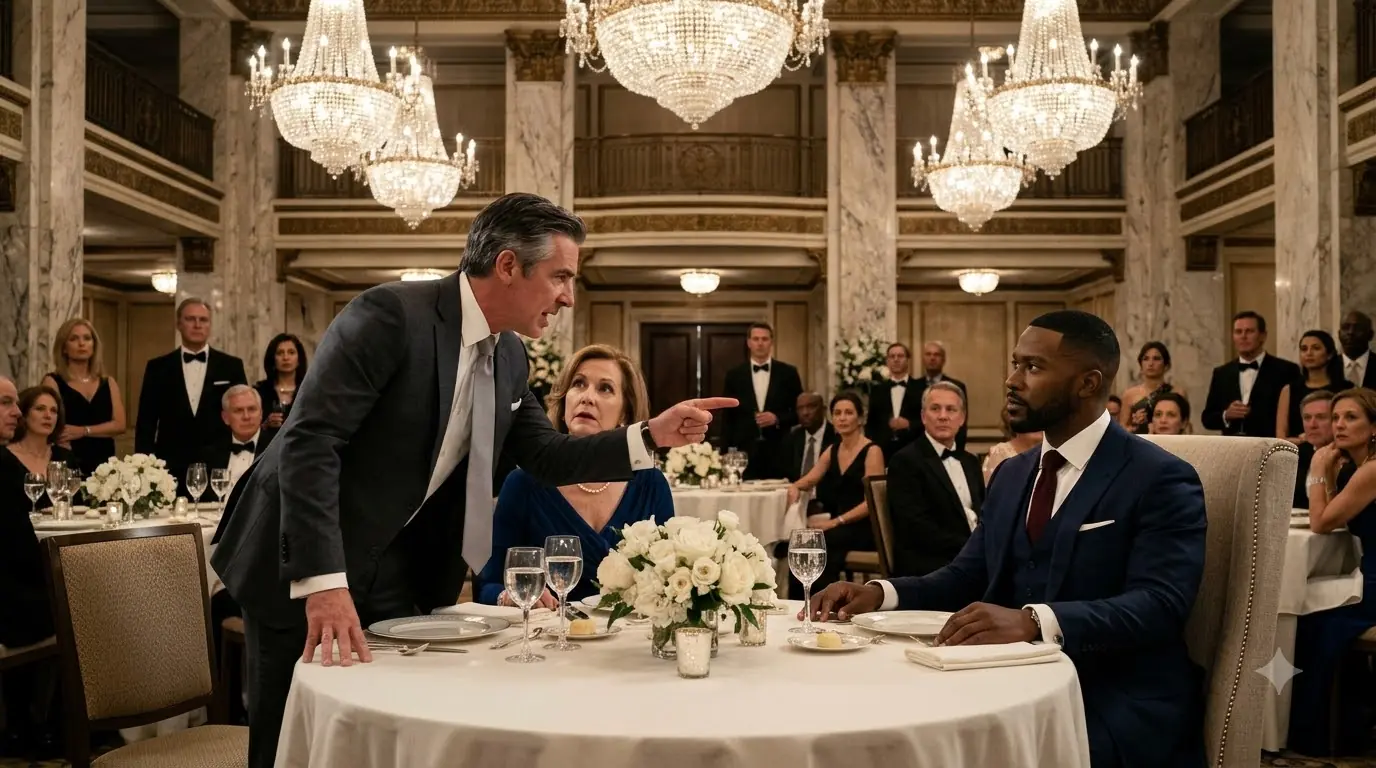
Charles had built an entire career on decisions made that quickly, although he preferred to call the habit executive instinct. By breakfast the following morning, that instinct would have cost him the position he had spent twenty years preparing to inherit.
The stranger was Isaiah Montgomery, forty-three years old, dressed in a navy suit without a visible label and carrying none of the theatrical confidence Charles expected from wealthy men. His tie was a dark silk knit, his shoes were polished but not new, and the vintage Patek Philippe at his wrist was old enough to have belonged to somebody's grandfather. He placed a slim leather folder beside the centerpiece, drew out the chair, and sat as though the printed card carrying his name had settled the question of where he belonged. It had, although Charles did not yet understand who had authorized that card.
Around them, the ballroom glowed with chandeliers and reflected champagne, a warm golden atmosphere carefully engineered to make expensive decisions feel like celebrations. White orchids rose from low silver arrangements, waiters moved between tables with the smooth timing of a well-rehearsed performance, and a quartet played near the windows overlooking Fifth Avenue. The event planners had called the evening Meridian Capital Group's annual leadership gala, but the guests knew the truth. They were waiting for the sale of Meridian to Apex Horizon Holdings to close in the morning, and everyone was wondering what the new owner intended to keep.
Charles believed he already knew. For the past six months he had reassured senior executives, board allies, clients, and anyone who would listen that Apex wanted the assets rather than the management responsibilities. He had told them the mysterious buyer would supply capital, stabilize the debt, and leave Meridian's established leadership structure alone. He had also allowed a rumor to spread that he would be elevated from acting chief executive to executive chairman immediately after the closing. The rumor had begun with Charles himself, but repetition had made it sound almost official.
At table one, Eleanor Kensington sat to Charles's right, immaculate in an ivory evening dress and a necklace that had belonged to his grandmother. Philip Mercer, Meridian's vice president of operations, occupied the seat beside her, nervously folding and unfolding a cocktail napkin under the table. Across from them sat Margaret Ellison, a board member whose thirty-two years in financial services had taught her to distrust any executive who described a pending agreement as a coronation. Two empty places had been marked for representatives of the acquiring group, although Charles had assumed those people would send apologies and remain somewhere far away.