"Hold it right there. Executive access? You?"
The words cracked across the marble lobby of Summit Dynamics at eight fifty on a Tuesday morning, loud enough to interrupt forty people on their way to work.
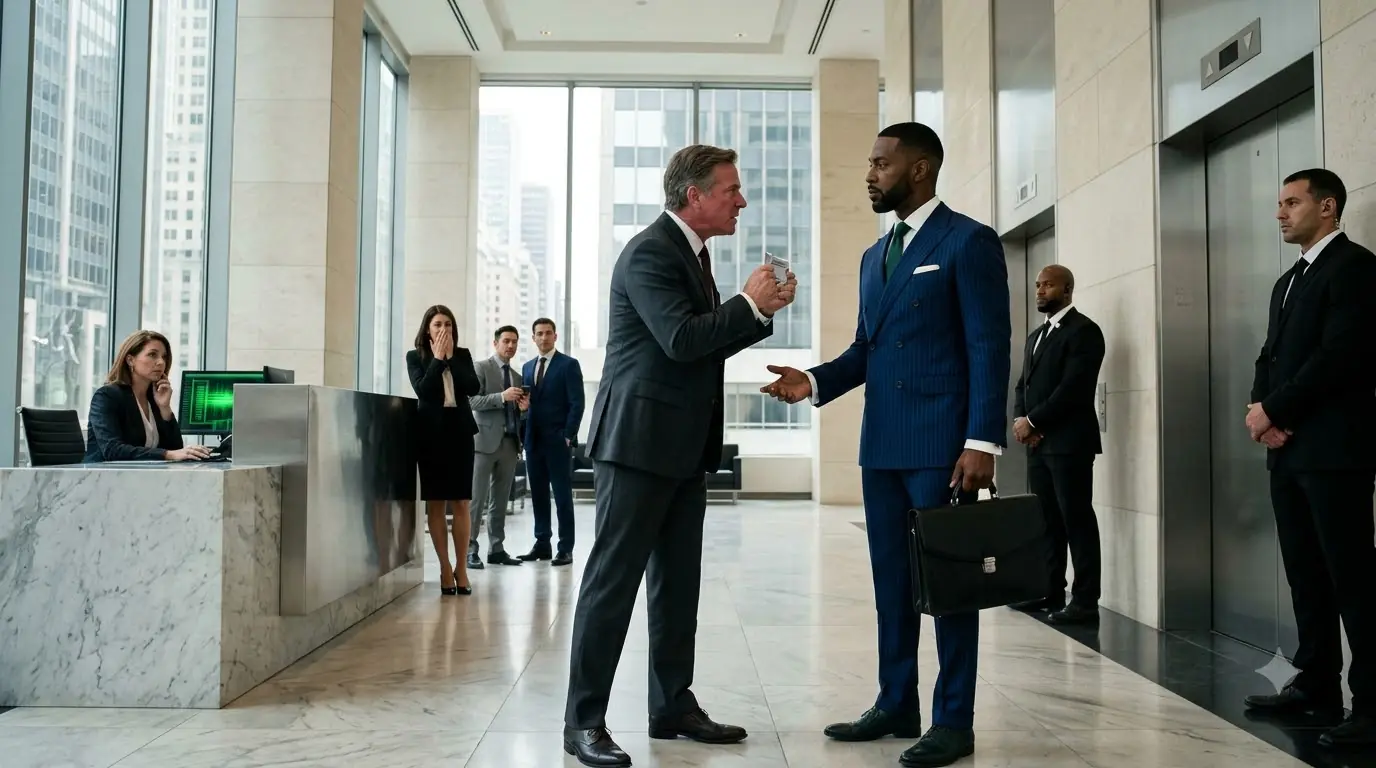
A man in a tailored dark suit stopped three steps short of the executive elevators and turned toward the voice.
Behind him, a receptionist's scanner was still glowing green, displaying the verification that ought to have settled the matter before it began. In front of him, Warren Ashdown, the company's chief executive officer, was approaching with a smile that had nothing friendly behind it.
"Yes," the visitor said. "I'm here for the morning board meeting."
Ashdown laughed as if the answer had been designed for his amusement. "You're joining our board meeting? Did the world turn upside down while I was in the elevator?" He looked at the receptionist, then at the visitor's carefully polished shoes. "Someone downstairs has made a very embarrassing mistake."
"Security verified my badge through the system," the visitor replied. His name was Daniel Carter, though Ashdown had not bothered to ask. "If there's a question about my access, you're welcome to verify it again."
"There must be something wrong with the system if somebody like you managed to fool it."
That was how the morning began, although by the time it was over, a small rectangle of broken plastic would matter more than any of the expensive furniture in the building. Warren would destroy an authorized badge, order the detention of a man he had never met, and boast that his cameras had recorded every word. He would do all of it in front of the one group of witnesses he believed had learned not to contradict him: his own employees. He could not imagine that the recording system he had bought to control other people was about to become the most honest witness in the building.
The Summit Dynamics headquarters occupied forty floors of a glass tower in the center of the city. Its lobby was designed to impress visitors before anyone spoke to them, with pale marble walls, a ceiling two stories high, and a suspended metal sculpture that resembled an unfinished compass. A brass plaque behind the reception desk listed the company's awards for engineering and supply-chain innovation. It said nothing about the people who had been made to feel unwelcome beneath those awards.
Summit had nearly four thousand employees, several major federal subcontracts, and a reputation for delivering complex industrial systems under impossible deadlines. Its engineers were excellent, its project managers resourceful, and many of its middle managers held together projects that would otherwise have collapsed. Over the previous decade, however, the company had developed another reputation, one employees discussed only at home or with friends they trusted. Certain people moved through the lobby without being questioned, while others were delayed, scrutinized, or humiliated for reasons nobody would put in an official email.
Therese Moreau had watched that second reputation grow from her desk for eleven years. She knew the maintenance schedules, the board members' preferences, the emergency numbers, and which elevator required a technician to press the door-close button twice. She knew how to calm an irritated visitor, guide a lost contractor, or find a meeting that had been entered under the wrong department code. Most important, she knew the difference between a security concern and a powerful man's prejudice dressed up as one.