At three minutes to noon on a hot Iowa morning, Calvin Briggs tore a signed agreement into four pieces and let them fall into the gravel. A dozen farmers saw him do it.
So did the auction manager, two machinery haulers, a grandfather holding his grandson on the tailgate of a pickup, and a young apprentice whose hands were black with grease.
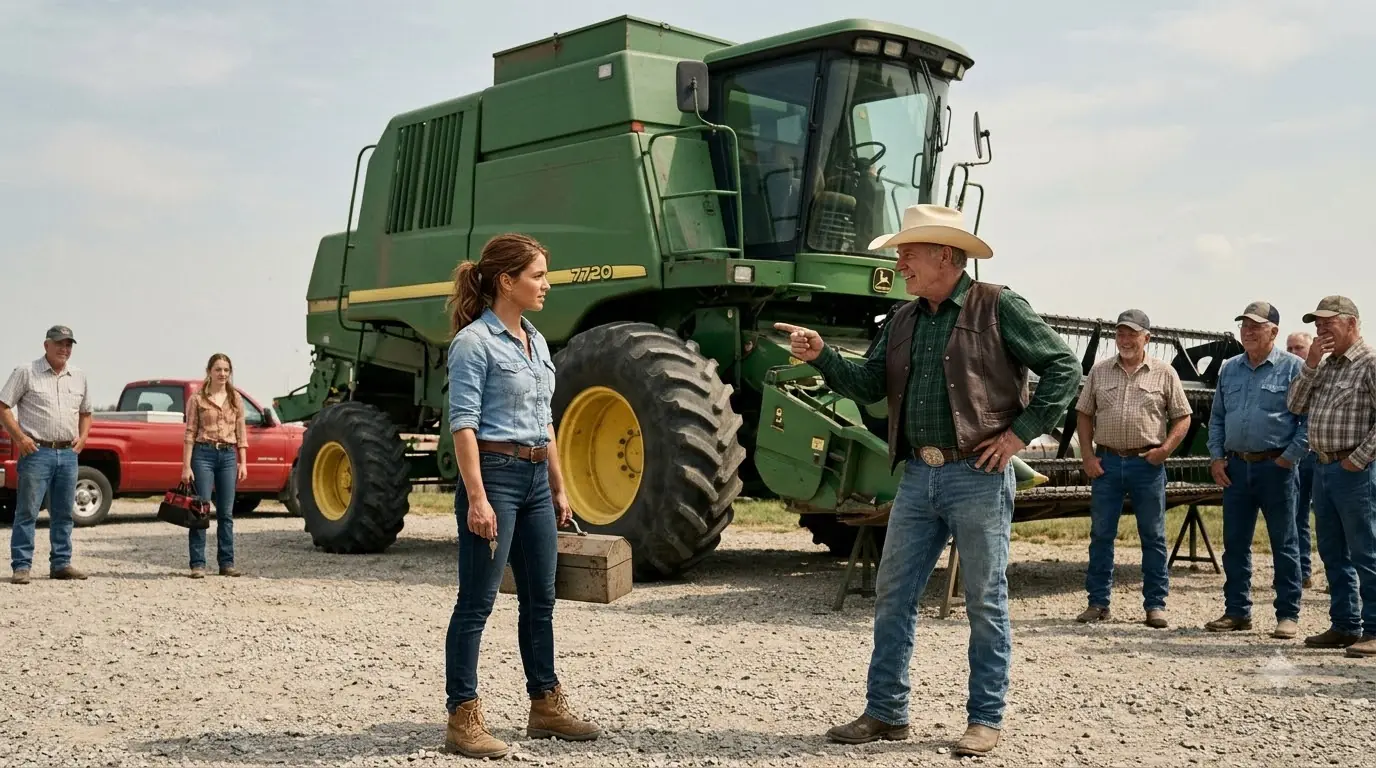
Above them, in the dusty cab of a John Deere 7720 combine that three repair shops had pronounced beyond saving, Martha Sullivan reached for the ignition key.
She had less than sixty seconds to prove the machine could run. Calvin had spent all morning laughing at the idea that she might succeed. Now he stood beneath the yellow front wheel, staring at the scraps of paper, as though destroying the evidence could undo a promise he had made in front of half the county.
Martha could not hear him over the starter when she turned the key. The old diesel rolled through one heavy revolution, then another. It coughed once, caught its breath, and started to wake. But by then she understood something Calvin still did not: whether the engine lived or died was no longer the only thing being tested in that auction yard. She was about to discover what a man's word was worth when keeping it would cost him something. And standing below the cab, June Parker was about to learn that she had a place in a trade which had spent years telling her otherwise.
Three weeks earlier, none of them had expected to meet under circumstances that would change their lives. Martha had been standing in the doorway of Sullivan Repair, looking at an envelope from the bank and calculating how many days of paying work remained before her small shop stopped being a business and became an expensive shed. The August heat had already settled over the flat fields outside town. Somewhere beyond the fence, a grain truck climbed the county road with a transmission whine that made her turn her head automatically. She could diagnose a failing bearing from its sound before some mechanics knew where to put a stethoscope. Yet no amount of talent could make an overdue invoice pay itself.
Sullivan Repair occupied a converted machine shed on three acres outside Eldora, Iowa, forty minutes from the auction lot where Calvin would make his mistake. The building had a concrete floor that dipped near the east door, three narrow windows, a rusty overhead hoist, and a sign Martha had painted herself after leaving a dealership job two years earlier. The letters were plain: SULLIVAN EQUIPMENT REPAIR. Underneath, smaller lettering promised field service, electrical diagnostics, and honest estimates. She had resisted adding anything about being a woman-owned business because she wanted the sign to announce the work she did, not start an argument about who ought to be doing it.