My wife threw my clothes out of a second-floor window and told me I no longer lived in my own house.
At the time, she thought she was making a point.
She believed I would stand in the front yard surrounded by shirts, shoes, and jeans, realize how serious she was, apologize for refusing her demands, and come back inside ready to negotiate from a weaker position.
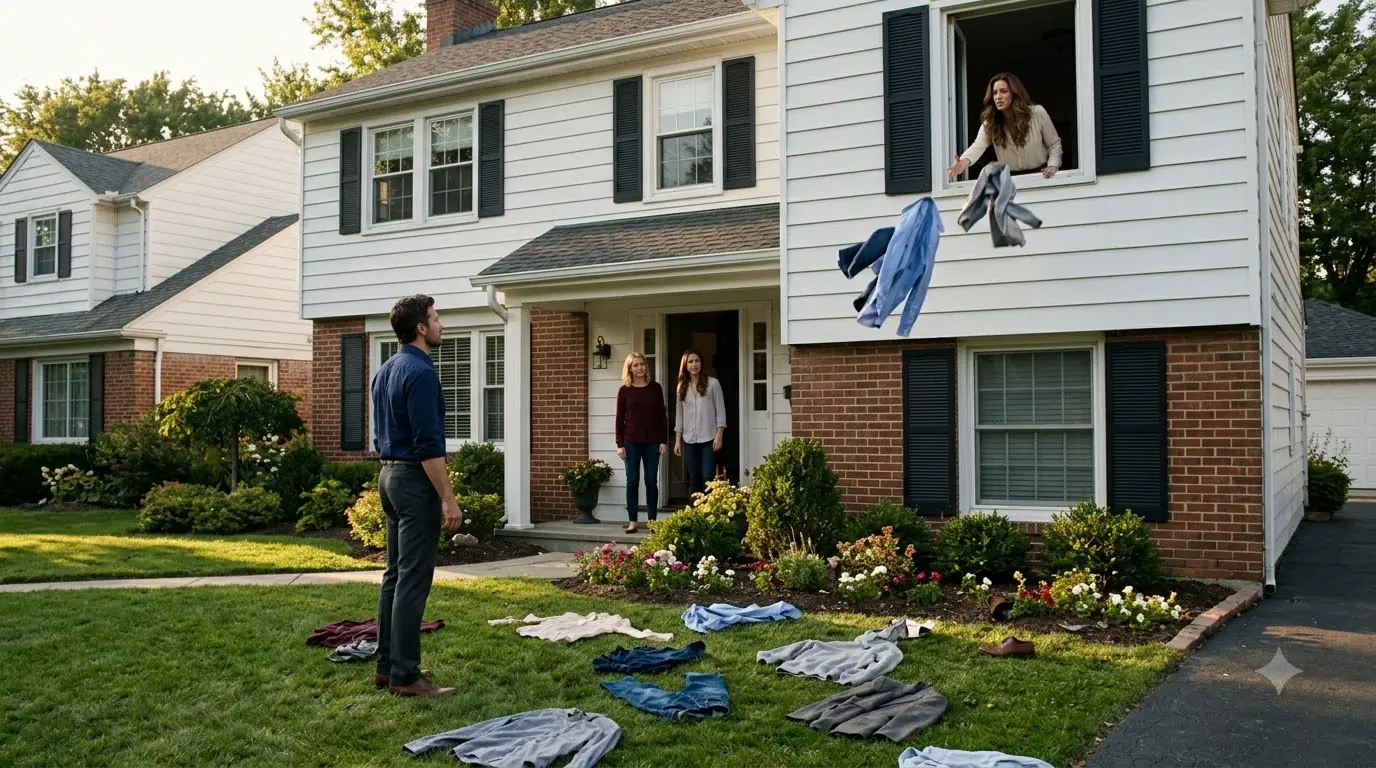
What she did not understand was that the moment she told me to get out, something in me stopped treating the evening like another marital argument.
It became information.
My name is Eric Dawson.
I was thirty-eight years old when my marriage ended, although the divorce papers would not be filed until several days later and the court would not finalize anything for months.
By then, Lauren and I had been married for six years.
The house had been mine for almost ten.
I bought it when I was twenty-nine, long before I met her.
It was a two-story brick house in a quiet neighborhood with an oak tree in the front yard, an oversized garage, and the kind of kitchen that had looked much better in the listing photographs than it did in person.
The cabinets were outdated.
The plumbing under the upstairs bathroom leaked.
Three rooms had carpet the color of weak coffee.
I loved it anyway.
I bought the place after spending most of my twenties renting apartments and telling myself I would eventually own something that nobody could raise the rent on.
For nearly a year, I spent every spare weekend repairing it.
I replaced the kitchen flooring myself.
I paid contractors to redo the roof and electrical panel.
My brother helped me rebuild the back deck.
I still remembered eating pizza on the living-room floor the first night after closing because I owned exactly one chair and had not yet bought a dining table.
When Lauren came into my life nearly four years later, the house already felt permanent.
We met through a mutual friend at a birthday dinner.
Lauren was funny, quick, social in a way I was not, and capable of walking into a room of strangers and leaving forty minutes later knowing half their names.
I liked that about her.
I was quieter.
She drew people in.
At first, the difference felt complementary.
She moved into the house about a year before we married.
I never made a ceremony out of ownership.
I did not remind her that my name was on the deed.
I did not refer to it as “my house” after she moved in.
We painted the guest room together.
She changed the curtains.
We replaced furniture.
She planted hydrangeas beneath the front windows.
The closet gradually became sixty percent hers, which I believed was somehow a universal law of marriage.
So I called it our home.
That was what it felt like.
For most of our marriage, money was similarly uncomplicated.
We both worked.
I was a project manager for an industrial engineering firm.