On the morning of May 7, Warren Puit stood on the porch of the farmhouse his father had built and watched the lowest eighty acres of his land disappear beneath brown water.
It was not the first time water had threatened the farm, and it would not have frightened him so badly if the weather had offered an honest explanation.
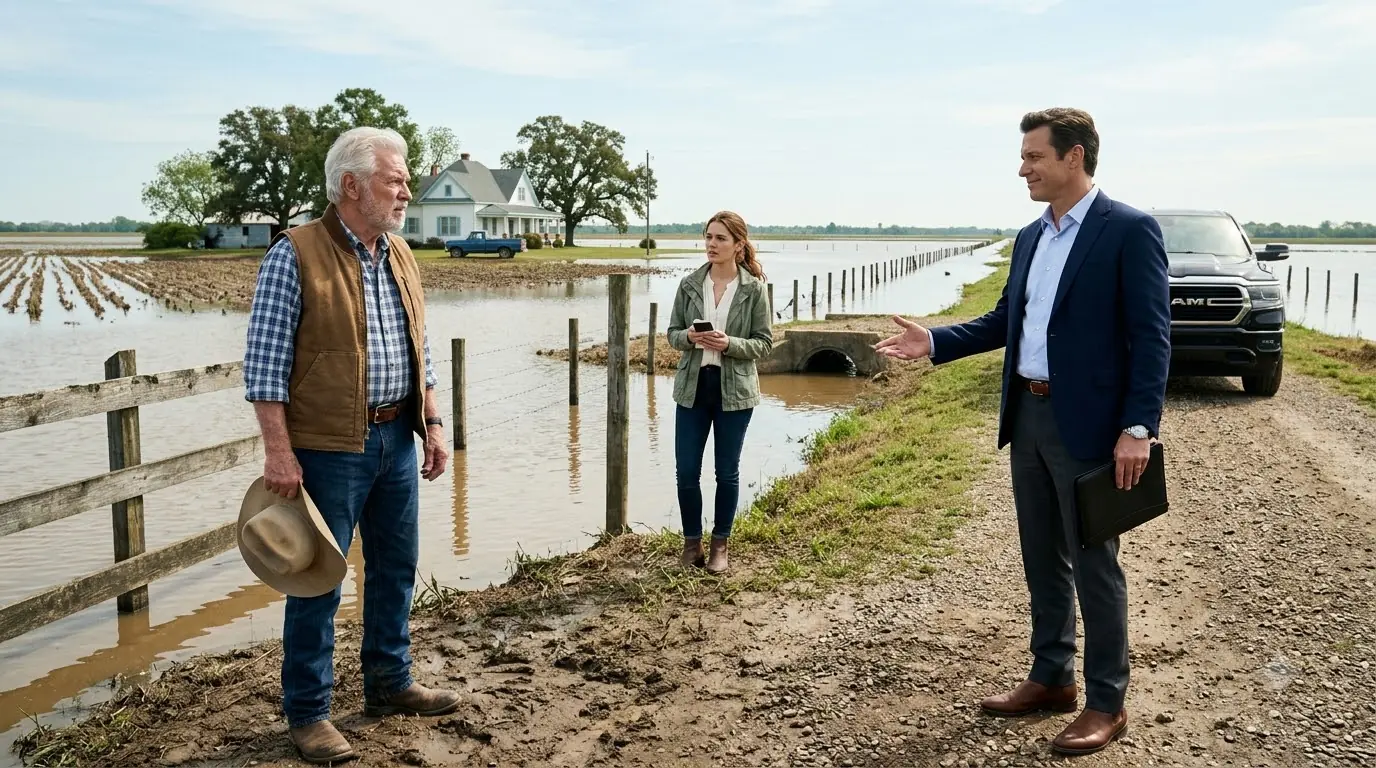
The night before, rain had tapped the roof for perhaps twenty minutes, barely enough to darken the dust on the driveway. Yet a current was moving across ground where young soybean plants had been pushing through the soil less than a month earlier, and the water was still rising.
Warren was seventy-four, with a back that had begun to announce every change in the weather and hands permanently marked by machinery, wire, and sixty years of work. He had spent most of his adult life believing that a farm was a bargain between a person and the land: you learned its demands, worked within its limits, and accepted the seasons when it gave you less than you needed. What he saw from the porch did not look like a season. It looked like somebody had opened a gate and forgotten that another man's livelihood stood on the other side.
He had planted the lower eighty acres in soybeans in the second week of April, taking advantage of an early spell of warm weather and a narrow stretch when the bottom ground was firm enough to carry equipment. Along the slightly higher margins, a few stands of winter wheat had been left as part of an earlier rotation, their green heads bending in the morning wind. Now the rows seemed to end in the middle of a muddy lake, and the wheat beyond them was barely visible. Fence posts rose from the surface like markers placed over something buried.
Warren went back inside for his boots and found an old yellow envelope lying beside the coffee maker. It contained a note written in his wife's handwriting, a reminder from years before to order new gaskets for the irrigation pump and call the veterinarian before calving season. He did not know why he had kept that particular note when he had thrown away hundreds like it. Perhaps because Martha had underlined the words call me if anything changes, a line written about a completely ordinary afternoon that had become unbearable after she was gone.
He folded the envelope carefully, slipped it back beneath the refrigerator magnet, and stepped outside. The porch thermometer read fifty-two degrees, but the breeze off the water was colder, and a haze had settled over the drainage ditch beyond the lowest field. He walked past the machine shed, across the gravel lane, and down the slope, calculating losses before he reached the fence. Seed, fuel, fertilizer, labor, rented planting equipment, and the opportunity to raise a crop that had already been sold in part through a forward contract: every step added another number.