The Officer Slammed Him Face-Down at a Gas Station — Then One Device Started Ringing
Chapter 2
Reader Theme:
Font Size:
24px
Did Cleary's camera upload? Brenda hesitated. I don't know. Did you log the original call? There wasn't one.
Cleary self-initiated. Listen carefully. Mark it as a response to the Ridge burglary bulletin. Use incident code B17. Chief, that bulletin expired last month.
Then reopen it. The state police are requesting our dispatch archive. Carter swung his feet to the floor and reached for his trousers. Do nothing until I get there. Don't answer questions.
Don't let anyone into the records room. He ended the call and opened a secure messaging application on his personal phone. The group was labeled night maintenance. It contained Carter Cleary, two patrol sergeants, and Oak Haven's town manager, Paul Dempsey. Delete tonight's messages.
State is coming. Use B17. He pressed send. A red exclamation point appeared beside the message. Delivery failed.
Carter tried again. The same symbol appeared at the gas station. A digital forensic specialist had already placed Cleary's phone in an isolation pouch. The state had not seen the group message yet, but Carter's attempt was recorded on the service provider's server. Panic had produced the very evidence he hoped to destroy.
Attorney General Robert Hayes was at his kitchen table when Dylan's call reached him. By 1:38 in the morning, he had awakened a duty judge, notified the independent inspector general, and assigned two career prosecutors who had never worked on Noah's political campaigns. He knew the danger of appearing to use state power for personal revenge. Every step would require written authority, independent custody, and a wall between the governor and prosecutorial decisions. At 156, the judge signed a temporary preservation order covering Oak Haven's dispatch logs, vehicle recordings, body camera systems, departmental messaging accounts, and property records.
The order prohibited deletion or alteration, but did not authorize a search. Hayes sent it electronically to Captain Ortiz and to Oak Haven's municipal council. At 207, a second judge approved a narrowly tailored emergency warrant after reviewing Arthur's video. the dispatch audio and the attempted alteration of the incident code. State investigators were authorized to secure the department's digital systems and make forensic images while a special prosecutor prepared the broader application. Chief Carter reached headquarters at 212.
The squat concrete building was lit from end to end. Brenda stood behind the dispatch desk, pale and rigid. Two night officers watched him enter without speaking. Server room, Carter snapped. Now, chief, the municipal attorney called.
There's a preservation order. Preservation means nobody outside this department touches our files. That isn't what he said. Carter pushed through the security door and hurried down the corridor. The server room was cold enough to sting his lungs.
He entered his administrative password and opened the retention console. Hundreds of folders appeared. Traffic stops, arrests, dispatch recordings, evidence photographs. One directory sat behind a second layer of encryption, NW archive. Operation Nightwatch had begun as a private promise to wealthy residents after three homes near Oak Ridge were burglarized.
Carter told midnight officers to stop unfamiliar vehicles and make outsiders uncomfortable. Then the town discovered how much money could be taken through civil forfeiture from drivers who lacked the resources to fight. Cash became new cruisers. Cruisers became political praise. Praise became quotas no one wrote down in official policy.
But unofficial records existed. Carter kept them because he trusted numbers more than people. The archive contained spreadsheets tracking stops by vehicle value, neighborhood, and amount seized. It contained message threads in which officers called black motorists travelers and Hispanic motorists packages. It contained complaint videos that had never reached the county review board.
Carter selected the directory and moved the cursor toward delete. Step away from the terminal, chief. Captain Lena Ortiz stood in the doorway with two investigators behind her. Her warrant was displayed on a tablet, its digital seal glowing beneath the text. Carter kept one hand beside the mouse.
This is a municipal facility. You have no authority to seize our entire system. The warrant identifies specific databases and date ranges. You were served with the preservation order 6 minutes ago. Any deletion now would be a separate felony.
You don't understand what you're looking at. Then step away and let the forensic team determine that. Carter glanced at the screen. If he clicked once, the directory would move to a recovery queue. A second command could overwrite it.
He might destroy enough before they stopped him. Ortiz seemed to read the calculation in his face. Chief Carter, put both hands on top of your head and take three steps backward. He did not move. Do it now.
The authority in her voice left no space for negotiation. Carter raised his hands and stepped away. An investigator took his place at the console, photographed the screen, and disconnected the keyboard before beginning the forensic image. When Carter saw the folder name reflected in the investigator's protective glasses, he knew the truth was no longer under his control. Noah arrived at the executive mansion at 2:34 in the morning with both eyes swollen and his wrists bandaged.
The rain had stopped, but water still dripped from the old trees lining the drive. Sarah Jenkins waited beneath the portico with a physician and two members of the legal staff. Sarah crossed the stone steps before the vehicle fully stopped. She was 52. Silver threaded through her dark hair and so disciplined that most reporters mistook restraint for coldness.
At the sight of Noah's face, restraint abandoned her. My god, I'm all right. You are very clearly not all right. The physician led him inside and examined him in a ground floor sitting room that had been converted into a medical workspace. The chemical irritation would pass.
The abrasion on his cheek needed cleaning. His wrists were badly bruised, but showed no fracture or lasting nerve damage. Noah listened, answered questions, and allowed photographs for the medical record. On a nearby table, Cleary's handcuffs rested inside a clear evidence bag. Sarah noticed him looking at them.
National media already has the scanner traffic. We can confirm the detention and say the investigation is independent. Nothing more until morning. Agreed. She blinked, surprised.
I expected you to demand a live address at 3:00. At 3:00, Anger would be speaking. I want evidence to speak. Attorney General Hayes entered carrying a thick folder. For the record, Governor, you are the victim and a material witness.
You are not directing charging decisions. I have appointed Deputy Attorney General Elena Ruiz as special prosecutor. She will report to the courts and the inspector general, not to your office. Good. The department is secured under warrant.
Carter attempted to access a concealed archive after receiving the preservation order. We don't know what is inside yet. I know the name of the program, Noah said. Nightwatch. Hayes stopped.
How? Cleary told me they were looking for people like me. Carter opposed statewide camera retention 6 years ago, and his forfeiture numbers have never made sense. Pull the files from the old attorney general inquiry. Sarah folded her arms.
If this is bigger than one officer, tomorrow's budget session becomes a constitutional crisis. Half the rural caucus will say you are using the state police to occupy a town that voted against you. Then we show the warrant. We show the independent prosecutor. We show every link in the chain of custody and the video.
Noah looked toward the evidence bag. Not until Arthur consents to release his copy and Elena determines it will not damage the case. Sarah studied him. You could win the news cycle in 10 minutes. I am not interested in winning 10 minutes.
I want the truth to survive 10 years. By 4 in the morning, the mansion's west conference room had become a quiet command center. No one raised a voice. Phones vibrated against the long table. Printers released warm pages, and rainwater ticked from the copper roof outside.
On the wall, a map of Oak Haven County glowed beside a timeline of the night's events. Deputy Attorney General Elena Ruiz arrived wearing a navy suit beneath an unbuttoned raincoat. She had prosecuted public corruption cases for 19 years and possessed a talent for making powerful people feel that lying was a waste of time. She greeted Noah as formally as she would any other witness. Governor, before we speak, I need you to understand the boundaries.
I control the criminal investigation. You control your office and your policy response. If those lines cross, I will document it and tell the court. That is why Robert chose you. He chose me because I once subpoenaed his campaign treasurer.
Hayes gave a tired smile. She enjoyed it. Elena placed a recorder on the table. For the next 73 milesnutes, she took Noah through the encounter without allowing political interpretation. Where exactly had his hands been?
Which instruction had heard? Had he moved toward the Bronco? When did Cleary search the vehicle? What words had the officer used? Noah answered slowly and admitted when the spray made his memory uncertain.
He did not call Cleary racist. He repeated Cleary's words. He did not claim the officer intended to kill him. He described the pressure of the knee and the difficulty breathing. He did not demand a charge.
He identified the evidence. When the interview ended, Elena turned off the recorder. Your account matches the station video and Arthur Penhallagan's recording in every material respect. Cleary's body camera log shows he manually disabled recording 31 seconds before leaving his cruiser. It reactivated automatically when the priority alert reached his radio and the dash camera.
It buffered continuously. He did not realize the system retained 2 minutes before activation. We have him blocking your vehicle, ordering you away from the pump and spraying you while both hands are visible. audio captured the rest. Sarah let out a breath she had been holding for hours. Elena continued, "Arthur has consented to public release after we make the forensic copy.
I recommend releasing one unedited angle with a written timeline. If you release selected clips, the defense will claim manipulation. Release the full encounter," Noah said. Blur Arthur's private information and the license plates of uninvolved customers. There were no other customers.
The emptiness of the station returned to him. Black woods, hard rain, one witness behind glass. If Arthur had looked away, Cleary might have owned the only narrative. Is Arthur safe? A trooper is with him.
He is more worried about missing the morning delivery than about himself. At 5:22, the forensic team opened the first night watch spreadsheet. Elena received the call in the conference room and listened without interrupting. Her expression changed gradually. not toward surprise, but toward the grim recognition of a theory becoming fact. How many?
She asked. Send me the verified totals only. Do not speculate in writing. And preserve the formulas as well as the values, she ended the call. The archive covers 26 months, she said.
At least 612 vehicle stops appear to have been tracked outside the official reporting system. Drivers were categorized by race, estimated income, and likelihood of contesting a seizure. There is a column labeled resistance potential. Another is labeled yield. Hayes looked down at the table.
Property taken? Cash, cars, tools, jewelry. More than $2 million in recorded value. Fewer than one in five drivers were charged with a crime. Complaints?
Noah asked. 43 in the hidden archive. The public database lists four. Sarah walked to the window. Dawn was beginning to gray the horizon beyond the mansion lawn.
By breakfast, she said, "Everyone will ask why the governor is receiving attention that 600 ordinary people never received. " "And they will be right," Noah replied. The sentence silenced the room. He thought of the credential in Cleary's pocket the moment fear replaced contempt on the officer's face. "The system had awakened because a governor was harmed. That awakening would mean nothing if it returned to sleep after protecting him.
Find every person in that archive, he said. Not for my speech, for counsel and restitution. Create an independent contact team. No campaign staff, no press, no demand that anyone tell their story publicly. We go to them because the state failed them.
Elena nodded. That belongs with the inspector general and victim services. I will arrange it. At 6:15, Police Benevolent Association President Michael Donnelly appeared on a local morning program from a studio two blocks from the Capitol. Sarah placed the broadcast on the conference room screen.
Donnelly was a polished man with a square jaw and the solemn manner of someone accustomed to being introduced as the voice of law enforcement. He had spoken with Chief Carter before the warrant team confiscated Carter's phone. He had not seen any video. What occurred last night appears to be an unfortunate case of mistaken identity, he told the host. Officer Cleary was responding to active burglary concerns and severe weather.
The driver wore concealing clothing, operated a vehicle with protected registration, and refused to provide ordinary identification. The officer used a standard defensive spray after perceiving a sudden movement. The host asked whether race played a role. There is no evidence of that. We should resist judging an officer from the comfort of a television studio when he had seconds to make a decision.
Nobody is above a lawful investigation, not even a governor. Noah watched without visible anger. He has the incident code, Elena said. B17, Carter gave him the cover story. Can you prove the call?
Hayes asked. Not yet. Sarah muted the screen. We release at 7. full video, dispatch log, warrant, medical summary, and a statement confirming Elena's independence. At 9, Noah addresses the joint session.
No charges announced from the podium, Elena said. No names beyond facts already public. Agreed, Noah replied. The video went online at exactly 7 in the morning. For the first 40 seconds, nothing dramatic happened.
A man filled an old truck beneath a leaking canopy. Rain crossed the camera in silver lines. Then Cleary's cruiser entered too fast, blocking the Bronco. The country watched Noah step back with his hands raised. They heard him ask why he was being detained.
They heard Cleary say that people matching his description had been prowling around wealthy homes. They saw Noah begin to turn. They saw Cleary spray him in the face. There was no sudden reach, no aggressive lunge, no ambiguous angle. Arthur's closer recording showed Noah falling, Cleary's knee against his neck and the handcuffs closing while the governor coughed into a puddle.
The final minutes captured Cleary finding the credential, hiding it in his pocket and rehearsing a false version of events. By 7:06, every major network had interrupted its programming. By 7:12, Donnelly's studio interview was being replayed beside the video that disproved him. By 7:20, Oak Haven's municipal website had crashed under the traffic. But the image that spread fastest was not the pepper spray or the cuffs.
It was Noah sitting in the patrol car after Cleary discovered his identity. His eyes were swollen, nearly shut, yet his voice remained level as he said, ""Then your report will be a confession. "" Commentators called it courage. Noah knew it had been discipline born of terror. There was no shame in that distinction. At 8:05, Elena received confirmation that Cleary's false burglary narrative had been constructed after the detention.
The B17 bulletin referred to two teenagers seen near an abandoned property 32 days earlier. The suspects were described as white, both under 20, driving a red compact car. Nothing in the bulletin resembled Noah or the Bronco. At 8:18, forensic analysts recovered the night maintenance group messages. Cleary had received instructions during previous stops to build cause, check for travel cash, and make the corridor uncomfortable.
Carter's failed deletion order appeared at the end of the thread. At 8:32, a judge approved arrest warrants for Carter and Cleary on state charges that included official misconduct, unlawful imprisonment, assault under color of authority, falsification of records, evidence tampering, and conspiracy. Federal prosecutors announced that they were reviewing potential civil rights violations, but made no promise of immediate indictments. Noah learned of the warrants while a makeup artist gently covered the abrasion on his cheek for the legislative cameras. He stopped her.
Leave it visible. The lights will make it look worse, she warned. It looked worse in the dark. He changed into a charcoal suit, but kept the white medical wraps around his wrists. Sarah had suggested carrying Cleary's handcuffs to the podium.
Noah refused. They were criminal evidence, not a prop. Instead, the legislature's sergeant-at-arms placed a certified evidence photograph on an easel beside the rostrum. The House chamber was full before 9. Legislators occupied every desk.
Judges, county officials, civil rights lawyers, police chiefs, clergy, and reporters crowded the galleries. Outside, thousands gathered behind metal barriers, some holding signs with Noah's final words from the patrol car. Others held photographs of relatives whose complaints against Oak Haven had gone nowhere. The speaker struck the gavl. Members of the general assembly, the governor of the state.
Noah entered through the central doors with Attorney General Hayes on one side and Inspector General Margaret Sloan on the other. Dylan followed several paces behind. The room rose, but Noah lifted a hand before the applause could build. "Please sit," he said. "They did. " He reached the rostrum and placed both bandaged hands on its edges.
The chamber became so quiet that the small movement of camera lenses was audible. Last night, at 12:48 in the morning, an Oak Haven police officer sprayed me in the face, forced me onto wet concrete, and locked my hands behind my back. At the time, I was committing no crime. I had broken no traffic law. I was buying gasoline.
He paused. Many people have called what happened to me shocking. To hundreds of families in this state, it was familiar. That difference should shame every person entrusted with public power, including me. Several legislators lowered their eyes.
The machinery of justice moved for me with extraordinary speed. My protection detail found me. State police preserved the scene. Judges answered their phones. Prosecutors obtained warrants.
Cameras ensured that my account was believed. By sunrise, the public knew my name and saw my injuries. Noah looked toward the gallery where Arthur sat beside his daughter. I am grateful for every professional who acted lawfully. I am especially grateful to Arthur Penhallagan, a citizen who understood that witnessing injustice creates a responsibility.
But gratitude is not enough. We must ask why that machinery did not move for the people stopped on Route 9 before me. The screens beside the rostrum displayed no image of Noah. Instead, six names appeared. Marcus Green, Leah Watkins, Rafael Santos, Denise Carter, Jamal Price, Tanya Brooks.
These names come from complaints found overnight in a concealed police archive. Their allegations were marked resolved without interviews, hearings, or notice. They represent only the beginning. We will not show their photographs or tell their stories without consent. Their pain does not belong to the state to display, but their names belong in this chamber because their government failed to hear them.
Noah explained Operation Nightwatch in careful terms, limiting himself to facts Elena had cleared for release. He described the unauthorized tracking system, the missing complaints, the racial categories, and the property seizures unconnected to criminal charges. He did not declare anyone guilty. He repeated that Carter and Cleary were entitled to counsel and a fair trial. Then his tone changed.
News in the same category
Mafia Boss Cheated On His Pregnant Wife — Then She Disappeared With The Daughter He Never Met
She Saw Her Husband Holding Another Woman’s Hand With Their Daughter… Then Her Six-Year-Old Revealed the Secret Plan
Unaware His Wife Is A Billionaire Heiress Husband Divorces His Pregnant Wife At Thanksgiving Dinner.
The Officer Forced the Elderly Woman to the Ground — Then She Asked for One Phone Call
He Handcuffed Her for Chalk — Then Her Father Stormed Into the Police Station
The Officer Dragged His Daughter Toward the Cruiser — Then Her Father Came Storming Out
CHAPTER 2: THE FATHER WHO REFUSED TO LET IT GO
CHAPTER 3: WHEN JUSTICE BECAME REAL CHANGE
The HOA President Called Him a Thief on His Own Land — Then the Gate Started Coming Down
CHAPTER 2: THE CONFESSION BEHIND THE HIDDEN DOOR
CHAPTER 3: WHEN THE CORRUPT DETECTIVE LOST EVERYTHING
He Came Home Early and Found His Wife and Son at the Pool With Another Man… Then His Son Asked the Question That Changed Everything
Duke’s New Life After Two Years at the Shelter
He Came Home Early From His Business Trip… Then He Saw His Wife Kissing Her Coworker
The Detective Tore His Law Office Apart — He Had No Idea Someone Was Recording
CHAPTER 2: THE CONFESSION BEHIND THE HIDDEN DOOR
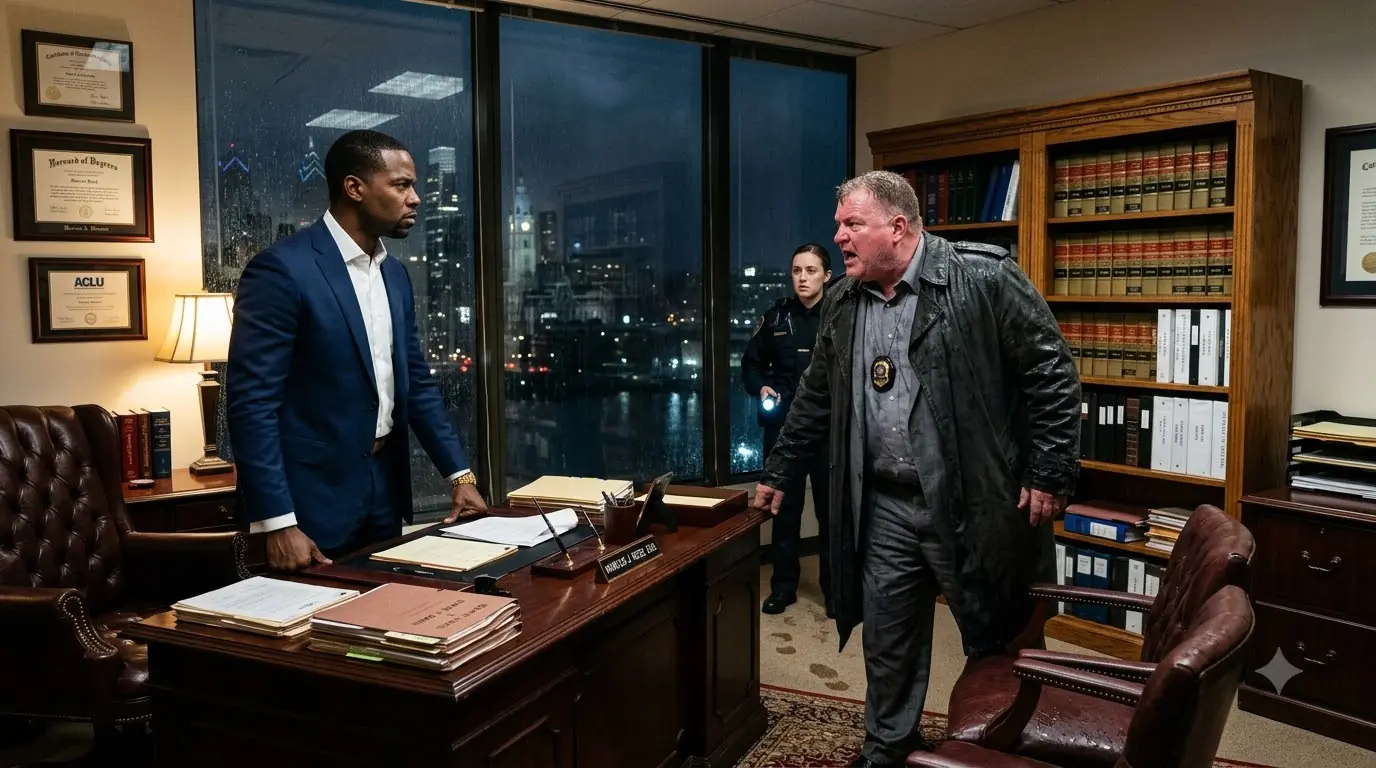
CHAPTER 3: WHEN THE CORRUPT DETECTIVE LOST EVERYTHING
Buddy Is Still Waiting for Someone to Choose Him
News Post
The Mafia Boss Called His Pregnant Wife a Cheap Toy—Unaware She Was the Sicilian Don’s Daughter
Mafia Boss Cheated On His Pregnant Wife — Then She Disappeared With The Daughter He Never Met
She Saw Her Husband Holding Another Woman’s Hand With Their Daughter… Then Her Six-Year-Old Revealed the Secret Plan
Unaware His Wife Is A Billionaire Heiress Husband Divorces His Pregnant Wife At Thanksgiving Dinner.
The Officer Forced the Elderly Woman to the Ground — Then She Asked for One Phone Call
He Handcuffed Her for Chalk — Then Her Father Stormed Into the Police Station
The Officer Dragged His Daughter Toward the Cruiser — Then Her Father Came Storming Out
CHAPTER 2: THE FATHER WHO REFUSED TO LET IT GO
CHAPTER 3: WHEN JUSTICE BECAME REAL CHANGE
The HOA President Called Him a Thief on His Own Land — Then the Gate Started Coming Down
CHAPTER 2: THE CONFESSION BEHIND THE HIDDEN DOOR
CHAPTER 3: WHEN THE CORRUPT DETECTIVE LOST EVERYTHING
He Came Home Early and Found His Wife and Son at the Pool With Another Man… Then His Son Asked the Question That Changed Everything
Duke’s New Life After Two Years at the Shelter
He Came Home Early From His Business Trip… Then He Saw His Wife Kissing Her Coworker
The Detective Tore His Law Office Apart — He Had No Idea Someone Was Recording
CHAPTER 2: THE CONFESSION BEHIND THE HIDDEN DOOR
CHAPTER 3: WHEN THE CORRUPT DETECTIVE LOST EVERYTHING
Buddy Is Still Waiting for Someone to Choose Him
The Officer Slammed Him Face-Down at a Gas Station — Then One Device Started Ringing
3 Part