“I’m not going to apologize for what I did.”
Sarah said it with a smirk.
That sentence, more than the confession itself, was the moment our five-year relationship ended.
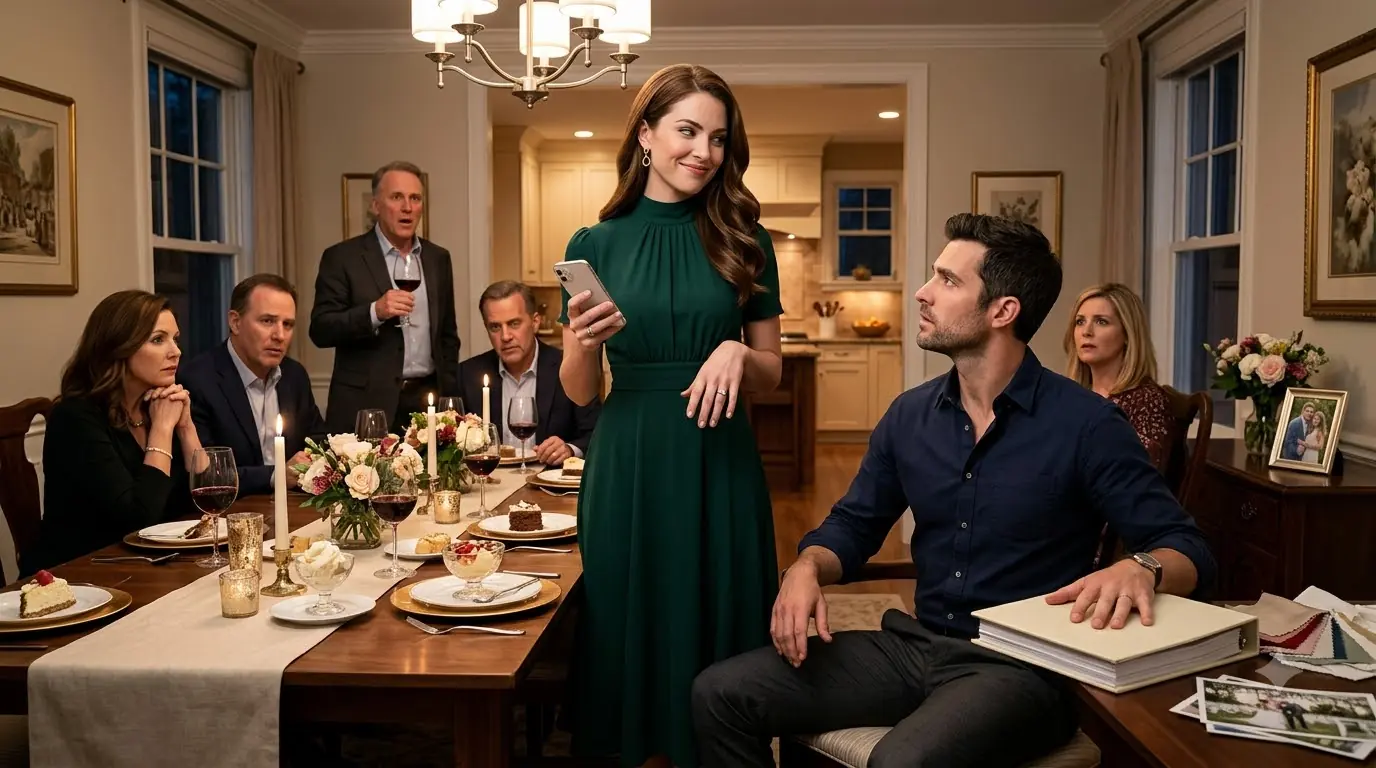
Not when she told me she had been sleeping with her boss. Not when she compared me to him and explained that he was more ambitious, more exciting, more willing to take risks. Not even when she admitted that the affair had been going on long enough for her to know exactly what she was doing.
It ended when she looked directly at me and made it clear that hurting me did not trouble her nearly as much as the possibility of having to explain herself.
Six months before our wedding, with deposits paid and invitations being designed and our families already discussing hotel reservations, I realized the woman I intended to marry had stopped seeing me as someone she could lose.
She thought I would forgive her.
She was certain of it.
And for a while, I think that certainty was the entire reason she felt safe betraying me.
My name is Alex.
I was twenty-seven when all of this happened. Sarah was twenty-six.
We had met during our final year of college.
There was nothing dramatic about it. No cinematic collision in a hallway, no instant declaration that we were meant for each other. We met because we were both invited to the same study group by a mutual friend who rarely attended his own study group.
Sarah arrived forty minutes late carrying two coffees and immediately complained about the professor.
I liked her before the evening was over.
She was quick, funny, confident, and socially effortless in ways I had never been. Sarah could enter a room full of strangers and leave knowing half their names. She was the person friends called when they wanted plans to happen instead of remaining group-chat suggestions.
I was quieter.
I liked plans.
I liked knowing where money was going.
I liked arriving at airports early.
I had grown up in a family where financial stability had never been guaranteed, so predictability did not feel boring to me. It felt safe.
Sarah used to say she loved that about me.
“You make life feel manageable,” she told me once during our second year together.
At the time, I thought it was one of the nicest things anyone had ever said to me.
We survived graduation.
First jobs.
One move.
Two terrible apartments.
Student debt.
The death of Sarah’s grandmother.
My father’s surgery.
A six-month period when Sarah hated her first job so much that she used to sit in her car for ten minutes after work before she could bring herself to come upstairs.
I was there through all of it.
Not because I considered myself extraordinary.
That was simply what partnership meant to me.
When Sarah wanted to quit that job without having another one lined up, I told her we could manage for a while on my salary.
When she decided she wanted to change industries, I helped rewrite her resume.
When she was rejected after three interviews for a company she desperately wanted, I drove across town and bought the ridiculous chocolate cake she liked even though we had agreed to cut unnecessary spending that month.
We ate it from the box on our living-room floor.
She cried.
I told her that one company saying no did not change who she was.
A year later, when I proposed, she told everyone that was why she had said yes.
“He believed in me before I knew how to believe in myself.”
For a long time, I thought that sentence meant something permanent.
Our engagement lasted a year.
The wedding was scheduled for early autumn.
By spring, nearly everything important had been booked.
The venue was a restored estate outside the city with old oak trees and a stone courtyard Sarah had fallen in love with during the first tour.
The caterer required a large deposit.
The photographer was booked thirteen months in advance.
There was a DJ, florist, rental company, hotel block, rehearsal-dinner reservation, and a spreadsheet I maintained because wedding planning apparently required the logistical infrastructure of a small military campaign.
Sarah teased me about the spreadsheet.
Then used it constantly.
We had a corkboard in our apartment dining area covered with samples, business cards, receipts, invitation designs, and photographs.
There was a picture of the venue in the center.
Underneath it, Sarah had pinned a card with the words:
OUR NEXT CHAPTER.
For months, that corkboard made me happy every time I passed it.
Later, it became the first thing I took down.
The red flags started slowly enough that I explained them away.
Sarah became more irritated when I worked late.
That seemed understandable at first.
I had recently been promoted, and the position required extra hours while I learned it. The pay increase was significant enough that we had started discussing buying a house within a year after the wedding.
I thought I was investing in our future.
Sarah began describing it as me choosing work over life.
One evening, I came home at eight thirty after a client emergency.
She was sitting on the couch scrolling through her phone.
“You said seven.”
“I know. I texted you.”
“You always text after you already decide.”
“It wasn’t optional.”
“It’s always something.”
I apologized.
That became another pattern.
I apologized for working.
For being tired.
For forgetting to reserve a restaurant three weeks ahead.
For suggesting we reduce the floral budget.
For asking whether we really needed upgraded chairs at the reception when the standard chairs were perfectly fine.
None of the arguments individually seemed important.
Together, they created a strange imbalance I did not fully recognize until later.
Sarah had become increasingly dissatisfied, but the source of her dissatisfaction kept moving.
If I worked more, I was absent.
If I suggested spending less, I lacked vision.
If I planned something carefully, I was controlling.
If I asked what she wanted instead, I was making her do all the emotional labor.
Whatever I changed became evidence that something else was wrong.