“My fiancée looked me straight in the eyes and said, ‘I want to pause the engagement. I need time to think if you’re really the right choice.’”
I didn’t argue. I didn’t beg.
I didn’t ask what I could change, promise to become more spontaneous, or remind her how much money we had already spent on the wedding.
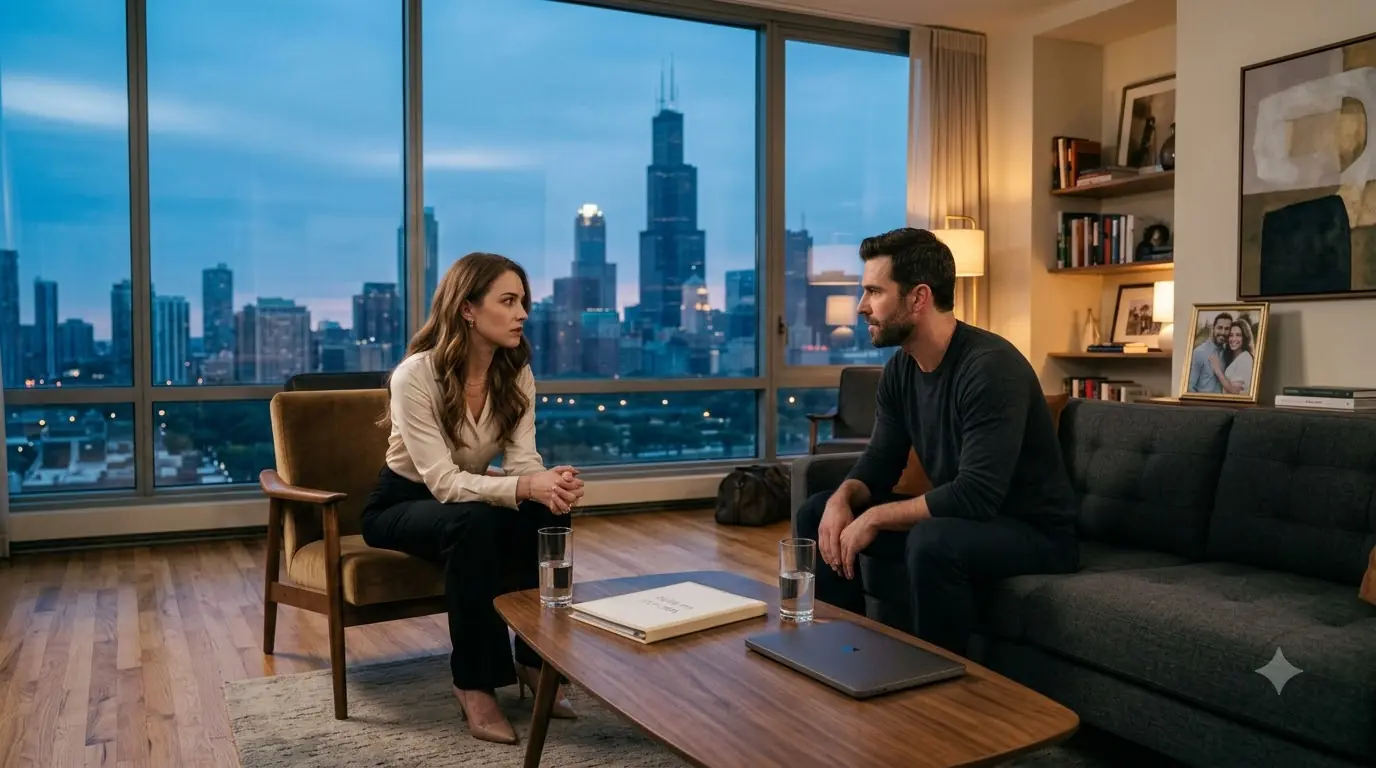
I simply said, “Take all the time you want.”
Emma’s shoulders relaxed almost immediately.
That tiny movement told me more than the speech she had spent the drive home rehearsing.
She believed I had accepted her proposal.
She thought she had successfully placed our future on a shelf where it would remain waiting for her while she explored whatever she thought she had found with another man.
What Emma didn’t know was that, eight hours earlier, I had already discovered three months of messages between her and Alex Kendall.
And by the time she asked me to pause our engagement, I had stopped thinking about how to save it.
My name is Michael Turner.
I was thirty-four years old, and Emma and I had been together for almost four years.
We met through work, although we never actually worked for the same company.
I was a marketing manager for a software firm. Emma handled brand strategy for a consumer-health company. Our industries overlapped just enough that we kept running into each other at conferences, award dinners, networking nights, and agency presentations.
The first time I noticed her, she was arguing with a panel moderator about a terrible advertising campaign.
She was right.
The moderator knew she was right.
Everybody in the room knew she was right.
Emma was the only person willing to say it.
Afterward, I found her near the bar.
“You realize half the people in there are probably never going to hire you now.”
She smiled.
“The other half might.”
“That’s your strategy?”
“It worked on you.”
I laughed.
That was Emma.
Confident.
Sharp.
Funny without trying too hard.
She could enter a room full of strangers and leave with six new contacts, two lunch invitations, and the name of someone’s dog.
I was different.
Quieter.
More deliberate.
I liked to prepare before meetings.
Emma liked to discover what she thought while saying it aloud.
For a long time, those differences fit together beautifully.
We started dating casually.
Three months later, casual was obviously a lie.
After a year, we moved into a two-bedroom townhouse just outside the city.
The second bedroom became a shared office, then gradually became Emma’s office because she needed more space for presentation boards and sample packages.
I didn’t mind.
Two years after we met, I started thinking seriously about marriage.
Not because people were asking.
Not because we had reached some social deadline.
Because life with Emma had become something I looked forward to rather than something I had to maintain.
We were good during ordinary days.
That mattered to me more than vacations.
We could grocery shop without arguing.
We could sit on opposite ends of the couch working for two hours and still feel together.
She tolerated the fact that I organized the refrigerator.
I tolerated the fact that she opened three drinks and finished none of them.
When my company went through layoffs, Emma sat with me on the kitchen floor at one in the morning while I convinced myself I was about to lose my job.
I didn’t.
When her father needed surgery, I drove six hours with her because she was too nervous to sit still.
I knew what coffee she ordered when she was stressed.
She knew I became quiet when something was wrong long before I admitted it.
Or I thought she did.
Last spring, I proposed.
Not at a restaurant.
Not on vacation.
At home.
Emma came back from a miserable workday, dropped her bag beside the door, and said:
“If one more person says the word synergy to me tonight, I’m quitting.”
I was standing in the kitchen holding the ring.
She stared at it.
Then at me.
Then laughed and cried at the same time.
“You’re doing this now?”
“I was going to wait until dinner.”
“What happened?”
“You said synergy.”
She threw both arms around me.
“Yes.”
I hadn’t even asked the question properly.
I eventually did.
She said yes again.
For the next several months, our engagement felt exactly the way I had hoped it would.
We chose a venue for the following October.
A renovated brick hall outside the city with huge windows and a courtyard.
Emma wanted autumn.
I wanted fewer than two hundred guests.
We compromised at one hundred forty-eight.
Her mother wanted roses.
Emma hated roses.
My father insisted no wedding needed a cocktail called “The Michael.”
I agreed with him.
Emma did not.
There were spreadsheets.
Menus.
Guest lists.
Arguments over whether second cousins counted as family obligations.
Normal wedding things.
Eight months after I proposed, I believed our biggest problem was that Emma wanted a string quartet during the ceremony and I thought recorded music was perfectly adequate.
Then, about two months before the morning I found the messages, Emma changed.
Not dramatically.
That would have been easier.
It happened in tiny pieces.
Her phone stopped lying around.
Emma had never been careless exactly, but before, her phone might be charging on the kitchen counter while she showered.
Now it followed her everywhere.
Bathroom.
Bedroom.
Laundry room.
If she walked outside to grab a package, the phone went with her.
She also changed her passcode.
I knew because one night she handed me the phone and asked me to check the dinner reservation while she was driving.
I entered the code I had known for years.
Wrong.
“Oh,” she said. “I changed it.”
“To what?”