Marissa Crowley thought the warehouse was an easy target because she had spent six years learning how often people surrendered before anyone ever forced them to.
A letter on official-looking stationery could make a homeowner repaint a fence. A fine printed in bold type could make a family cancel a vacation.
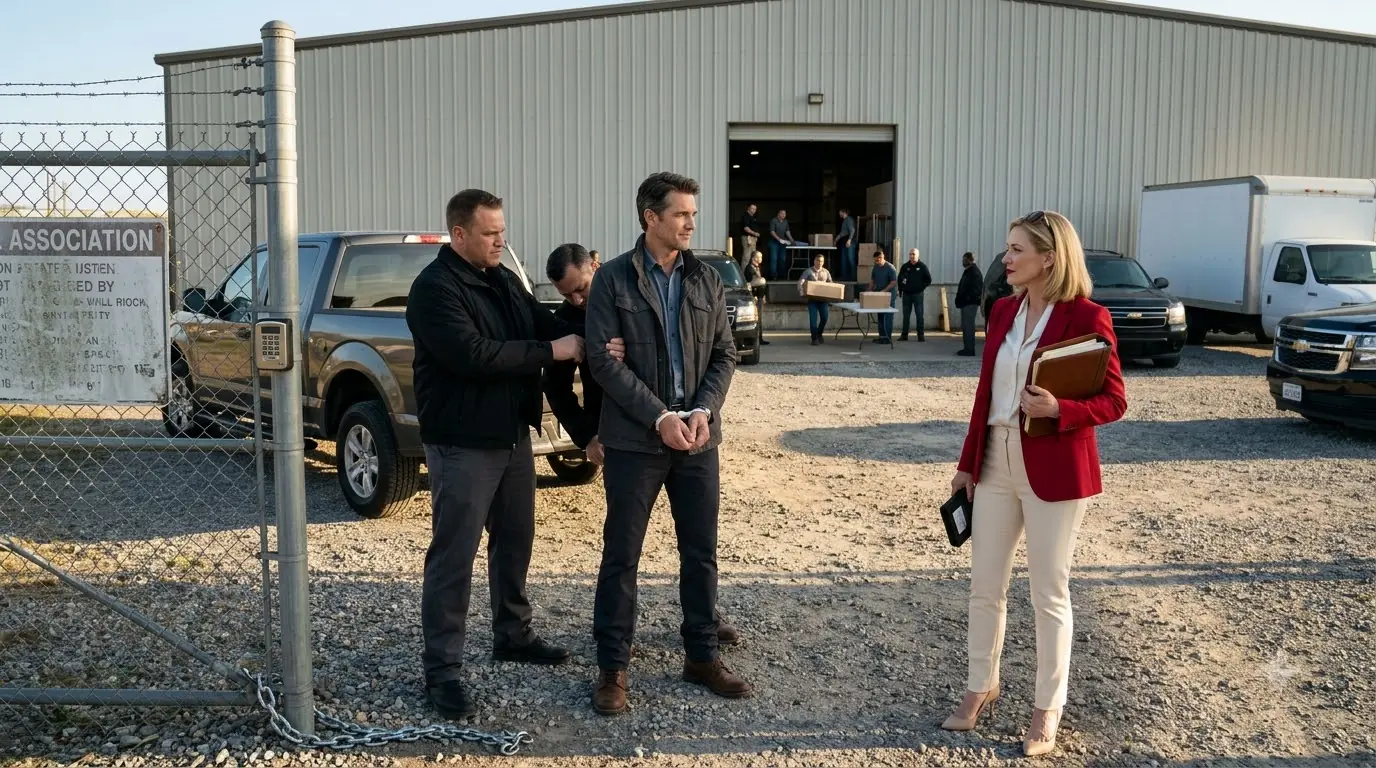
A threat of a lien, even one most people did not fully understand, could turn anger into panic in a single afternoon. By the time she decided to take Duncan Vale's warehouse, she had stopped thinking in terms of what she was legally allowed to do and started thinking only in terms of how much pressure a person could be made to absorb before giving up.
Duncan had been gone for four days when Marissa made her move. During that time, a crew working for Stonebridge Ridge Homeowners Association cut the chain on his gate, replaced his padlock with an electronic lock, drilled a new sign into the brick beside the loading dock, and moved boxes of association files into a building the association had never owned.
They did it in daylight, without a court order, without a sheriff, and without a recorded deed transfer. They did it with the relaxed confidence of people who believed official-looking paperwork would be enough to turn trespassing into authority after the fact.
When Duncan returned shortly after three on Thursday afternoon, he understood within ten seconds that something was wrong.
His black pickup had barely rolled off the county road when he saw the unfamiliar sign mounted beside his fence: STONEBRIDGE RIDGE HOMEOWNERS ASSOCIATION - AUTHORIZED PERSONNEL ONLY.
The old steel padlock he had used for years was missing. In its place hung a keypad unit with a fresh plastic face that had not been there when he left Monday morning.
He stopped the truck before entering the lot and stayed behind the wheel for several seconds. Duncan was forty-seven, broad shouldered, close-cropped hair beginning to gray above the ears, the kind of man whose stillness usually meant he was taking in more than he appeared to notice. Eleven years of owning the warehouse had taught him the normal shape of the property so completely that even small differences felt loud. Three SUVs along the fence line.
A rented box truck backed into Bay Two. Two men in black jackets stood near the open loading door. Folding tables were visible inside where pallets of contractor equipment normally sat.
He put the truck in park, reached for his phone, and took three photographs through the windshield before getting out. He did not yet know whether he was looking at a scam, a burglary, an aggressive collection attempt, or something even more reckless. What he did know was that the property record had not changed while he was away. The eighteen-thousand-square-foot building, the gravel lot around it, and the narrow service road along its eastern edge still belonged to him as completely as they had four days earlier.
The warehouse itself had been there long before Stonebridge Ridge existed. Duncan had bought it eleven years earlier from a retired industrial supply owner who was more interested in getting out of the business than maximizing the sale price.
The building had been an empty steel shell then, with stained concrete, broken lighting, a leaking western roof seam, and an office that smelled like wet cardboard every time it rained. Duncan had spent years rebuilding it piece by piece until it became the center of Vale Industrial Supply.
This small but dependable company furnished replacement hardware, lifting equipment, safety components, and specialized fasteners to contractors across three counties.
He knew which roof panel groaned in hard wind. He knew which forklift battery needed an extra ten minutes to reach full charge. He knew the scrape in the concrete by Bay One where a delivery driver had turned too tightly eight winters ago.
He knew the cracked lower pane in the office window that he had promised himself to replace every spring and somehow never did. Seeing strangers carry filing cabinets past that window felt less like coming home to vandalism and more like walking into a life that someone had attempted to edit while he was gone.
Duncan pushed the gate open by hand because the electronic lock had not yet been connected to anything sturdy enough to keep the gate from moving. The irony registered, but he did not smile. Gravel shifted under his boots as he walked toward the loading bay. One of the security men watched him approach and lifted a hand.
"Private property," the guard said.
Duncan stopped six feet away. "Correct. Mine."
The guard frowned as though Duncan had failed to follow a script. Before he could answer, a woman's voice came from inside the bay.
"Mr. Vale."
Marissa Crowley stepped into view wearing a cream blazer, narrow black trousers, low heels entirely unsuited for a warehouse floor, and the kind of composed expression that suggested she had rehearsed this meeting before he arrived. She was fifty-four, polished in every detail, silver-blond hair cut to the same shape it had held in every association newsletter photograph for years. In one hand she carried a thick folder with color tabs along the edge. In the other was a phone already set to record.
"I was wondering when you would get back," she said.
Duncan looked past her into the building. Association-branded storage boxes had been stacked beside his shelving. A folding table sat where two crates of pneumatic couplers had been Monday. Someone had moved his rolling tool cabinet three feet to the left and left one drawer open. Near the office door, another man in a black jacket was carrying in a printer.
"Who authorized you to enter this building?" Duncan asked.