She Humiliated Her Own Husband in Front of Billionaires — Then He Looked at the $4.6 Billion Deal
Chapter 2
Reader Theme:
Font Size:
24px
She turned away and I let her because there was something on the screen behind the main table that had just taken all of my attention. Donovan Price was at the podium. He was 58 years old and built like a man who had spent decades making sure other people needed him. Broad, polished, comfortable with the sound of his own voice in large rooms. He was chairman of Rowan Dynamics's board and had been Celeste's most trusted adviser for the better part of a decade.
He raised his glass and announced to the assembled room that tomorrow at 10:30 in the morning, Celeste would sign the agreement finalizing the sale of Forge Point Systems. The room responded with the kind of applause that wealthy people produce when they are genuinely pleased. I looked at the summary slide projected on the screen behind him, $4.6 billion. To anyone else in that room, that number was a triumph. To me, it was a signal that something had gone badly wrong.
I knew Forge Point. I had known it for six years. Known its contract structure, its manufacturing capacity, its position in the industrial technology market. 4.6 billion was not the price of a healthy Forge Point. It was the price of a Forge Point that had been made to look weaker than it was.
I moved through the crowd until I was standing beside Celeste. Don't sign that deal, I said. She kept her eyes on Donovan at the podium. Don't make tonight about you. Forge Point is undervalued.
Someone manipulated those numbers. She looked at me then. She looked at the wet front of my shirt, at the champagne that had dried into the fabric, and she said five words in a tone I had heard her use with interns who had overstepped. You don't understand these transactions. I did not answer her.
There was nothing to say in that room at that moment that would have mattered. But as I stood there in my ruined jacket, listening to the applause die down, I understood that the most dangerous thing in that building was not Donovan Price at the podium. It was a document that should have been in Celeste's hands and wasn't, and a room full of people who were about to celebrate a deal that would cost the company far more than anyone realized. I needed to find out what was missing before 10:30 the next morning. I left the gala at 9:43.
I know the exact time because I checked my phone in the elevator calculating how many hours I had before the signing. 12 hours and 47 minutes. I drove home, changed out of the ruined shirt, and sat down at the desk in the study with a cup of coffee. I never finished. I called Terrence Cole at 10:15.
He picked up on the second ring, which told me he had been expecting the call or something like it. Terrence was the chief operating officer of Forge Point Systems. I had known him since the early days of Bennett Meridian's involvement with Rowan Dynamics. He was one of the few people inside the company who understood what the fund had actually done to keep the operation alive. I was careful, methodical, and deeply uncomfortable with what he had been watching happen over the past 10 months.
When I asked him to send me the operational data, he did not ask why. He just said, "Give me 20 minutes. " And then he sent everything. I spent the next 2 hours reading. I did not look at the revenue summary. I did not look at the headline numbers that had been prepared for the buyer or the presentation slides that Celeste's team had likely reviewed a dozen times.
I looked at the contract flow. Specifically, I looked at which contracts had moved, where they had moved to, and when. In any manufacturing operation, there is a tier of contracts that carry the weight of the entire business. long-term agreements with reliable clients, high margin work, the kind of business that a buyer prices the whole company around. Forge Point had that tier. I had watched it being built over years.
What I was looking at now was a 10-month record of that tier being systematically hollowed out, not all at once. That would have been visible. Instead, two contracts moved in the first month, three in the second, one in the third, then two more in the fourth. Each transfer was small enough to fall below the reporting threshold that would have triggered an automatic review. Each one was documented as an internal reallocation, standard language, reasonable justification, the kind of paperwork that looks unremarkable until you line all of it up in sequence and see the pattern underneath.
The revenue had dropped. The margin profile had thinned. The valuation had followed the numbers down as valuations always do. But the plant itself had not changed. The workforce was intact.
The equipment was current. The production capacity was exactly what it had always been. Someone had taken a fully functional division and over the course of 10 months made it look like a business in decline. 4.6 billion was the price of the version they had constructed. The real Forge Point with its contracts restored was worth considerably more than that.
I set down the data and opened the closing package for the transaction. I had done enough deals over two decades to know the standard architecture, the schedules that attached to any agreement of this size, each one covering a specific category of obligation or disclosure. I moved through them in order. Schedule A, asset list. Schedule B, debt obligations.
Schedule C, contracts being transferred. Schedule D, representations and warranties. Schedule E, employee retention commitments. Schedule G, tax allocation. I read the index twice before I accepted what I was seeing.
There was no schedule F. In a transaction with a strategic beneficiary component, any deal where an individual or organization outside the primary parties receives a direct financial payment upon closing. Schedule F is the disclosure document. It exists specifically to surface conflicts of interest before a signature goes on the page. Its absence is not a clerical matter.
Its absence means either the deal has no such beneficiary or someone decided the buyer and the signing CEO did not need to know that it did. I found the reference I was looking for in a footnote buried near the end of the internal audit file. Three lines formatted like a technical cross reference, easy to miss if you were reading for content rather than structure. It named the document by its full title, strategic beneficiary disclosure schedule F. It had existed.
It had been part of the master closing package and it was not in the version that had been circulated for signature. I sat with that for a long moment. Then I drove back to the hotel where Celeste was staying. She had booked a room to avoid the commute on the morning of the signing and knocked on the door at midnight. She opened it looking like a woman who had been awake and was not glad to see me.
I asked her one question. Had she read schedule F? She told me there was no schedule F. Not defensively, not with the careful blankness of someone managing a lie. She said it the way a person says something they believe to be true, with the mild impatience of someone being asked about a thing that does not exist.
I looked at her standing in the doorway of that hotel room, and I understood something that changed the shape of everything I had been thinking since the gala. Celeste had not hidden schedule F. Celeste did not know schedule F existed. She was not the person running this transaction. She was the person it was being run through.
And that meant the enemy was not standing across from me tonight. He was the man who had raised his glass in that ballroom and led the applause. I did not sleep that night. By 6:00 in the morning, I had cross-referenced the contract movement data Terrence had sent with the quarterly internal reports that Relle Gaines had filed over the same period. Relle was Rowan Dynamics's director of internal audit.
A woman who had spent 30 years treating financial documentation the way a surgeon treats an open incision with complete attention and zero tolerance for approximation. Her reports had flagged the contract transfers. The flags were in the system. What they had not done was reach the CEO's desk in any form that connected them to the Forge Point valuation. That was not an accident either.
I called Celeste at 7:00 and told her I needed her to delay the signing. I told her the contract movement was systematic and deliberate and that the valuation reflected a Forge Point that had been engineered to look diminished. I told her calmly without accusation with the same tone I would have used presenting an analysis to any client. She listened and then she said that I was not a client, that I was her husband who had embarrassed himself at a professional event the previous evening and that she needed to get ready. She hung up.
Donovan moved faster than I expected. By 8:30, he had already spoken to Celeste. I learned the shape of that conversation later from what Celeste eventually told me herself. He had not gone to her with documents or data. He had gone to her with a story, and the story was about me.
He told her to think about the sequence of events. Her husband had been publicly embarrassed at the gala, made to look small in front of everyone whose opinion she valued. Within hours of that humiliation, he had begun making calls, pulling operational data, and attempting to insert himself into the most significant transaction of her career. Donovan did not say I was wrong. He said something more effective than that.
He said my motives were compromised. He told her not to confuse wounded pride with business instinct. It was a precise weapon, and he knew exactly where to aim it. Because Celeste knew what she had done at the gala. She had not forgotten the champagne or the money or the laughter at the table.
News in the same category
A Black Belt Thought the Quiet New Nurse Would Back Down — Then Everything Backfired
Girl Mechanic Saves a Biker From 6 Bullies in 8 Seconds — The Crew’s Reaction Makes National News
A Cocky Black Belt Champion Confronted Me — He Never Expected Me to Be an Elite Instructor
A Black Belt Champion Cornered Me — Never Knowing I Had Trained Top-Level Fighters
My Neighbor’s Black Belt Champion Tried to Intimidate Me — Unaware of My Elite Training Background
My Neighbor’s Black Belt Champion Cornered Me — He Had No Idea I Trained Elite Fighters
The ER Erupts in Chaos When a K9 Rushes Inside — Until It Walks Straight to the Duty Nurse
A K9 Charges Into the Emergency Room and Causes Panic — Then It Suddenly Stops at One Nurse
Everyone Panics When a K9 Bursts Into the ER — Until It Stops Right in Front of the Duty Nurse

He Returned Home a Wealthy Leader to Find His Parents — Never Knowing His Siblings Had Left Them Behind
He Became Rich and Powerful, Then Returned for His Parents — Unaware His Siblings Had Abandoned Them

Police Accused a Grandma of Stealing a Motorcycle — Then Learned It Was Her Son’s Bike
Cop Cuffed a Grandma for “Stealing” a Motorcycle — Unaware It Belonged to Her Powerful Son
He Came Home Early and Heard His Mother Threatening His Wife—Then a Hidden Secret Was Revealed
My Rich Neighbor’s Black Belt Son Mocked Me and Demanded a Fight — Then Everything Changed

NEXT PART: Teen Bullies Tried to Intimidate a Quiet Old Man — They Had No Idea Who He Used to Be

NEXT: Teen Bullies Surrounded an Elderly Black Man in the Park — Then Everything Changed

They Thought the Elderly Black Man Was an Easy Target — Biggest Mistake of Their Day
News Post
A Young Mechanic Steps In Against 6 Bullies to Help a Biker — What Happens Next Goes Nationwide
A Black Belt Thought the Quiet New Nurse Would Back Down — Then Everything Backfired
Girl Mechanic Saves a Biker From 6 Bullies in 8 Seconds — The Crew’s Reaction Makes National News
A Cocky Black Belt Champion Confronted Me — He Never Expected Me to Be an Elite Instructor
A Black Belt Champion Cornered Me — Never Knowing I Had Trained Top-Level Fighters
My Neighbor’s Black Belt Champion Tried to Intimidate Me — Unaware of My Elite Training Background
My Neighbor’s Black Belt Champion Cornered Me — He Had No Idea I Trained Elite Fighters
The ER Erupts in Chaos When a K9 Rushes Inside — Until It Walks Straight to the Duty Nurse
A K9 Charges Into the Emergency Room and Causes Panic — Then It Suddenly Stops at One Nurse
Everyone Panics When a K9 Bursts Into the ER — Until It Stops Right in Front of the Duty Nurse

After 60, I Became More “Selfish”—These 5 Things Now Get My Time First

At 63, I Finally Learned the Power of Saying “I’ll Think About It”

After 60, My Circle Got Smaller—And I Finally Understood Which Friendships Were Worth Keeping
He Returned Home a Wealthy Leader to Find His Parents — Never Knowing His Siblings Had Left Them Behind
He Became Rich and Powerful, Then Returned for His Parents — Unaware His Siblings Had Abandoned Them
Police Accused a Grandma of Stealing a Motorcycle — Then Learned It Was Her Son’s Bike
Cop Cuffed a Grandma for “Stealing” a Motorcycle — Unaware It Belonged to Her Powerful Son

LOSING OLD FRIENDS CAN MAKE AGING FEEL DIFFERENT
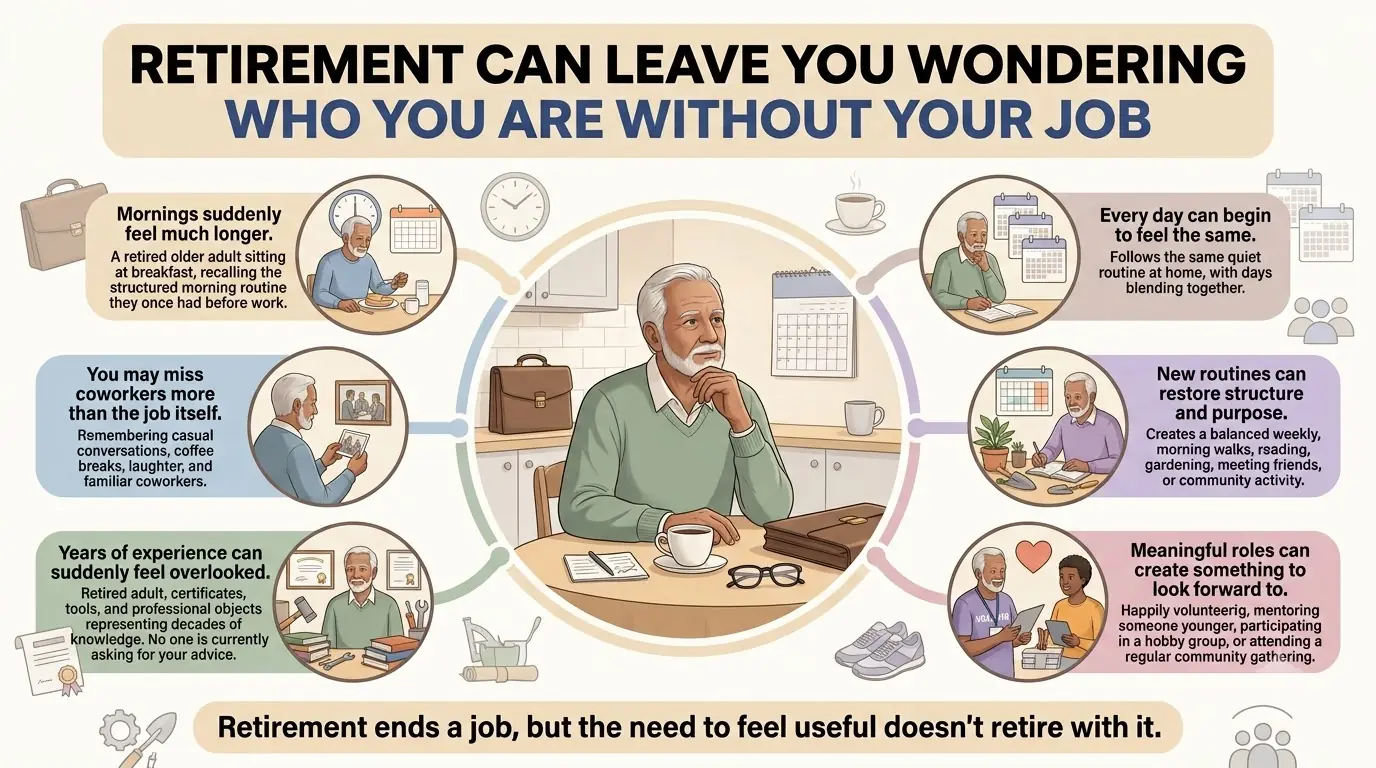
RETIREMENT CAN LEAVE YOU WONDERING WHO YOU ARE WITHOUT YOUR JOB
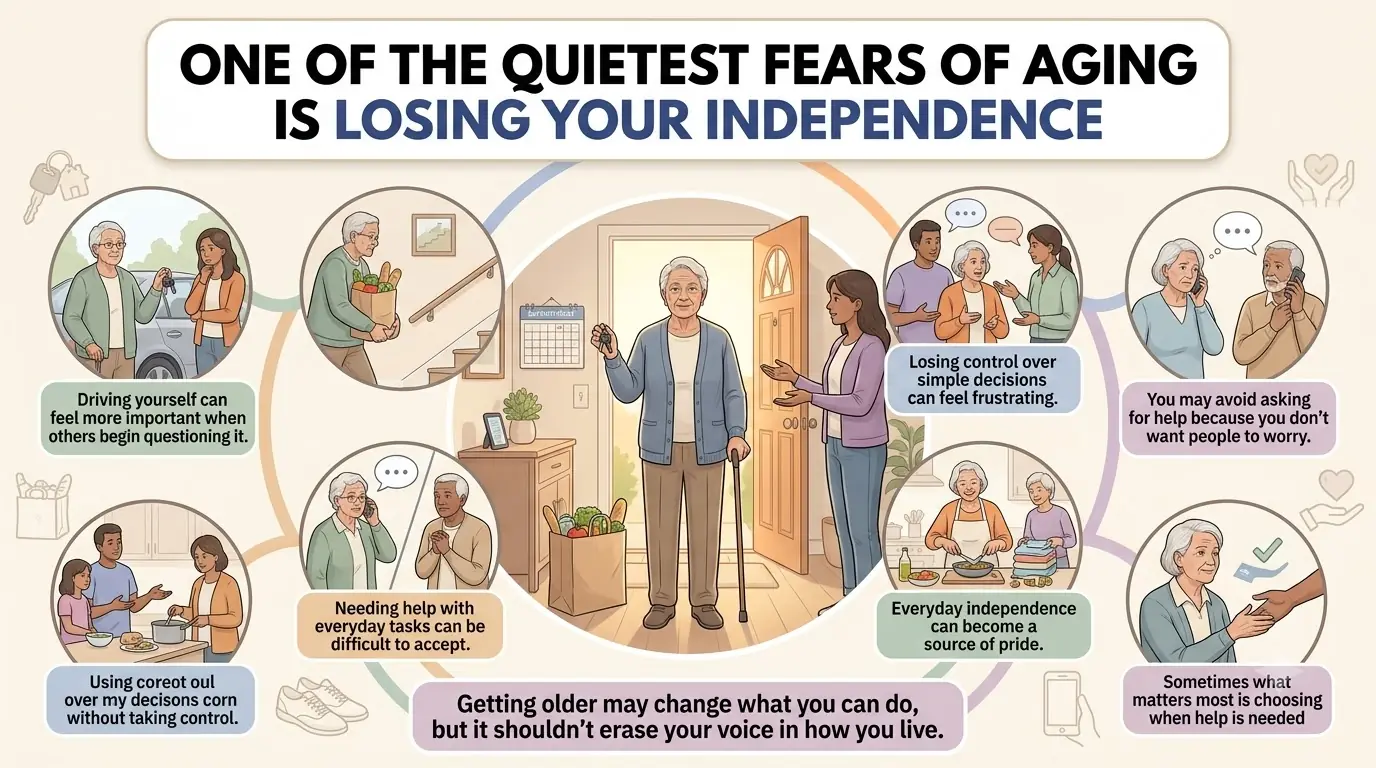
ONE OF THE QUIETEST FEARS OF AGING IS LOSING YOUR INDEPENDENCE
She Humiliated Her Own Husband in Front of Billionaires — Then He Looked at the $4.6 Billion Deal
5 Part