She Humiliated Her Own Husband in Front of Billionaires — Then He Looked at the $4.6 Billion Deal
Chapter 5
Reader Theme:
Font Size:
24px
I said, "Who does it pay? " Donovan's voice came immediately. That is an administrative annex with no bearing on the core transaction. Then produce it, I said. If it has no bearing, producing it costs nothing and takes 30 seconds. Donovan looked at the board's counsel.
This is a delay tactic from a man who was escorted from this building two hours ago. The schedule in question is a standard philanthropic allocation. Then it will take 20 seconds, I said. Ed, produce it. The room was watching him now in a way it had not been watching him a minute earlier.
There is a specific kind of attention that turns on a person when their resistance to something simple becomes the most noticeable thing in the room. Celeste had not spoken since I walked in. She had been watching, processing, doing what she did when she was moving very fast through something complicated and did not want to show the speed of it. Now she looked at the board's legal counsel and said with a quietness that was not uncertainty but its opposite, produce schedule F. Donovan said her name.
She said now it took four minutes to pull the document from the master file and project it on the screen at the end of the room. There was a single line that carried the weight of everything. $310 million. Price Legacy Foundation. Celeste read it. Then she said, "Who controls that organization? " The board's counsel took two minutes to run the registration.
The answer came back in a single line as well. Donovan Price. The room absorbed that. Donovan made three more attempts. He said the foundation was a registered charitable entity.
He said the money was allocated for educational scholarships and had been disclosed to the acquiring firm in a separate communication. He said that stopping the transaction at this stage would send a signal of instability to the market that would damage Rowan Dynamics far more than any disputed annex. Each argument was delivered with the confidence of a man who had navigated difficult rooms for decades and believed that confidence itself was a form of documentation. Then he looked at Celeste and said the sentence that ended him. If you don't sign, every person in this room will know you needed your husband to come rescue you.
He followed it immediately with a motion to the board to transfer signing authority to him as chairman so the transaction could proceed without further delay. The board's legal counsel set down his pen. He said very carefully, "Mr. Price, you have just moved to assume signing authority over a transaction in which an organization under your direct control is the named recipient of $310 million. " Donovan said nothing. Under both applicable law and this company's governance charter, you cannot be the executing party in a transaction where you hold a direct financial interest of this nature.
The counsel looked at the rest of the board. Furthermore, the motion itself made after the conflict was disclosed and on the record creates an independent legal problem that will need to be addressed separately. The board voted. It was not close. The transaction was frozen pending an independent review.
Donovan stood at the window where he had positioned himself when I walked in in the spot he had chosen because it communicated authority without the need to assert it. He did not look authoritative. He looked like a man who had just used his last move to dig the hole he was standing in. The independent review took 11 days. Terrence provided the contract movement records with full documentation. every transfer, every date, every internal authorization signature that had moved Forge Point's most valuable business out of the division's ledger over the preceding 10 months.
With schedule F now part of the formal record, and Donovan's conflict of interest established on the board's own transcript, the context for those transfers became impossible to interpret as anything other than deliberate. The investigators did not need to speculate. The paper trail was complete. Donovan was removed from the board's transaction committee on the fourth day. He submitted his resignation as chairman on the eighth.
What happened to him in the weeks and months that followed was a matter for regulators and lawyers. My part in it ended when Schedule F appeared on the screen. Forge Point was revalued. Terrence walked the independent assessors through the division's actual operational capacity, the workforce, the equipment, the contract pipeline as it existed before the systematic transfers had thinned it. The number that came back was significantly higher than 4.6 billion.
The sale process was reopened under new terms with full board oversight and Celeste in the room for every conversation. Relle was reinstated on the sixth day. She returned to her office, sat down at her desk, and by all accounts resumed her work without comment on the 11 days she had spent outside the building. I sent her a message that evening. She replied with three words.
Back to work. It was the most Relle response I could have received, and I was grateful for it. Celeste kept her position. The board's decision was not without conditions. There would be an external governance review and her renewal terms were amended to require additional oversight during the Forge Point reprocess.
Her reputation had absorbed real damage, not because she had been deceived. Executives get deceived. It happens in companies of every size and quality. What she had to answer for was the space she had created. the years of signaling in small consistent ways that her judgment was not to be questioned, that proximity to power entitled certain behaviors, that a man who appeared to have less than her could be made smaller in public without consequence. Three weeks after the signing room, she came to the house.
I was in the study when she arrived. She knocked, which she had not done in years. This was still technically her house as much as mine. and I understood from the knock that she was asking permission rather than announcing herself. I opened the door and she came in and sat down across from me at the desk where I had spent the night reading Terren's contract data. She had an envelope in her hands.
She held it for a moment before she set it on the desk between us. I opened it. Inside were several $100 bills. I recognized them the way you recognize something you watched happen and hoped you had misread. She told me she had contacted the event staff and reviewed the security footage from the gala.
She had found everyone who had handled the money after it left the table and assembled the bills with the specificity of someone who needed the act of finding them to cost her something. She said she used to think that was what made a person matter, what they could put on a table. She said she had thrown a few hundred at the man whose capital had kept her company breathing for six years and that the math of it was the least important part. The important part was what she had believed in the moment she did it. That she had the right to do it.
That the distance between what she had and what she believed I had made it acceptable. She said the most shameful part was not that she had been wrong about my bank account. It was that she had believed a smaller bank account made someone smaller. I did not answer immediately. What she had just said was the thing I had spent years constructing elaborate distance to avoid hearing, not because I feared she would never say it, but because I had never given her the conditions under which she could arrive at it honestly.
I had managed the experiment too carefully. I had watched from too far back, and in doing so, I had withheld the kind of honesty from her that I was now sitting across from, and recognizing as the first true thing said between us in a very long time. I pushed the envelope back across the desk. I told her I did not need the money returned. She asked what I needed.
I said, "Time. " She nodded. She did not argue for more than that, which told me she understood what time meant. not a pause before reconciliation, but the actual work of two people rebuilding something that had been constructed on incomplete foundations from the beginning. She left after another hour. We had talked carefully and without resolution about things that would take much longer than an hour to resolve. The following Monday, I walked into the Bennett Meridian Capital offices for the first time in 18 months without coming through a back entrance or joining by remote link.
I sat at the head of the table. The screen at the end of the room showed the current figures, $20.4 billion in assets under management, a number that had become over the years something I thought of as a private fact rather than a public identity. My fund's director of strategy asked if I wanted to maintain the anonymous investment structure going forward. I looked at the list of portfolio companies on the screen. Rowan Dynamics was in the middle of the list, bracketed by the names of 30 other organizations whose operations touched the lives of people who had no idea this fund existed or who ran it.
I said no. I said that if the capital I managed was large enough to determine whether companies survived or failed, whether divisions were sold or saved, whether the people who worked in those buildings kept their jobs or lost them, then my name needed to be close enough to those decisions that I could be held accountable for them. The room was quiet for a moment. Then we got to work. There are two lessons this story leaves behind and neither one is about money.
The first belongs to Celeste. She did not make a mistake because she failed to recognize a billionaire. She made a mistake because she had decided somewhere along the way that the amount in someone's account determined the respect they deserved. That belief did not appear overnight. It was built slowly, event by event, room by room, until humiliating a man in public felt like something she was entitled to do.
The revelation of who Darius was did not create her shame. It only made visible what was already there. The second belongs to Darius. Staying invisible is not always humility. Sometimes it is a way of staying safe, of watching without being watched, of judging without being judged.
He protected himself with a secret and called it generosity. The most honest thing he did in this entire story was sit on that bench, look at a single $100 bill, and finally tell the truth about what he had been doing all along. Power does not need to be announced. But responsibility cannot be hidden
News in the same category

A Black Belt Thought the Quiet New Nurse Would Back Down — Then Everything Backfired
Girl Mechanic Saves a Biker From 6 Bullies in 8 Seconds — The Crew’s Reaction Makes National News
A Cocky Black Belt Champion Confronted Me — He Never Expected Me to Be an Elite Instructor
A Black Belt Champion Cornered Me — Never Knowing I Had Trained Top-Level Fighters
My Neighbor’s Black Belt Champion Tried to Intimidate Me — Unaware of My Elite Training Background
My Neighbor’s Black Belt Champion Cornered Me — He Had No Idea I Trained Elite Fighters
The ER Erupts in Chaos When a K9 Rushes Inside — Until It Walks Straight to the Duty Nurse
A K9 Charges Into the Emergency Room and Causes Panic — Then It Suddenly Stops at One Nurse

Everyone Panics When a K9 Bursts Into the ER — Until It Stops Right in Front of the Duty Nurse

He Returned Home a Wealthy Leader to Find His Parents — Never Knowing His Siblings Had Left Them Behind
He Became Rich and Powerful, Then Returned for His Parents — Unaware His Siblings Had Abandoned Them

Police Accused a Grandma of Stealing a Motorcycle — Then Learned It Was Her Son’s Bike
Cop Cuffed a Grandma for “Stealing” a Motorcycle — Unaware It Belonged to Her Powerful Son
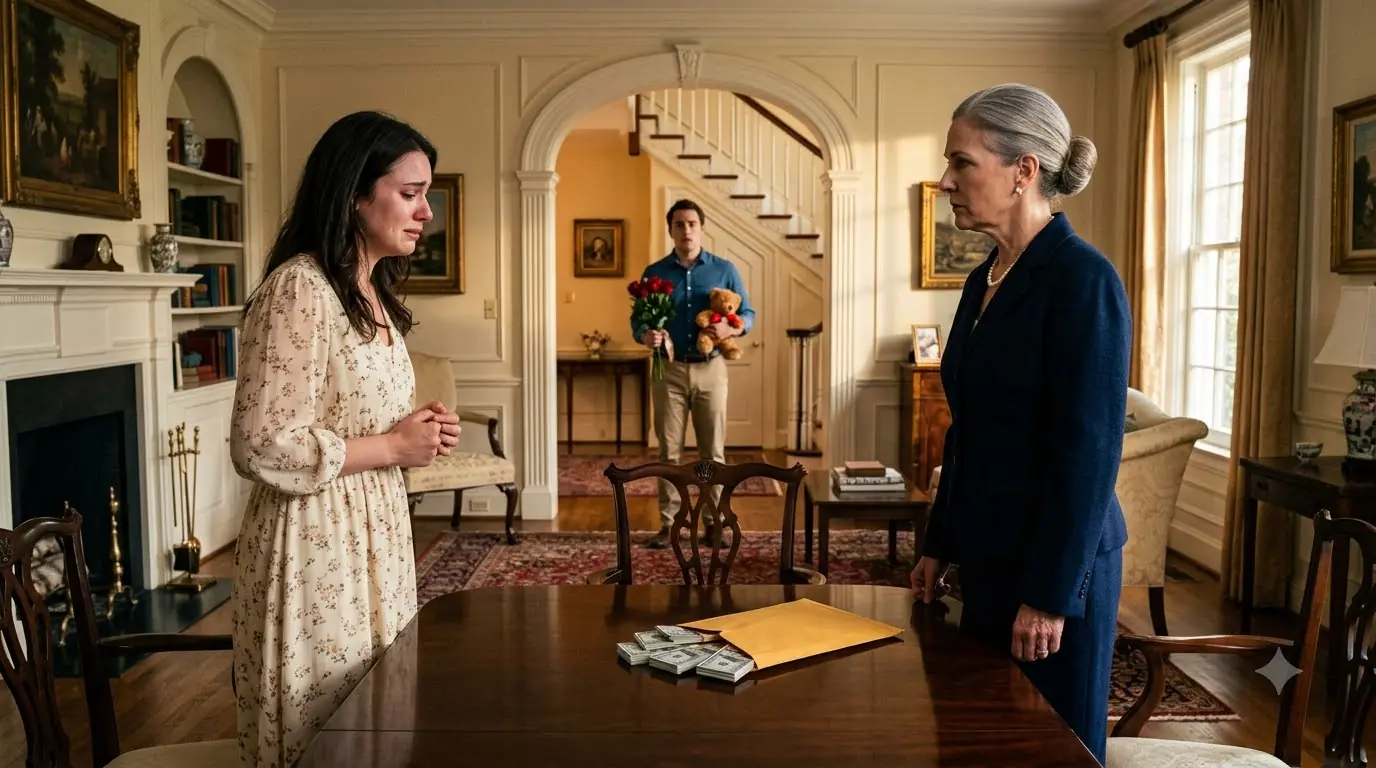
He Came Home Early and Heard His Mother Threatening His Wife—Then a Hidden Secret Was Revealed

My Rich Neighbor’s Black Belt Son Mocked Me and Demanded a Fight — Then Everything Changed

NEXT PART: Teen Bullies Tried to Intimidate a Quiet Old Man — They Had No Idea Who He Used to Be

NEXT: Teen Bullies Surrounded an Elderly Black Man in the Park — Then Everything Changed

They Thought the Elderly Black Man Was an Easy Target — Biggest Mistake of Their Day
News Post
A Young Mechanic Steps In Against 6 Bullies to Help a Biker — What Happens Next Goes Nationwide
A Black Belt Thought the Quiet New Nurse Would Back Down — Then Everything Backfired
Girl Mechanic Saves a Biker From 6 Bullies in 8 Seconds — The Crew’s Reaction Makes National News
A Cocky Black Belt Champion Confronted Me — He Never Expected Me to Be an Elite Instructor
A Black Belt Champion Cornered Me — Never Knowing I Had Trained Top-Level Fighters
My Neighbor’s Black Belt Champion Tried to Intimidate Me — Unaware of My Elite Training Background
My Neighbor’s Black Belt Champion Cornered Me — He Had No Idea I Trained Elite Fighters
The ER Erupts in Chaos When a K9 Rushes Inside — Until It Walks Straight to the Duty Nurse
A K9 Charges Into the Emergency Room and Causes Panic — Then It Suddenly Stops at One Nurse
Everyone Panics When a K9 Bursts Into the ER — Until It Stops Right in Front of the Duty Nurse

After 60, I Became More “Selfish”—These 5 Things Now Get My Time First

At 63, I Finally Learned the Power of Saying “I’ll Think About It”

After 60, My Circle Got Smaller—And I Finally Understood Which Friendships Were Worth Keeping
He Returned Home a Wealthy Leader to Find His Parents — Never Knowing His Siblings Had Left Them Behind
He Became Rich and Powerful, Then Returned for His Parents — Unaware His Siblings Had Abandoned Them
Police Accused a Grandma of Stealing a Motorcycle — Then Learned It Was Her Son’s Bike
Cop Cuffed a Grandma for “Stealing” a Motorcycle — Unaware It Belonged to Her Powerful Son

LOSING OLD FRIENDS CAN MAKE AGING FEEL DIFFERENT
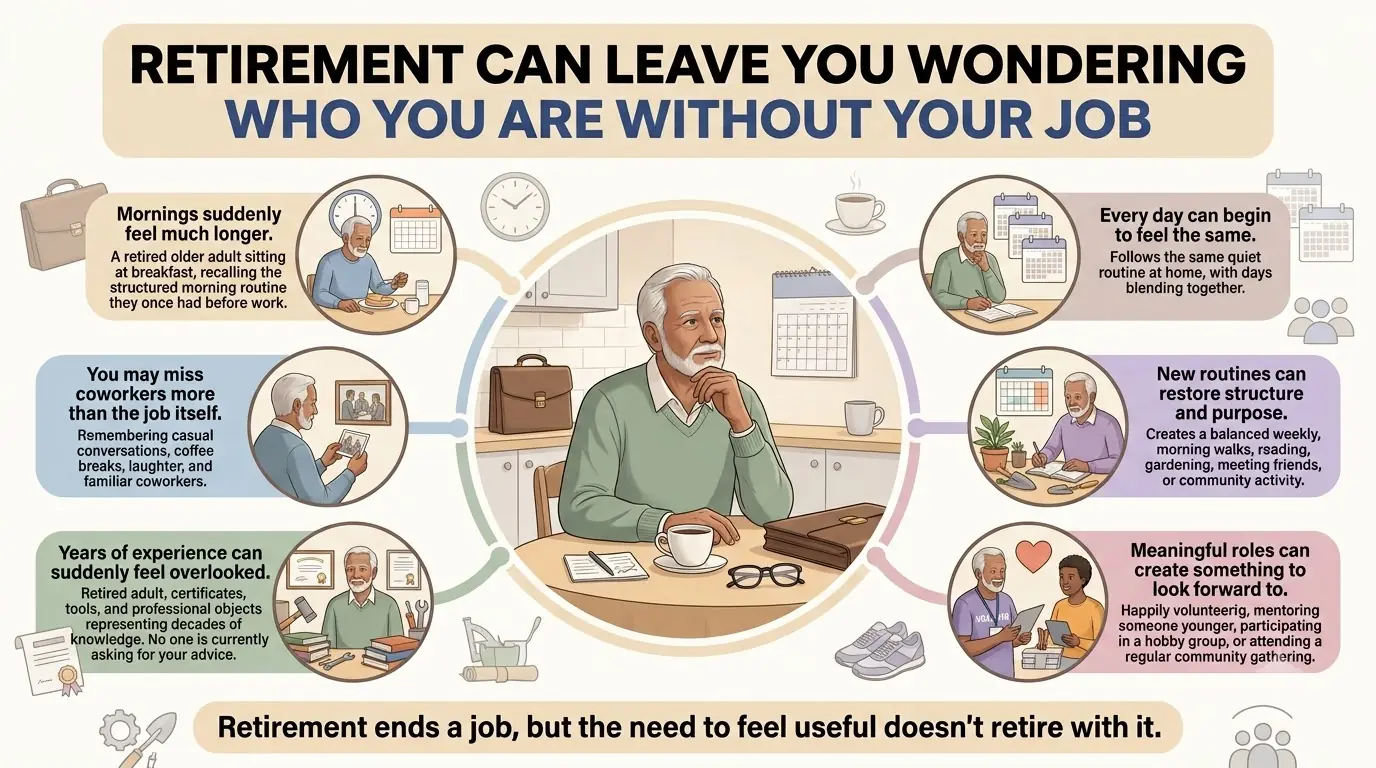
RETIREMENT CAN LEAVE YOU WONDERING WHO YOU ARE WITHOUT YOUR JOB
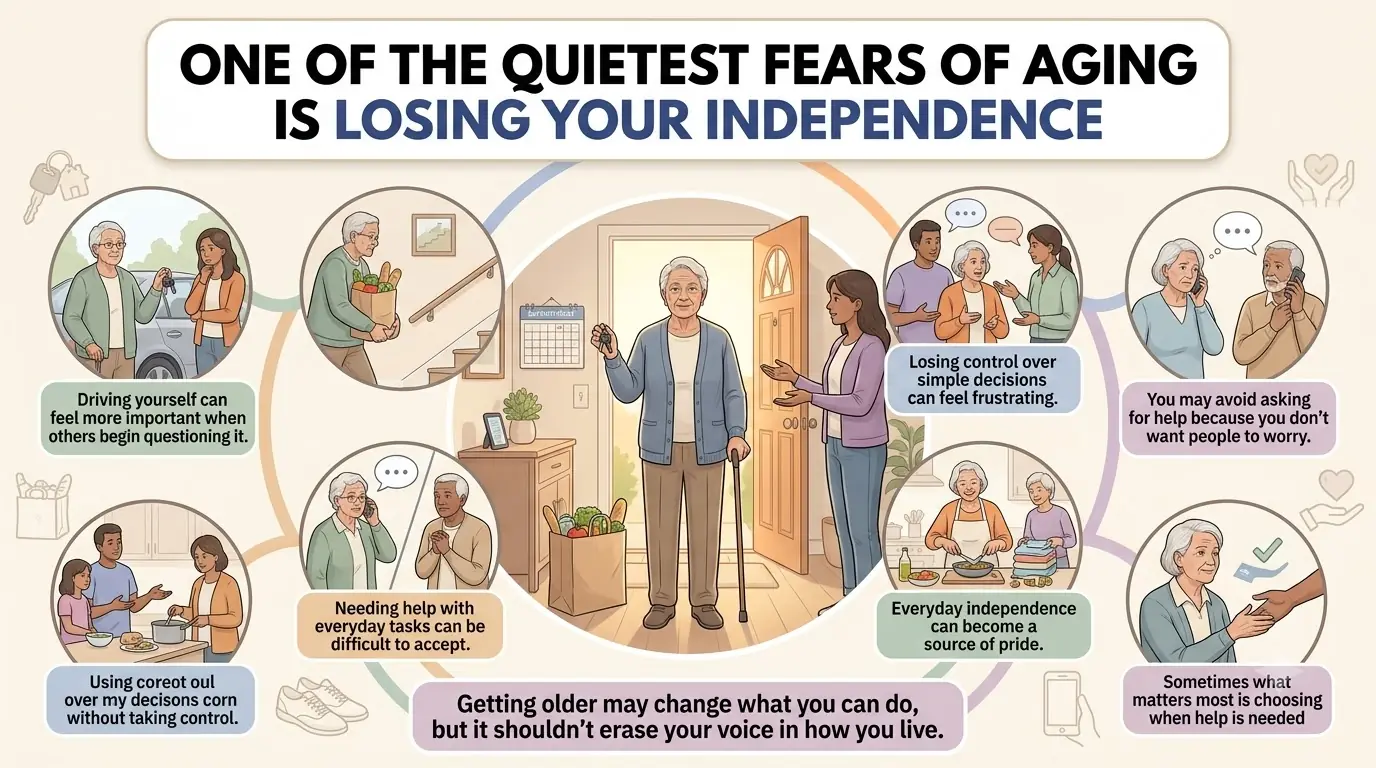
ONE OF THE QUIETEST FEARS OF AGING IS LOSING YOUR INDEPENDENCE
She Humiliated Her Own Husband in Front of Billionaires — Then He Looked at the $4.6 Billion Deal
5 Part