Chapter 2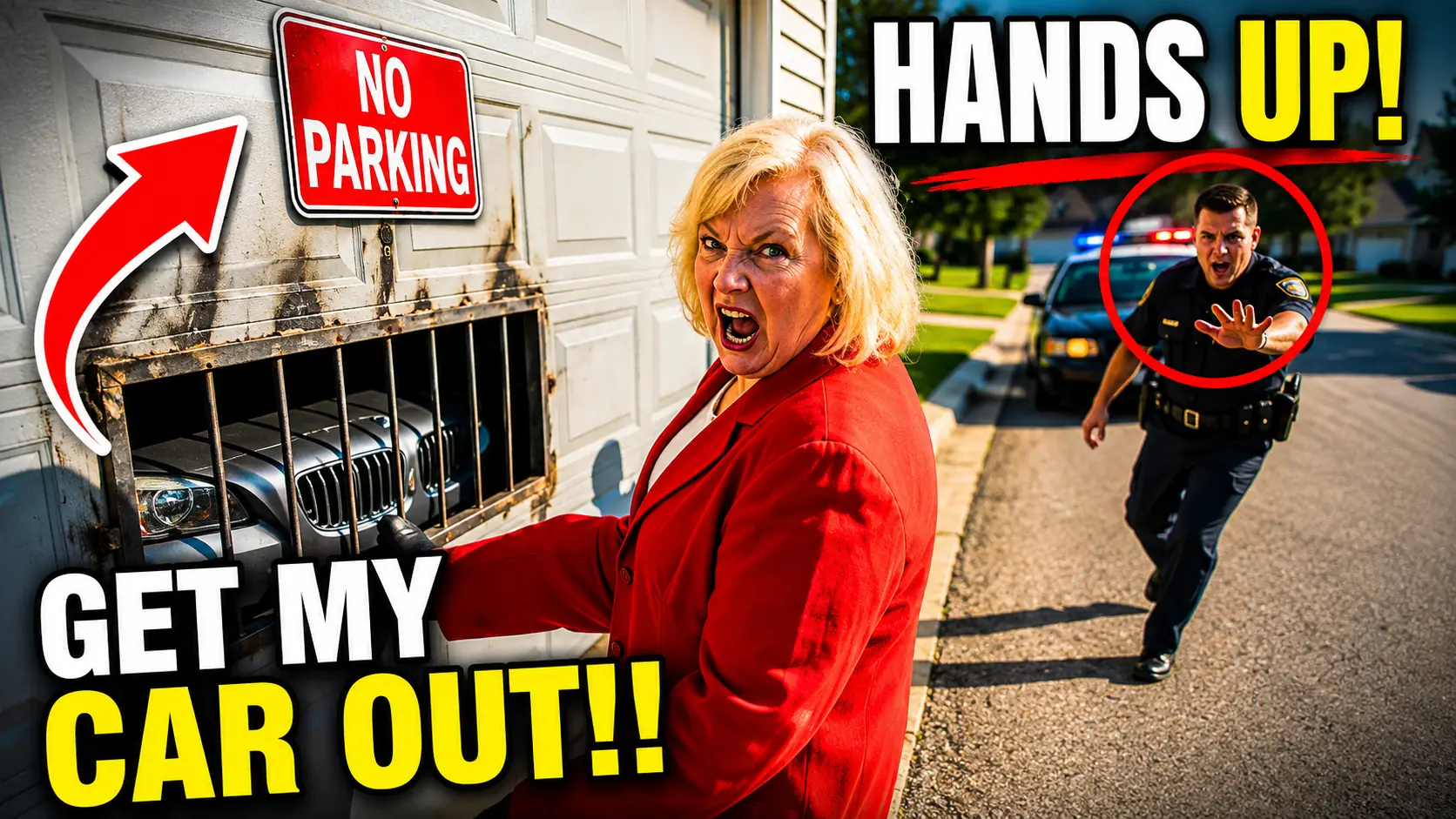
The bungalow at Clearwater was exactly what the listing had promised. Wood-planked floors, a ceiling fan that moved the salt air in lazy circles, and a view of the Gulf that started at the back porch and ended somewhere around the horizon. I had arrived on a late Friday flight, slept nine hours without interruption for the first time in months, and woke up to the sound of pelicans working the shallows. I made Cuban coffee with the stovetop pot I had packed specifically for this trip, stood on the back porch barefoot, and drank it watching the morning light hit the water. This was what six months of planning looked like. This was what the work was for. I opened my laptop once that first morning, logged into the security camera’s cloud feed, and let it run for about 45 seconds. The garage door: sealed, unchanged. The Mercedes: visible through the lower camera angle, parked precisely where Linda had left it, silent and undisturbed. The infotainment screen was still on. The glow faint but detectable in the frame. I watched it for a moment, the way you watch a candle you set on a windowsill before leaving the house. Then I closed the laptop and went down to the water.
The fishing charter on day two ran out into the Gulf at dawn. A 28-ft center console, a guide named Marco who knew every structure in the bay system, and four hours of working live bait along grass flats in water so clear you could count the spots on a redfish before it took the hook. I had my phone on silent in the dry bag. That evening, before dinner, I pulled up the camera feed again for what had become a brief, almost ritual check. Day 1, 4:47 in the afternoon: Linda had appeared at the driveway, knocked on the garage door frame—which was a strange thing to do to a welded surface—looked at the bright orange camera indicator light for a long moment, and walked away. Day 1, 7:15 in the evening: She returned with a man I did not recognize, presumably her husband. Both of them peered into the gap between the door and the sill. Both of them left. The Mercedes center console was still faintly lit, though the intensity seemed marginally lower than the morning. I noted it the way an engineer notes a data point, without drama.
The scuba certification course ran Tuesday through Thursday. The instructor was a retired Coast Guard diver who had the useful habit of explaining physics in plain language, and the more useful habit of not repeating himself. I spent those afternoons 60 feet down in water warm enough that the wetsuit was almost unnecessary, practicing neutral buoyancy in a world that did not contain HOA board minutes or property line disputes. On Thursday evening, I checked the camera feed to find that Linda had visited the garage twice more—once in the morning, once in the early afternoon. The second time, two other people had come with her, a man and a woman, both of whom spent a long time looking at the weld seams and at the notices I had posted. The woman appeared to take a photo of the private property sign. They all left without touching anything. The center console screen in the lower camera frame was now visibly darker than it had been on day one. I had also, on Tuesday, forwarded the entire documentation package to Tom Hendricks—the original photographs, the email thread to the board, Linda’s voicemails (she had called six times on day one, leaving messages that would cut off mid-sentence by the system’s time limit), and the first three days of camera footage. Tom responded within an hour. His assessment was clean. Nothing I had done was legally actionable from any direction. My securing of the property was lawful maintenance on private land. If Linda or anyone else attempted to forcibly breach the door, the statutory threshold for criminal mischief in this state started at a misdemeanor and scaled upward based on property value. Tom noted that the attempted forced entry would need to be documented clearly, and that my existing camera setup was more than adequate for that purpose. He added one dry observation at the end of his note: “I’d also suggest looking into a formal HOA grievance regarding section 4.7 at some point. You’d probably win.” I replied, “Let’s let it develop a little further.” Then I put the phone away and went to find something for dinner.
She had not, I think, believed on that first morning that the situation would extend past a single afternoon. That was the read I got from the footage. A woman who had dealt with minor resistances before and expected this one to resolve by sundown the way they always had. The confidence in the way she first approached the garage on day two said, “I am coming to collect something that is owed to me.” She walked up the driveway at 9:23 in the morning, reached out, gripped the bottom rail of the door with both hands, and pulled. Nothing. She adjusted her grip, planted her feet, and pulled harder. Still nothing. She stood back and looked at the seam between the door panel and the frame, and I watched the exact moment of realization cross her face in the camera’s wide-angle frame. A slow progression from certainty to confusion to something hot and involuntary moving up into her cheekbones. The door was not locked. It was not stuck. It had been permanently joined to the surrounding structure by someone who knew precisely what they were doing, and no amount of force applied by a human being without mechanical equipment was going to change that fact. She called me four times before 10:00 in the morning. I was on the water, cellular signal intermittent at best, and I let the calls go to voicemail with a clear conscience. The message she left before the system cut her off was: “Mr. Foster, I am requiring you to open this garage door immediately. This is a serious violation of HOA governing documents, and I have the authority to—” then silence. I listened to it that evening, sitting on the bungalow porch with a glass of cold water, once, the way you listen to something that has already been decided.
By mid-morning, she had brought in reinforcements. Greg Patel and Susan Chow from the HOA board, both of whom arrived in the posture of people who had been told this would be a quick formality. Greg stood in front of the weld seams for a while, then looked at the surveillance notice, then looked at the camera mounted above the door with its recording indicator glowing steadily red. He said something quietly to Linda that I could not read from the camera angle. Susan appeared to take a photograph of the notices, then Greg said something else, and Linda made a gesture that suggested the conversation was over. Both board members left. Linda stayed alone at the driveway for a few minutes, then left as well. By early afternoon, she had produced an official HOA violation notice, which she slid under my front door despite knowing I was not home—a detail that would matter later. The notice cited two alleged violations: deliberate obstruction of community activities and failure to cooperate with HOA management directives. It was signed, dated, and formatted with the specific kind of institutional authority that works well on people who don’t know their rights. I was not those people.
Later that same day, I was informed by a neighbor—a retired school teacher named Eleanor Walsh, who lived two houses down and had apparently been watching the week’s events with considerable interest—that Linda had posted on the neighborhood’s community social platform. The caption above a photo of my sealed garage door described the resident at my address as engaging in hostile behavior toward the community and announced that corrective measures would be taken. Eleanor, bless her, had screenshotted the post, the comments below it, and the timestamp before forwarding them to me. The comments were not what Linda had intended. Six separate neighbors had responded asking why the HOA chairwoman’s personal vehicle was parked in another resident’s private garage in the first place. Two others asked what authority permitted the use of enclosed private structures under section 4.7. One person, I did not know who, had posted a direct link to the relevant passage of state property law. I was eating dinner on the bungalow porch when the notifications came in. I read through Eleanor’s screenshots carefully, then forwarded everything to Tom with a single line attached: “She just publicly documented her own overreach.” Tom responded within minutes. “This is genuinely useful. A public post from the HOA chairwoman implicitly acknowledging the dispute while misrepresenting the facts to the neighborhood is exactly the kind of secondary evidence that strengthens a grievance filing.” I put the phone face down on the table and watched the last of the sunset drain out of the sky over the Gulf. The camera feed update I checked before sleeping was brief. One frame, 11:47 at night: the garage door unchanged, the driveway empty. And in the lower corner of the frame, the Mercedes’ center console—dark. Not dimmed. Off. The battery had begun its final decline.
Linda hired a locksmith on day four. This I learned from the camera footage and from a brief, amused voicemail Tom left me on Thursday evening. The locksmith, a man in a gray work shirt who arrived in a van with a magnetic company logo on the door, spent approximately four minutes examining the garage door before delivering his verdict. He walked the seam line, pressed his palm flat against the surface, and then stepped back with the posture of someone who has just been asked to unlock a bridge. He told Linda, as I gathered from the footage of the two of them in conversation, that what she was looking at was not a mechanical lock and therefore was not something his profession addressed. What she was looking at was structural metalwork. Cutting through it on someone else’s private property without a court order was not a service his company provided and was not a service he personally intended to provide under any financial arrangement she might suggest. He charged her $95 for the consultation and drove away. I watched that clip twice. It is, technically speaking, one of my favorite pieces of footage from the entire two weeks. Tom’s update arrived by email that same evening, summarizing everything in three concise paragraphs. He ended with: “Every avenue Linda has tried—social pressure, institutional authority, law enforcement, professional services—has returned empty-handed. She has one option left and it is the wrong one. Make sure the camera battery is fully charged.” I was eating stone crab at a place on the water that had no indoor seating and a menu written on a chalkboard. I read Tom’s note, ordered another round, and watched a brown pelican work the pilings for scraps. The camera was on continuous cloud backup. The battery was solar-supplemented. Everything was fine.
Day five arrived with the kind of Gulf Coast morning that makes you understand why people retire to Florida. Low light, flat water, the air still carrying the coolness of the night before. I was on the back porch with coffee when the first notification came through at 7:51. Motion detected at the garage. I let it queue. Two more alerts followed before 8:15. I finished my coffee, went inside, and pulled up the feed on my laptop with the calm of someone reviewing security footage rather than the urgency of someone whose property is under threat, because by that point I understood that whatever was happening in front of my garage was happening on my terms, not Linda’s. The pressure she was operating under had been building in invisible layers. A dealership service alert had apparently gone out to the registered owner of the Mercedes warning that extended inactivity could compromise the vehicle’s battery management system—a fact I learned later from David Prescott, who was not a subtle man when he was stressed. The community platform was now a running commentary on the situation, with 47 posts in the thread Eleanor had been monitoring, the majority of them asking questions that Linda had no good answers to. And David himself had apparently shifted from passive to actively unhappy, because when the two of them appeared on my driveway at 8:22 that morning, he was carrying a crowbar and wearing the expression of a man who has been told one too many times that the problem will work itself out.
David wedged the crowbar into the gap between the door panel and the frame—the same gap that the locksmith had examined and declined to engage with—and applied leverage. The door did not open. The engineering I had put into those eight weld points was not theatrical. It was calculated to withstand exactly this kind of opportunistic force. What the crowbar accomplished was a slight inward deformation of the lower door panel, which produced a sharp metallic groan and accomplished nothing else structurally. The camera recorded it all in clear, timestamped detail. Across the property line, on the veranda of the neighboring house, Eleanor Walsh had come outside with her morning tea and apparently her phone. I noted her presence in the upper corner of the frame, a small, still figure in a cardigan, watching. I appreciated Eleanor Walsh more than I had ever adequately expressed. Officer Ramirez reappeared at 8:41, which I had not anticipated, but which in retrospect made perfect sense. He had been on the same patrol route as the previous visit, heard the metallic impact from the street, and pulled over. He stepped out of the unit and asked David to stop what he was doing in a tone that did not require a second request. David stepped back. Linda began explaining. Ramirez listened for approximately 30 seconds, then told them both, with the patience of a man who has had this exact conversation once already this week, that they were in the process of committing criminal mischief on private property, and that if they continued, the next step was not a warning. David put the crowbar down. Linda turned back toward the door.
What happened next was entirely Linda’s doing, and I want to be precise about that because it matters. While Ramirez was speaking to David, Linda stepped forward alone, gripped the lower edge of the door panel at the point where David’s crowbar had bent the metal inward, and pulled with her full body weight. Both hands wrapped around the deformed edge, fingers curled into the gap. The bent metal had created a lip with an exposed cut edge—the kind that exists on deformed sheet steel when it has been stressed beyond its design tolerance. She pulled hard. The edge found her palm. She released the door immediately, stepped back, and the sound she made was sharp and involuntary. Not the theatrical outrage of the previous days, but the genuine, unfiltered reaction of a person who has just been hurt. It was a shallow laceration, not serious, bleeding more than it was deep, but it was real, and it was hers, and it had come entirely from her own decision to grab a piece of damaged metal with her bare hands while a police officer was standing ten feet away telling her to stop. Ramirez issued David a formal written warning on the spot—documented, signed, a matter of record. He called in the incident from his unit and flagged my property file for the clip-sharing protocol that Tom had established at the start of the trip, which meant the precinct now had access to the full camera archive if it was needed. Eleanor Walsh posted her video—shot from her veranda, clear and steady, capturing the crowbar, the impact, the door, and Linda’s injury in a single uninterrupted sequence—to the neighborhood platform within the hour. The caption read: “Can someone explain why our HOA chairwoman is hitting the neighbor’s garage with a crowbar?” Two hundred views in the first 90 minutes. I received a screenshot of it from Tom at 11:43 with three words in the subject line: “Save everything. Perfect.” I was toweling off after a beach swim when I read it. I looked at the footage once, forwarded it with a timestamp log to Tom’s office, and went to find lunch.
>>>NEXT CHAPTER 3: HOA Karen Parked in My Garage Without Asking — So I Sealed It Shut and Left for Vacation<<<