Chapter 3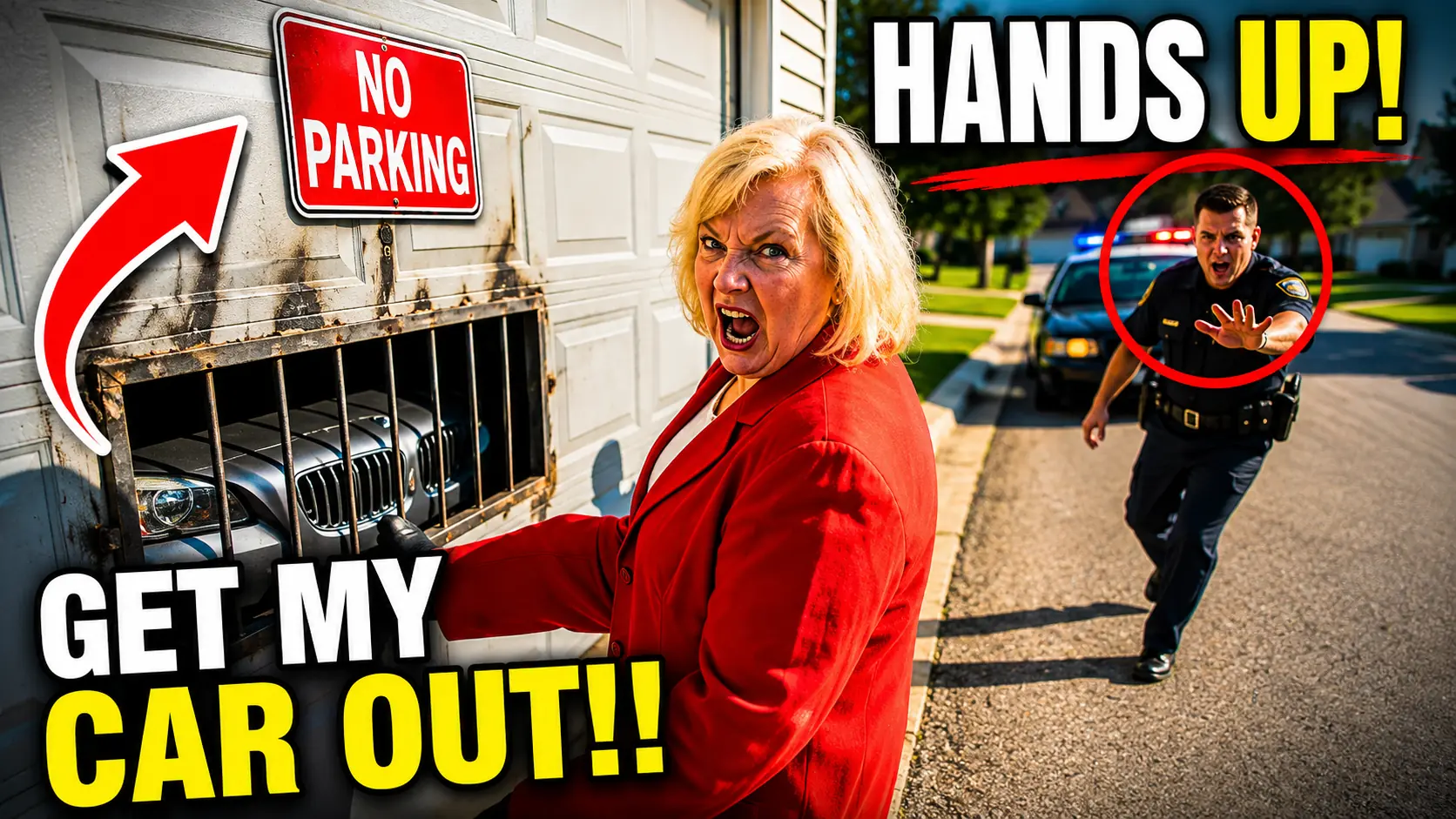
The cab from the airport turned onto my street just after 8:00 in the morning on day 14. I had the window down. The neighborhood smelled the way it always does in late June—cut grass, someone’s sprinklers, the faint exhaust of early commuters clearing out. I had a carry-on bag and a fishing hat with a salt stain on the brim, and I had slept four hours on the red-eye and felt fine. Some people come back from vacation wrung out. I came back from this one rested in a way that had less to do with the beach and more to do with two weeks of watching a situation resolve itself without requiring anything further from me. She was standing at the end of my driveway—no navy blazer, no tablet, a thin cardigan over a blouse, one hand wrapped in a bandage that had been applied at some point in the past week and was now slightly frayed at the edges. She was standing the way people stand when they have been waiting a long time and are no longer certain what they are waiting for. Eleanor Walsh was across the street pretending to deadhead her roses with the studied casualness of someone who has been watching a doorway and is not going to miss whatever comes through it. Two other neighbors, a man I knew by sight and a woman I did not, were visible in their driveways doing nothing with particular conviction. The street had the specific quality of a room where everyone is pretending not to listen.
I paid the driver, took my bag, and walked up the path. Linda moved toward me immediately, the way a person moves when they have been rehearsing an opening line. “Mr. Foster,” she said, “you have been gone for two weeks while my car has been locked inside your—” I said, “Good morning, Mrs. Prescott,” and walked past her into the house. I set my bag down, washed my hands at the kitchen sink, drank a glass of water, and stood at the window for a moment looking at nothing in particular. Then I went back to the door. She was on the porch. I did not invite her in. I stood in the frame and looked at her the way you look at someone when you are prepared to have a short, clear conversation. She told me she needed me to open the garage immediately, that the car had been inside for 14 days. I told her I was aware of that. I asked her if she remembered what I had said to her on that first Saturday morning—that this was private property, that I needed her permission request made in advance, that she did not have authorization to park there. She did not answer. I asked her if she remembered what she had said in response to that. She looked at the porch floor for a moment. I told her to give me 15 minutes.
I changed into my work clothes, pulled the angle grinder from the cabinet, checked the disc, and went out to the garage. I did not look at Linda as I passed her. I set up at the first weld point, lower left, braced my stance, brought the disc to the bead, and started the grind. The sound of it carried clearly in the morning air, which I suspected was not unpleasant for the neighbors who had front-row access. I worked through each of the eight points in sequence, the same methodical order I had used going the other direction two weeks earlier. No performance in it. Just a man finishing a job he had started. When the last bead was cleared, I set the grinder down, gripped the door handle with both hands, and raised it smoothly. The door rolled up on its track without resistance, exactly as it had been designed to do. Inside, the silver Mercedes sat precisely where Linda had left it. No scratches. No damage from my side. Not a mark on the paint or glass that had not been there on the morning she drove it in. I stepped to the side and gestured toward it—a simple, open-handed indication that the vehicle was available, nothing more.
Linda walked past me into the garage, settled into the driver’s seat, straightened herself, and pressed the start button. The silence that followed was the kind that takes up physical space. She pressed it again. A faint thin chime from the instrument cluster, barely audible—the last flickering of a system trying to report in on almost no power—and the center console screen brightened for approximately two seconds and then went dark entirely. She pressed the button a third time. Nothing. Not even the chime. Just the complete, definitive silence of a 12-V battery that had been running an unattended electrical system for 336 hours with no source of charge and had finally, quietly, given out. Linda sat in the driver’s seat and did not move for a moment. Through the windshield, I could see her hands on the wheel. Then she turned to look at me standing in the garage doorway with my arms at my sides, and she said very quietly, “The battery is dead.” I said, “Yes.” She said it again, slightly louder, as though the repetition might produce a different outcome. “The battery is dead.” And I heard in it the first note of something genuinely unmoored—not the performed outrage of the previous two weeks, but the flat, undecorated recognition that a sequence of events had concluded in a way she had not modeled.
I told her, in the same tone I would use to explain a mechanical failure to a client, that I had noticed on the first morning that she had left the vehicle’s comfort cooling system active and the infotainment display running in accessory mode. I told her that the W213 platform center stack draws approximately two to three amps from the 12-V auxiliary battery in standby, that the keyless entry module maintains a separate low-draw communication loop, and that without an alternator cycle to restore charge in an enclosed space over 14 consecutive days, the result she was experiencing was not a surprise. It was arithmetic. She asked me very quietly if I had known this from the beginning. I told her I had not done anything to her battery. I told her she had activated those systems herself on the morning she parked the car, and that I had secured my property the way I was legally entitled to do, and that the two facts had intersected in the way that they had. She had no response to that.
David arrived within the hour. He called roadside assistance, which sent a technician who spent eight minutes with the car before explaining that a deep-discharged absorbed glass mat battery—the type fitted to the E-Class—could not be safely jump-started by conventional means. The battery management system required a controlled slow charge cycle to recover, and even then, a cell that had reached full depletion had a measurably shortened service life going forward. The safest course was dealer service, which meant a flatbed. The flatbed cost $150. The dealership’s diagnostic inspection was $200. A new absorbed glass mat battery of the correct specification was $450 plus installation. The battery management system recalibration was billed separately. Total: somewhere between $800 and every cent of it a direct consequence of a decision Linda had made on a Saturday morning when she pressed the comfort cooling button and walked away from her car without a second thought. I was not responsible for any of it. No court in the county would have found otherwise.
Tom Hendricks arrived while the flatbed was still in the street. He had driven over from his office, which was not something he typically did for routine matters, and the fact that he had made the trip in person told me the filing was ready. He handed Linda a sealed envelope, introduced himself by name and firm, and told her she was being formally notified of a grievance complaint filed with the county’s HOA oversight board on behalf of John Foster, resident. The complaint documented the unauthorized use of private property under a misapplied covenant clause, the public defamation post made to the neighborhood platform, the attempted forced entry by two individuals using a crowbar and hammer, documented on timestamped camera footage and corroborated by a sworn witness statement from Eleanor Walsh, and the formal HOA violation notice issued to an absent homeowner whose property had been illegally occupied at the time of issuance. The complaint requested a full review of section 4.7, a formal censure of the board chairwoman’s conduct, and damages assessment. I was not standing in the driveway when Tom made the handoff. I had already gone inside. There was nothing left for me to do out there.
The neighborhood platform had 1,400 views on Eleanor’s video by early afternoon. The comments had moved past curiosity into something that looked like community consensus. People who had quietly watched a chairwoman accumulate unchecked authority for seven years and were now, with the footage right in front of them, saying so clearly for the first time. Three weeks later, Linda Prescott submitted her resignation from the HOA board, citing personal reasons in a statement of four sentences. The board accepted it at a special session that lasted 11 minutes. Six weeks after that, the county oversight board issued a guidance memorandum requiring all residential HOAs in the district to audit their governing documents for covenant clauses that purported to authorize use of enclosed private structures, citing the grievance filed at my address as the case reference. Section 4.7 was amended at the following HOA annual meeting to include explicit exclusion language for garages, outbuildings, and any structure with a fixed enclosing wall. It passed unanimously.
On a quiet evening about a month after I returned, I went out to the garage and stood in it for a while. The tools were where I had left them. The MIG welder was covered. The C-clamps were racked. There were eight small areas on the door frame where the grinding had left the steel slightly bright—not damaged, just worked. I took a strip of fine grit paper and smoothed each one, then touched them up with a rattle can of matching gray primer and let them dry. No ceremony to it. I turned the light off, pulled the door down, and went inside. The garage was mine. The vacation had been excellent. And Linda Prescott had spent seven years in this neighborhood under the assumption that institutional authority was the same thing as actual power, only to learn, in the most direct way available, that a property line is not a suggestion, and that the person who truly understands what they own and what they’re entitled to defend will always outlast the person who is merely performing control. When the line gets crossed, you don’t have to shout to win.