Chapter 2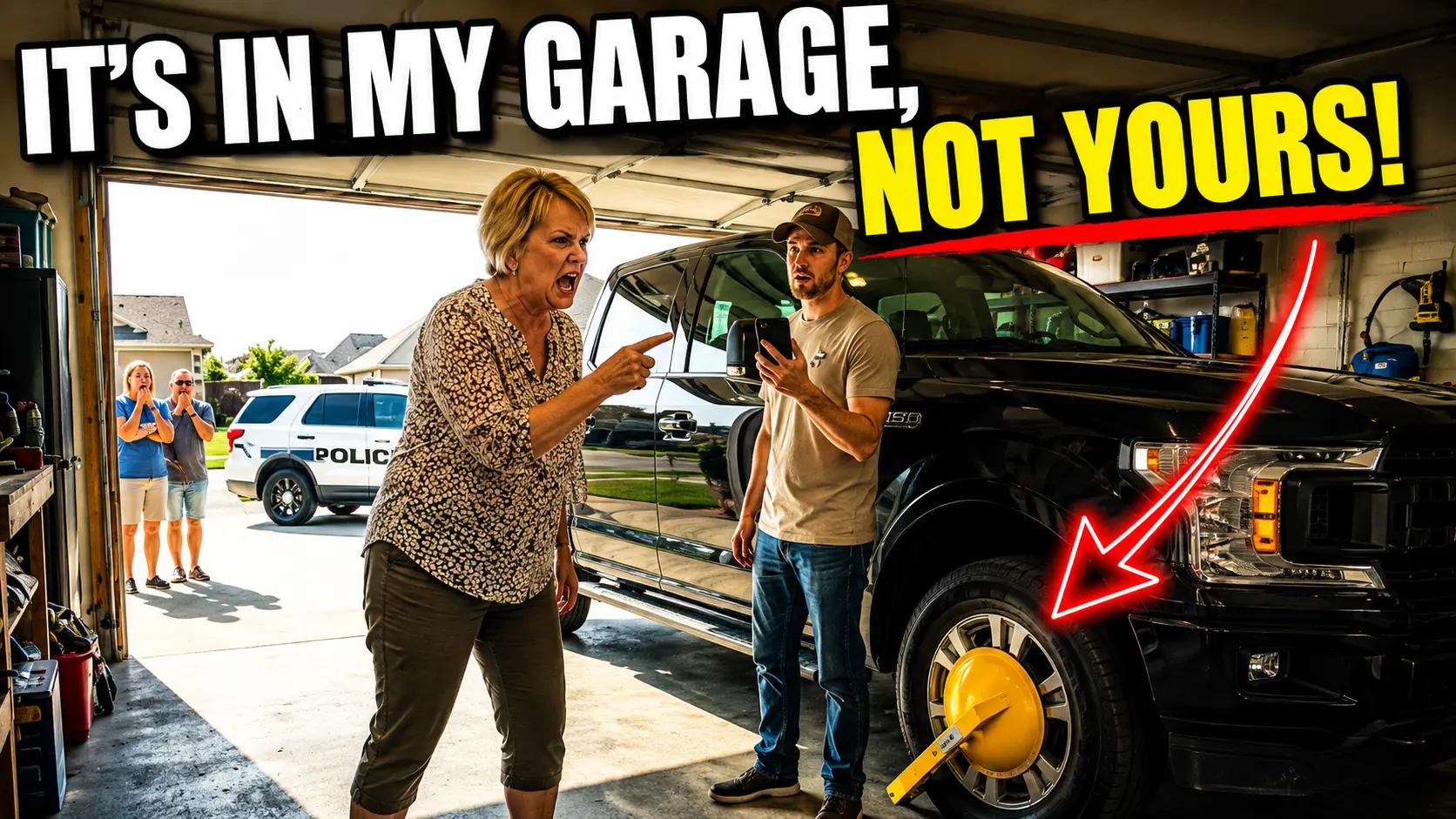
The next morning, I woke up to find my car exactly where I’d left it, still booted. I took fresh photos with that day’s newspaper in the frame to establish the timeline, then headed to work. My shift at the hospital was brutal. We had three trauma cases come in back-to-back, and I didn’t get a break until almost midnight. When I finally checked my phone, I had seven missed calls and a dozen text messages. The first voicemail was from Patricia, her voice calm and satisfied. “Marcus, it’s Patricia Hoffman. I filed the emergency injunction this morning. We have a hearing scheduled for tomorrow at 10:00. The judge’s clerk indicated he’s inclined to grant the injunction, so that’s good news. Call me when you get this.” The second voicemail was from Dave at Quick Lock Towing, and his tone was completely different from our first conversation. “Mr. Chen, this is Dave from Quick Lock. I need to talk to you about the boot on your vehicle. Please call me back as soon as possible. It’s important.” The remaining voicemails were from Brenda, each one progressively more agitated. “Mr. Chen, I’ve been informed that you filed a lawsuit against the HOA. This is completely unnecessary and a waste of everyone’s time. Call me immediately so we can resolve this.” The next one: “Mr. Chen, I’m trying to work with you here, but you’re making this very difficult. The board is willing to waive half the boot removal fee if you withdraw your lawsuit and register your vehicle properly.” And the final one left at 9:00 that evening: “Mr. Chen, you’re making a serious mistake. The HOA has every right to enforce community standards, and we will vigorously defend ourselves against your frivolous lawsuit. You should also know that the board is considering a special assessment against your unit for legal fees. This could have been resolved simply, but you chose to escalate. That’s on you.”
I saved all the voicemails and forwarded them to Patricia, then called her back despite the late hour. She answered on the second ring, sounding wide awake. “Marcus, thanks for calling back. Did you get my message about the hearing?” “I did. I also got several messages from Brenda Carmichael that sound increasingly desperate.” “That’s not surprising. I sent a copy of our filing to the HOA’s registered agent this afternoon. And I’m guessing their attorney read them the riot act. What we’re alleging is pretty serious, and if we can prove it, the HOA could face significant damages.” “Brenda mentioned something about a special assessment against my unit for legal fees. Can she do that?” Patricia made a dismissive sound. “She can try, but it won’t hold up. You can’t be assessed for the cost of defending against a legitimate lawsuit filed because of the HOA’s own misconduct. That’s retaliatory and illegal. If she does it, it’s just more ammunition for us.” “There was also a message from the towing company. The guy sounded worried.” “I’m not surprised. I sent them a letter this afternoon as well, informing them that they may have participated in an illegal trespass and unlawful detention of property. I made it clear that we’re not currently naming them as defendants, but that could change depending on their level of involvement. My guess is they’re realizing they got played by the HOA and they want to distance themselves from this mess.” “Should I call him back?” “Not yet. Let’s see what happens at the hearing tomorrow. Once we have the injunction, we’ll have more leverage. In the meantime, just keep documenting everything.”
The hearing the next morning was held in Multnomah County Circuit Court. I’d taken the day off work and I arrived at the courthouse 45 minutes early, dressed in my best suit. Patricia met me in the lobby carrying a leather briefcase and looking every bit the competent attorney. “Ready?” she asked. “As ready as I’ll ever be.” The courtroom was smaller than I expected, with about 20 seats for observers and a raised bench where the judge would sit. Brenda was already there, seated next to a man in an expensive-looking suit who I assumed was the HOA’s attorney. She shot me a venomous look when I walked in, but I ignored her. Judge Raymond Blackwell entered at precisely 10:00. He was an older man with gray hair and the tired expression of someone who’d seen every type of human pettiness imaginable. He sat down, adjusted his glasses, and looked at the paperwork in front of him. “This is case number 26-4573, Chen versus Meadowbrook Heights Homeowners Association. I’ve reviewed the petition for emergency injunction. Ms. Hoffman, you’re representing the plaintiff?” Patricia stood. “Yes, your honor.” “And Mr. Garrett, you’re here for the defendant?” The HOA’s attorney stood. “That’s correct, your honor. Maxwell Garrett, representing Meadowbrook Heights HOA.” “All right. Ms. Hoffman, this is your motion. Make your case.” Patricia launched into a concise but powerful argument. She outlined the facts, showed photos of the boot on my car in my garage, quoted the relevant sections of Oregon law regarding HOA access to private property, and highlighted the fact that I’d never been given proper notice of the parking permit requirement. She concluded by arguing that the HOA’s actions constituted an illegal trespass and unlawful detention of my property, causing ongoing harm that warranted immediate injunctive relief. Judge Blackwell listened without interruption, occasionally making notes. When Patricia sat down, he turned to Maxwell Garrett. “Mr. Garrett, your response?” Garrett stood, smoothing his tie. “Your honor, the HOA acted entirely within its authority as outlined in the community’s CC&Rs. All homeowners agree to abide by these regulations when they purchase property in the community. Mr. Chen’s vehicle was in violation of clearly stated parking requirements, and the HOA took appropriate enforcement action.” “In his private garage?” Judge Blackwell’s tone was skeptical. “The CC&Rs grant the HOA access to all areas of the community for enforcement purposes. Mr. Chen signed those CC&Rs when he purchased his property.” “Did the HOA provide notice before entering Mr. Chen’s garage?” Garrett hesitated. “The ongoing violation itself provided sufficient notice of the need for enforcement action.” Judge Blackwell removed his glasses and rubbed the bridge of his nose. “Mr. Garrett, I’m going to stop you right there. I’ve been a judge for 23 years, and I’ve seen a lot of HOA cases. This one is particularly egregious. Your client entered this man’s private garage without notice, immobilized his vehicle, and is now demanding $400 for its release. That’s not enforcement. That’s extortion.” “Your Honor, I must object to that characterization.” “You can object all you want, but it doesn’t change the facts. The injunction is granted. The HOA will immediately arrange for the removal of the boot at no cost to Mr. Chen. Furthermore, the HOA is enjoined from taking any retaliatory action against Mr. Chen, including but not limited to special assessments, fines, or restrictions on his use of his property. We’ll schedule a full hearing on the merits in 30 days. Anything else?” Patricia stood. “Your Honor, we’d like to request attorney fees for this motion.” “Granted. The HOA will pay reasonable attorney fees associated with this injunction. Mr. Garrett, I suggest you have a very serious conversation with your client about their policies and procedures. This case should never have gotten to my courtroom. We’re adjourned.” The gavel came down with a sharp crack.
I felt a wave of relief wash over me so powerful that my knees actually went weak. Patricia turned to me with a satisfied smile. “That went well.” Across the courtroom, Brenda was having a heated whispered conversation with Maxwell Garrett, her face flushed red. He was shaking his head, looking deeply unhappy. As we gathered our things to leave, Garrett approached us. “Miss Hoffman, might I have a word?” Patricia glanced at me, then nodded. We stepped into the hallway, where Garrett loosened his tie slightly and sighed. “Look, I’m going to be frank with you. I’ve been the HOA’s attorney for three years, and this is the worst case of overreach I’ve seen from them. I advised Ms. Carmichael not to contest the injunction, but she insisted. After that hearing, I think she’s starting to realize the situation she’s in.” “Is the HOA prepared to settle?” Patricia asked. “I think they might be. What would your client consider fair?” Patricia looked at me. I thought about it for a moment, remembering Brenda’s smug expression when she told me to pay the fee, her casual dismissal of my concerns, her threats about special assessments. “I want a formal written apology from the HOA board,” I said. “I want the HOA to revise their policies to require 24 hours written notice before entering any private garage or unit except in genuine emergencies. I want a full refund of my attorney fees. And I want Brenda Carmichael removed as HOA president.” Garrett winced. “That last one is going to be difficult. The board is elected by homeowners.” “Then put it to a vote. Let the community decide if they want someone who thinks it’s acceptable to invade people’s private property in charge of the HOA.” “I’ll discuss it with the board, but I should warn you, Ms. Carmichael is not going to go quietly.” “I don’t care,” I said. “She violated my rights and she needs to face consequences.” We left the courthouse and Patricia promised to follow up with Garrett in a few days to see if the board was serious about settlement. In the meantime, she’d continue preparing for the full hearing.
True to the judge’s order, I received a call that afternoon from Dave at Quick Lock Towing. His voice was apologetic. “Mr. Chen, I’m calling to arrange removal of the boot from your vehicle. I can come by this evening if that works for you.” “That works. No charge, correct?” “No charge, and Mr. Chen, I want to apologize. We were given information by the HOA that turned out to be inaccurate. If I’d known the vehicle was in your private garage, I never would have sent my guy to boot it.” “I appreciate that, Dave. Can I ask you something? Did Brenda Carmichael tell you the car was in my garage when she requested the boot?” There was a long pause. “She told us the vehicle was parked on HOA property without a permit. She didn’t specify that it was in a private garage. When we got there, our technician did think it was odd, but he had the work order, so he followed through.” “Would you be willing to testify to that if this goes to trial?” Another pause, even longer this time. “I’d have to think about it. We do a lot of work for HOAs in the area, and I don’t want to burn bridges. But between you and me, what happened to you was wrong. So yeah, if it comes to it, I’ll tell the truth about what we were told.” “That’s all I can ask. Thanks, Dave.” He arrived at 7:00 that evening with a younger guy who did the actual work of removing the boot. The whole process took maybe 10 minutes. Dave handed me a receipt marked “no charge per court order” and shook my hand. “Good luck with your case,” he said. “For what it’s worth, I hope you win.” After they left, I sat in my car for a few minutes, just enjoying the fact that it was mobile again. Then I took one final photo of my unblemished wheel and sent it to Patricia with a thumbs-up emoji.
Over the next week, things got interesting. Word of the lawsuit spread through the community like wildfire. I started getting emails and texts from neighbors I’d barely spoken to, most of them expressing support and sharing their own stories of Brenda’s overreach. One woman, Sandra Martinez from unit 12, told me that Brenda had fined her $300 for having the wrong color welcome mat. Another homeowner, James Woo, said he’d been threatened with a lien on his property for painting his front door a shade of blue that Brenda deemed not in keeping with community aesthetics. The stories kept coming, each one more ridiculous than the last. Brenda had apparently been running the HOA like her personal fiefdom for years, and people were terrified of her. She had a reputation for being vindictive, and homeowners who crossed her often found themselves facing a barrage of fines and violations for the most minor infractions. I compiled all these stories and forwarded them to Patricia, who was delighted. “This is perfect,” she told me over the phone. “It establishes a pattern of abusive power. If we go to trial, these people could testify about the toxic environment Brenda has created.”
But we didn’t get a chance to use that testimony right away. Three days after the injunction hearing, Maxwell Garrett called Patricia with a settlement offer. The HOA would pay my attorney fees, issue a formal apology, and revise their access policies as I’d requested. However, they were not willing to remove Brenda from the board. “Not good enough,” I told Patricia when she relayed the offer. “Brenda is the problem. As long as she’s in charge, this is going to keep happening.” “I agree, but we can’t force the board to remove her. That’s up to the homeowners.” “Then let’s make sure the homeowners have all the information they need to make an informed decision.” With Patricia’s help, I drafted a letter to every homeowner in Meadowbrook Heights. In it, I outlined what had happened to me, referenced the court’s injunction, and shared some of the stories other homeowners had told me about Brenda’s conduct. I concluded by calling for a special meeting to vote on Brenda’s removal from the board and to discuss reforms to the HOA’s governance. Oregon law allowed homeowners to call a special meeting if they could get signatures from at least 20% of the community. Meadowbrook Heights had 86 units, so I needed 18 signatures. I got 43. The special meeting was scheduled for three weeks later to be held in the community clubhouse.
In the meantime, Brenda went into full damage control mode. She sent out her own letter claiming that I was a troublemaker who was trying to undermine the HOA over a simple parking violation. She argued that the rules existed for everyone’s benefit and that enforcing them was her job as board president. What she didn’t count on was the fact that a lot of people were really, genuinely fed up with her behavior. The more she tried to defend herself, the more people came forward with their own horror stories. A Facebook group called Meadowbrook Heights HOA Reform sprang up and quickly gained over 60 members. People shared photos of ridiculous violation notices, complained about arbitrary fines, and vented their frustrations. The night before the special meeting, I got a call from an unknown number. When I answered, a woman’s voice said, “Is this Marcus Chen?” “Yes, who is this?” “My name is Linda Patterson. I used to be on the HOA board with Brenda Carmichael. I resigned two years ago because I couldn’t deal with her anymore. I heard about the special meeting tomorrow and I wanted to offer my support.” “I appreciate that, Linda. Can I ask why you resigned?” “Brenda is a bully. She sees the HOA as her personal kingdom and anyone who disagrees with her gets steamrolled. I tried to push back on some of her more extreme policies and she made my life hell. She filed violation notices against my property almost weekly, always for things that were either completely made up or incredibly petty. Eventually, I just gave up and resigned. It was easier than fighting her.” “Why didn’t you say something? Why didn’t other board members stand up to her?” Linda sighed. “Because she’s relentless. And honestly, most of the board members are just people who don’t want to be there. They got elected because nobody else wanted to do it, and they just rubber-stamp whatever Brenda wants because it’s easier than arguing. But what she did to you crossed a line. If you need me to speak at the meeting tomorrow, I will.” “That would be incredibly helpful. Thank you.”
The special meeting was standing-room-only. Every seat in the clubhouse was filled, and at least 20 people were standing along the walls. I’d never seen this level of engagement from the community, and judging by Brenda’s expression, neither had she. She sat at the front table with the other two board members, both of whom looked deeply uncomfortable. I’d been designated to chair the meeting since I’d organized it, so I stood at a podium and called things to order. “Thank you all for coming. We’re here tonight to discuss concerns about HOA governance, and to vote on a motion to remove Brenda Carmichael from her position as board president. Before we vote, we’ll have an open comment period where anyone can speak. Please keep your comments respectful and stick to facts.” The first person to speak was Sandra Martinez, the woman who’d been fined for her welcome mat. She described the violation notice she’d received and the threatening tone of Brenda’s follow-up emails. Next was James Woo, who talked about being told his door color was unacceptable, despite there being no specific color requirements in the CC&Rs. One by one, homeowners stood up and shared their experiences. Some were angry, some were tearful, but all of them painted a picture of an HOA president who had completely lost sight of her role. When it was Linda Patterson’s turn, she didn’t hold back. “I served on the board with Brenda for a year and a half, and it was the most miserable experience of my life. She doesn’t see herself as a servant of this community. She sees herself as a ruler. She makes decisions without consulting the other board members. She retaliates against anyone who questions her. And she interprets the CC&Rs in whatever way serves her interests at the moment. What happened to Marcus Chen was wrong, but it wasn’t an isolated incident. It’s part of a pattern that’s been going on for years.” By the time the comment period ended, Brenda’s face was pale. She stood and tried to defend herself, but her arguments fell flat. She claimed she was just enforcing the rules, that people didn’t understand how hard her job was, that she’d given years of service to the community. And this was how she was being repaid. Nobody was buying it. When it came time for the vote, the result was overwhelming. Sixty-eight homeowners voted to remove Brenda from the board. Seven voted against, likely her few remaining friends in the community. Eleven abstained. The motion passed. Brenda stood, grabbed her purse, and walked out without another word. As the door closed behind her, the room erupted in applause.
In the aftermath of the vote, the remaining board members appointed Linda Patterson as interim president. One of her first acts was to accept the settlement terms Patricia and I had proposed. The HOA issued a formal written apology, revised their access policies to require proper notice, and paid my attorney fees in full, which came to just over $8,000.
>>>NEXT CHAPTER 3: HOA Karen Had My Car Booted Inside My Own Garage — Then the Tow Company Testified Against Her<<<