CHAPTER 3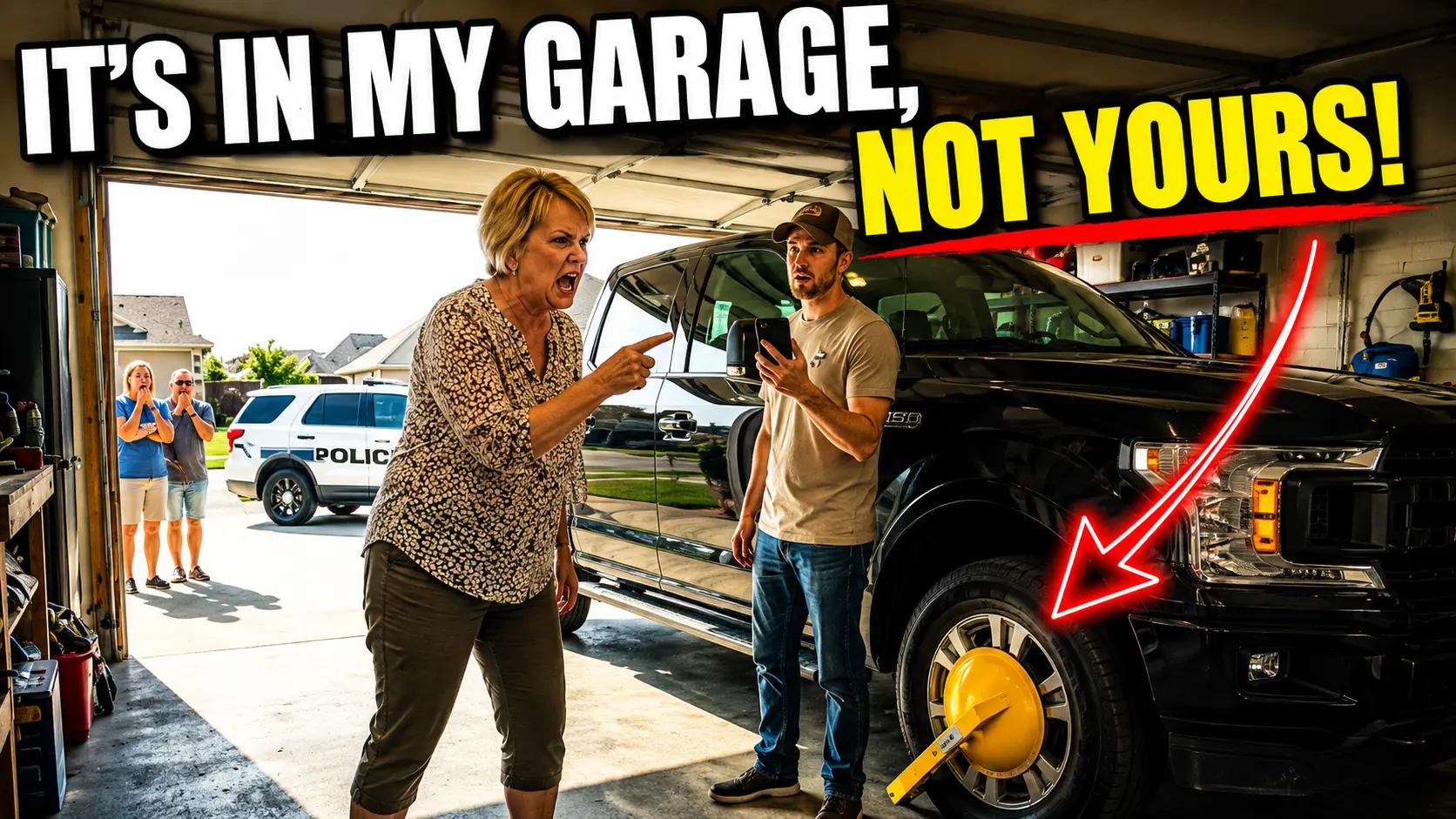
But the story didn’t end there. About two weeks after the special meeting, I got another call from Patricia. “Marcus, you’re not going to believe this. I just got a very interesting phone call from the county prosecutor’s office.” “About what?” “About Brenda Carmichael. Apparently, after your case got publicity, several other homeowners came forward with complaints. The prosecutor is investigating whether Brenda misappropriated HOA funds.” I sat up straighter. “Misappropriated how?” “That’s still being investigated, but the preliminary evidence suggests she was using the HOA’s credit card for personal expenses. Dinners, shopping trips, even a weekend getaway to Cannon Beach. She apparently thought because she was board president, she was entitled to these perks. The total amount is somewhere around $12,000 over two years.” “Is that enough to press charges?” “Definitely. That’s theft.” The investigation took about six weeks. During that time, an independent audit of the HOA’s finances was conducted. And it revealed that Brenda had been far more creative with the HOA’s money than anyone had realized. Beyond the personal expenses on the credit card, she’d been paying herself an unauthorized salary of $500 a month, claiming it was compensation for her time as board president. The CC&Rs explicitly stated that board positions were volunteer and unpaid. In total, Brenda had taken roughly $24,000 from the HOA over a three-year period. The audit also revealed that she’d been approving contracts with vendors who gave her kickbacks, including the landscaping company that maintained the common areas.
The Multnomah County District Attorney’s office filed charges in late May. Brenda was charged with theft in the first degree, a class C felony, and fraudulent use of a credit card. The case attracted local media attention with a headline “HOA president accused of embezzling thousands” appearing in The Oregonian. I didn’t take any pleasure in Brenda’s downfall. Part of me actually felt sorry for her, but I also knew that what she’d done was wrong and that accountability was necessary. The criminal case moved slowly as these things do. In the meantime, I got back to my normal life. Work at the hospital was as demanding as ever, but I found that I actually enjoyed coming home to Meadowbrook Heights now that the oppressive atmosphere Brenda had created was gone. Linda Patterson was doing an excellent job as HOA president, focusing on actual community improvement rather than petty enforcement of arbitrary rules.
The full hearing on my civil case was scheduled for August. I honestly didn’t expect it to go forward since the HOA had settled most of my claims, but Patricia explained that we were still pursuing damages for emotional distress and the invasion of privacy. More importantly, we wanted a court ruling that would set precedent and prevent other HOAs from pulling the same stunt. The hearing was held on a sweltering Thursday afternoon. Judge Blackwell was once again presiding, and he seemed to remember our case from the injunction hearing. This time, the HOA had a different attorney, since Maxwell Garrett had apparently decided he didn’t want to defend the indefensible. The new attorney, a woman named Rebecca Stone, was professional, but clearly aware she had a losing hand. She made a half-hearted argument that the HOA had acted in good faith based on their interpretation of the CC&Rs, but Judge Blackwell wasn’t having it. “Miss Stone, we’ve already established through the injunction that your client violated Mr. Chen’s rights. The question now is what damages he’s entitled to. Miss Hoffman, what are you asking for?” Patricia stood. “Your Honor, we’re seeking $10,000 in compensatory damages for emotional distress and invasion of privacy. Plus a declaratory judgment that the HOA’s actions violated Oregon’s Planned Community Act.” Judge Blackwell nodded. “Mr. Chen, would you like to address the court regarding the impact this situation had on you?” I stood, my heart racing. Public speaking had never been my strong suit, but I’d prepared for this. “Your Honor, I’m a physician. I work 12-hour shifts in an emergency room dealing with life and death situations. When I come home, I need to be able to relax and recharge. What Brenda Carmichael did made me feel violated in my own home. For weeks, I didn’t feel safe in my own garage. I was anxious and angry, and it affected my work and my personal life. Beyond that, the principle matters. If an HOA can enter someone’s garage without notice and hold their property hostage, what else can they do? This wasn’t about a parking sticker. It was about power and control, and it was wrong.” Judge Blackwell listened carefully, then turned to Rebecca Stone. “Does the HOA wish to present any evidence or testimony?” “No, your honor.” “All right, here’s my ruling. The HOA’s actions were clearly unlawful and constituted a serious invasion of Mr. Chen’s privacy and property rights. I’m awarding compensatory damages in the amount of $10,000. I’m also issuing a declaratory judgment that the HOA violated Oregon Revised Statutes section 94.640 regarding HOA access to private property. The HOA is ordered to pay Mr. Chen’s attorney fees and costs. This decision will be published and can be cited as precedent in future cases. Court is adjourned.” Patricia and I shook hands, both of us grinning. As we left the courtroom, Rebecca Stone approached us. “Ms. Hoffman, Mr. Chen, the board wanted me to convey their apologies once again. The new leadership is committed to making sure nothing like this ever happens again.” “I appreciate that,” I said. “And for what it’s worth, Linda Patterson is doing a great job. I actually like living in Meadowbrook Heights now.” We walked out into the bright August sunshine, and I felt a weight lift off my shoulders that I hadn’t even realized I’d been carrying.
But there was one more chapter to this saga. Brenda Carmichael’s criminal trial was scheduled for October. The prosecutor’s office had offered her a plea deal. Plead guilty to a reduced charge of theft in the third degree, pay full restitution to the HOA and serve two years of probation. Brenda rejected the offer, insisting she’d done nothing wrong. The trial lasted three days. I attended part of it, sitting in the gallery and watching as the prosecution methodically presented their case. They had bank records, credit card statements, emails, and testimony from the HOA’s accountant. The evidence was damning. But the moment that stood out to me was when Dave from Quick Lock Towing took the stand. The prosecutor called him as a witness and he testified about the work order he’d received from Brenda to boot my car. “Can you describe what information you were given by Ms. Carmichael?” the prosecutor asked. Dave looked uncomfortable but determined. “She told us there was a vehicle parked on HOA property without a permit. She said it had been there for several days and needed to be booted immediately. She gave us the address and unit number.” “Did she specify that the vehicle was in a private garage?” “No, she did not. If she had, I would have questioned whether we had the authority to enter private property. When our technician arrived and saw that the car was in a garage, he called me. I told him to proceed because we had a signed work order from the HOA president. In hindsight, that was a mistake.” “Why do you say it was a mistake?” “Because what we did was wrong. We entered someone’s private garage and immobilized their vehicle based on misleading information. Mr. Chen had every right to be angry and I’m just glad he didn’t sue us along with the HOA.” The defense attorney tried to argue that Dave’s testimony proved Brenda hadn’t done anything wrong since she’d simply hired a towing company to enforce HOA rules. But the prosecutor countered by pointing out that Brenda had deliberately withheld information from the towing company to ensure they’d carry out an action that she knew was legally questionable. When it was Brenda’s turn to testify, she was defensive and evasive. She insisted that everything she’d done was for the good of the community, that people just didn’t appreciate how hard she worked, that she deserved to be compensated for her time. When the prosecutor showed her receipts for personal dinners and shopping trips charged to the HOA account, she claimed they were legitimate business expenses because she’d sometimes discussed HOA matters during those meals. The jury deliberated for less than four hours. They found Brenda guilty on all counts: theft in the first degree and fraudulent use of a credit card. Sentencing was scheduled for six weeks later.
I wasn’t in the courtroom for the sentencing, but Patricia called me afterward to fill me in. Judge Maria Santos, who had presided over the criminal trial, sentenced Brenda to three years in prison with eligibility for early release after serving 18 months. She was also ordered to pay full restitution to the HOA, which came to $24,000 plus interest, and to cover the cost of the independent audit that had uncovered her theft. In her sentencing remarks, Judge Santos was blunt. “Ms. Carmichael, you were given a position of trust by your community, and you abused that trust in multiple ways. You stole from your neighbors, you violated their privacy, and you created an atmosphere of fear and intimidation. Your actions went far beyond simple theft. You undermined the entire concept of community governance. The sentence I’m imposing reflects the seriousness of your crimes and the need to deter others who might think they can use HOA leadership positions for personal gain.” Brenda was led out of the courtroom in handcuffs. According to news reports, she showed no emotion.
The fallout from Brenda’s conviction rippled through the Portland HOA community. Several other HOA boards hired independent auditors to review their finances, worried about what they might find. The Oregon state legislature introduced a bill that would require HOAs to undergo annual independent audits and provide more transparency about their financial operations. The bill passed in March of the following year, directly citing my case and Brenda’s conviction as the impetus. As for me, life gradually returned to normal. I kept working at the hospital, kept living in my townhouse at Meadowbrook Heights, and tried to put the whole ordeal behind me. The $10,000 in damages went toward paying off some medical school debt, and I donated a portion to a legal aid organization that helps homeowners fight abusive HOAs. Linda Patterson served as HOA president for two years and did a fantastic job. She simplified the rules, improved communication with homeowners, and actually made the community feel like a community rather than a prison camp. When she decided not to run for re-election, I actually considered running myself, but ultimately decided I didn’t have the time given my work schedule.
I still see Dave from Quick Lock Towing occasionally. His testimony in Brenda’s trial had been a turning point, and I made a point of thanking him for his honesty. He told me that after everything that happened, his company revised their policies about accepting HOA work orders. Now they require detailed information about where a vehicle is located and verification that the HOA has legal authority to request a boot or tow. “What happened to you opened my eyes,” he told me over coffee one afternoon. “I always thought HOAs were legitimate authorities, that they knew what they were doing. I never questioned their work orders. Now I do. We’ve actually turned down several jobs from HOAs because the situation seemed sketchy.” “I’m glad something good came out of it,” I said. About a year after Brenda’s sentencing, I ran into Maxwell Garrett, the first attorney who’d represented the HOA. He was at a legal conference I was attending as a panelist on medical malpractice issues. During a break, he approached me. “Doctor Chen, I wanted to apologize for how I handled your case initially. I should have recognized immediately that what Brenda did was indefensible. I let my loyalty to a long-term client cloud my judgment.” “I appreciate that,” I said. “For what it’s worth, I know you were just doing your job.” “I’ve actually stopped representing HOAs entirely,” he admitted. “After your case and Brenda’s conviction, I realized that too many HOA boards see themselves as mini governments with unlimited power. I don’t want to be part of enabling that anymore. I’ve shifted my practice to business law.” “That’s probably a healthier area of law,” I said with a smile.
As I write this, it’s been almost three years since I found that boot on my car. Brenda served 16 months in prison and was released on parole in early 2027. I have no idea what she’s doing now and honestly, I don’t care. I hope she’s learned from her mistakes, but that’s not my concern. What I do know is that my case made a difference. I’ve received emails and messages from people all over Oregon and even other states thanking me for standing up to HOA abuse. Some of them have shared their own stories of fighting back against overzealous HOA boards, citing my case as inspiration. The legislative changes that came out of it have made HOAs more accountable and transparent. But more than any of that, I’m proud that I didn’t just pay the boot fee and move on. It would have been easier. It would have been cheaper, at least in the short term, but it would have been wrong. Brenda Carmichael needed to be held accountable and the system needed to be changed. Sometimes I still park my car in my garage and think about finding that yellow boot clamped to my wheel. It seems almost surreal now, like something that happened to someone else. But then I remember the anger I felt, the violation, the sheer audacity of someone thinking they had the right to enter my private space and hold my property hostage. And I remember that standing up for yourself, even when it’s hard, even when it’s expensive, even when everyone tells you to just let it go, is sometimes the most important thing you can do. The Meadowbrook Heights community is thriving now. The pool and gym are well maintained, the landscaping is beautiful, and the atmosphere is friendly and welcoming. People actually talk to each other instead of living in fear of violation notices. The current HOA board operates with transparency and respect for homeowners’ rights. Last month there was a community barbecue by the pool. I went, not because I had to, but because I wanted to. I stood there with a plate of hamburger and potato salad chatting with Sandra Martinez and James Woo and a dozen other neighbors. And I thought about how different things could have been if I just paid that $400. But I didn’t pay it. I fought back and in the end justice prevailed. My Tesla still parks in my garage every night exactly where it belongs. No boot, no sticker, no harassment. Just my car in my garage in my home and that’s exactly how it should be.