Cooper the Shelter Dog Finished His First Full Meal, Marking a Turning Point in His Recovery
Reader Theme:
Font Size:
24px
When Cooper first entered our medical kennel, one of the most important things we monitored was not how far he could walk or how loudly he barked.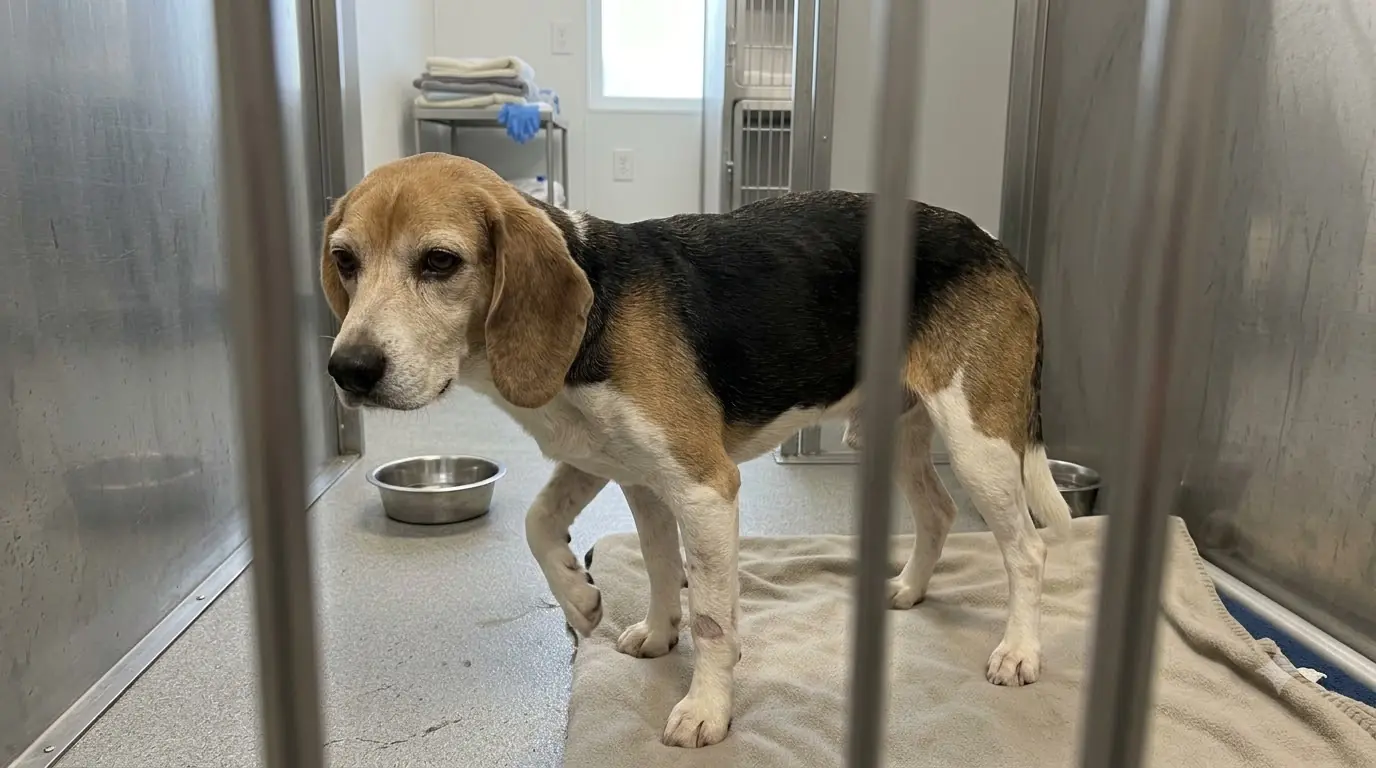
It was how long it took him to finish a meal.
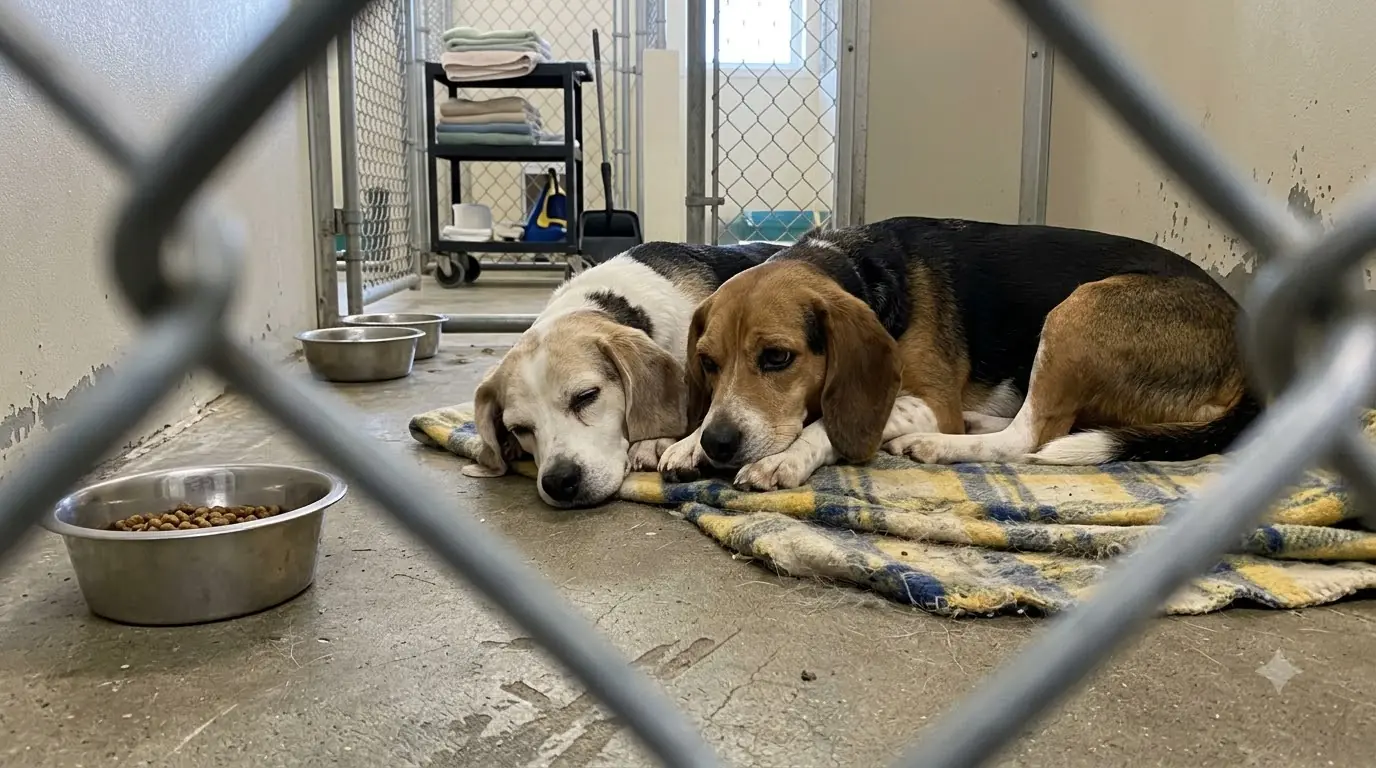
The 9-year-old Beagle mix was noticeably thin. His hips and ribs were easier to feel than we would expect in a dog of his size, and his muscles lacked the fullness we wanted to see in a healthy older adult. He was alert and interested in food, but eating seemed to require more effort than it should have.
Cooper did not refuse meals completely.
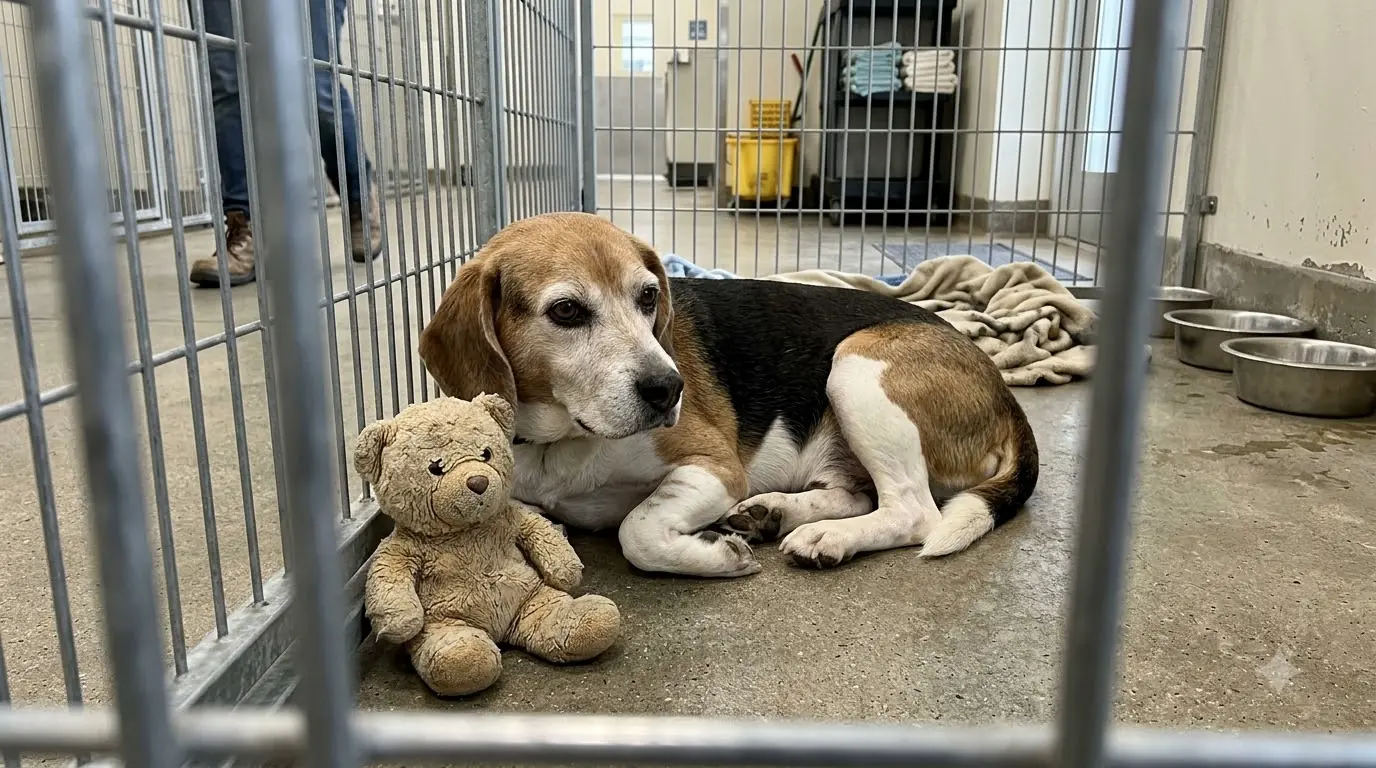
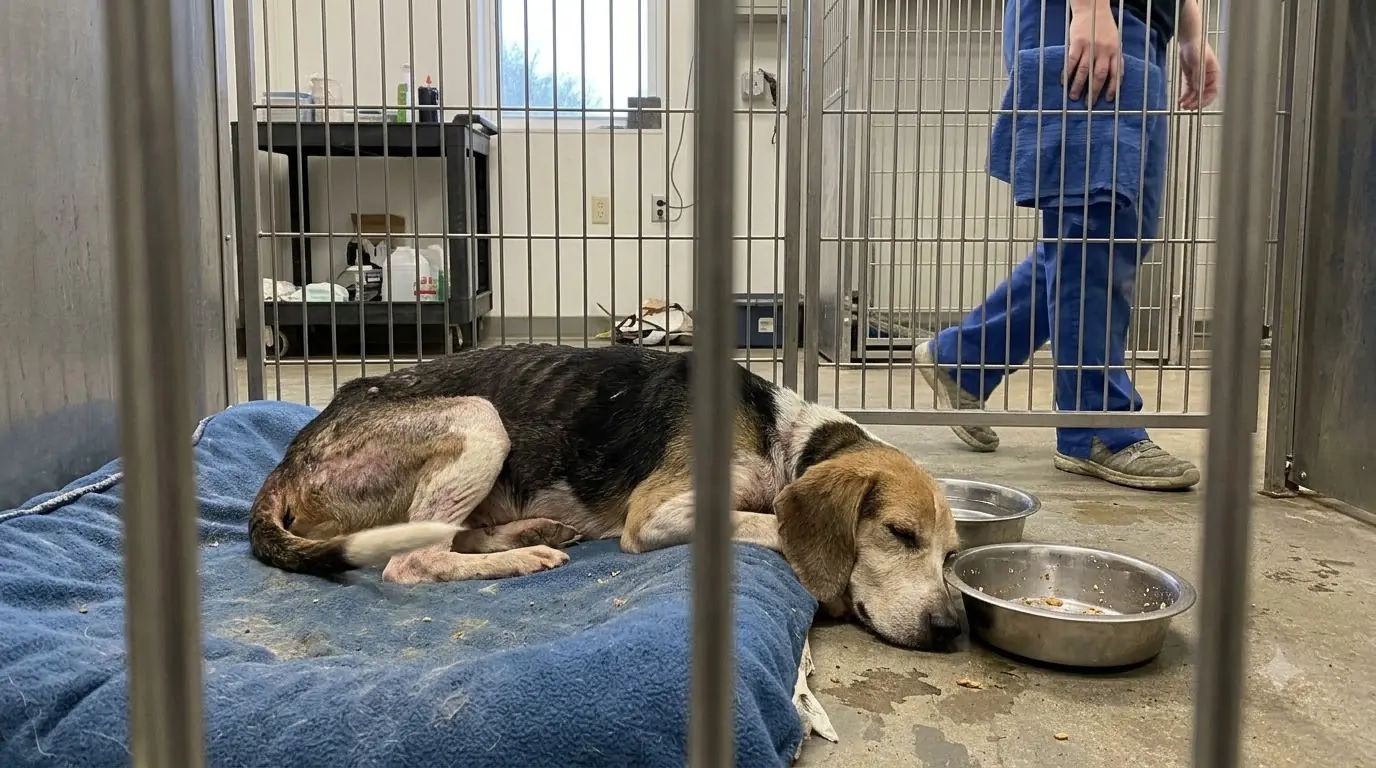
Instead, he approached his bowl, ate several bites, stopped, and lowered himself beside it.
After a minute or two, he might lift his head and try again.
Some meals took a long time.
Others remained partly unfinished.
That pattern immediately became part of his medical record.
Older dogs can lose weight for many reasons. Dental pain, chronic gastrointestinal disease, kidney disease, liver disease, endocrine disorders, cancer, inadequate nutrition, parasites, chronic infection, and stress can all contribute. Sometimes several smaller problems occur at the same time.
We did not want to choose the simplest explanation without investigating.
What We Knew at Intake
Cooper arrived with limited reliable history.
We could confirm his approximate age and identify him as a Beagle mix, but much of his previous medical care was unknown.
We could not verify how long he had been thin.
We did not know whether the change had happened gradually or recently.
We also could not confirm what type of food he had been eating, whether he had been receiving regular veterinary care, or whether anyone had previously noticed changes in his appetite, stool, or energy.
Because that history was incomplete, our team focused on what could be documented.
At intake, Cooper was quiet but responsive.
He stood when approached and showed interest in people without becoming overly excited.
His nose remained active, which was not surprising for a Beagle-type dog. He sniffed new bedding, the kennel floor, staff shoes, and every container that entered his space.
He drank water after settling in.
His appetite was present, but his eating pattern was slow.
His body condition was below ideal.
His coat was somewhat dull, and his skin had mild dryness without open wounds or severe irritation.
He was able to walk independently, though his energy was limited.
After a short period of activity, he often chose to lie down.
That combination of low body condition and reduced stamina warranted a full evaluation.
The First Veterinary Examination
Cooper received a complete physical examination soon after intake.
His temperature was within an expected range.
His heart and lungs were carefully assessed and did not reveal an immediate emergency.
His abdomen was soft, though he was mildly tense during deeper palpation. That finding alone was not specific enough to diagnose a gastrointestinal problem, but it was worth noting.
His eyes and ears did not show any major abnormality.
His mouth, however, needed attention.
Cooper had significant tartar, gum inflammation, and several teeth that appeared diseased enough to warrant further dental evaluation.
Dental disease can make eating uncomfortable, especially with dry food or harder textures.
It was possible that oral pain was contributing to his slow meals.
But his degree of weight loss suggested that we should not assume his mouth was the only issue.
The veterinarian also checked his lymph nodes, skin, joints, paws, and overall muscle condition.
No acute orthopedic injury was found.
Cooper had mild age-related stiffness, but nothing on examination explained why he was so thin.
Baseline Bloodwork
The next step was diagnostic testing.
A complete blood count and serum chemistry panel were performed.
His bloodwork did not show severe anemia or an obvious life-threatening organ failure.
Kidney values were within an acceptable range for his clinical picture, and his liver enzymes did not indicate a major acute hepatic crisis.
One finding, however, caught our attention.
Cooper's total protein and albumin were mildly below the ideal range.
Albumin is an important protein produced by the liver and maintained through a balance of production, distribution, and loss. Low albumin can occur for several reasons, including gastrointestinal protein loss, kidney loss, reduced production in some liver diseases, inflammation, or poor nutritional intake.
Cooper's other findings did not immediately point to one single cause.
His urine was therefore evaluated to check for significant protein loss through the kidneys.
Urinalysis did not support heavy urinary protein loss as the main explanation.
That made the gastrointestinal tract a more important area to investigate.
Stool Testing and Parasite Screening
A fecal sample was collected.
Parasites can contribute to weight loss, loose stool, poor coat condition, and reduced nutrient absorption.
Cooper's fecal testing did not reveal a heavy parasite burden that would explain his overall condition.
He still received appropriate preventive parasite care according to our shelter protocol, but we continued looking.
His stool history in the shelter was also important.
Cooper did not have constant severe diarrhea.
Instead, his bowel movements varied.
Some were normally formed.
Others were softer than expected.
That variability can occur with stress, diet change, mild intestinal inflammation, or many other conditions.
Because his weight loss and low albumin were more significant than the stool changes alone, our veterinary team recommended additional gastrointestinal evaluation.
Imaging Helped Narrow the Possibilities
Abdominal radiographs were obtained first.
They did not show an obvious foreign body or obstructive pattern.
There was no dramatic abdominal mass visible on those initial images.
An abdominal ultrasound was then performed to provide more detail.
Ultrasound allowed the veterinarian to evaluate the stomach, intestinal wall, liver, spleen, pancreas, kidneys, and abdominal lymph nodes more closely.
Cooper's intestinal tract showed mild diffuse thickening and changes that could be consistent with chronic enteropathy.
Chronic enteropathy is a broad term used for persistent gastrointestinal disease that can have several underlying causes.
In some dogs, dietary sensitivity plays a role.
In others, inflammatory disease is involved.
Certain cancers can produce similar signs.
No single ultrasound image could confirm exactly what Cooper had.
That distinction mattered.
We did not want to tell a dramatic story that the diagnostics had not yet established.
At this point, what we could say responsibly was that Cooper had chronic weight loss, low albumin, inconsistent stool quality, and imaging findings suggesting chronic gastrointestinal disease.
The Dental Problem Still Mattered
While the gastrointestinal workup continued, we did not ignore Cooper's mouth.
He had clear dental disease.
Several teeth were painful or structurally compromised enough that dental treatment would eventually be necessary.
However, Cooper was thin and still being medically stabilized.
Rather than immediately moving him into anesthesia, the team prioritized hydration, nutrition, diagnostic work, and improving his general condition.
This is common in rescue medicine.
Sometimes the correct procedure is obvious, but the safest timing is not immediate.
Cooper needed enough physiologic reserve to tolerate anesthesia well.
In the meantime, his food was softened.
That simple change made eating easier.
He still paused during meals, but he chewed less cautiously and appeared more comfortable.
Nutrition Became Part of His Treatment
Weight gain sounds simple until the patient has a gastrointestinal disorder.
Feeding very large meals to a thin dog can create problems.
Rapid dietary changes may worsen diarrhea or vomiting.
Overfeeding can be uncomfortable.
The safest approach is often controlled, measured nutrition adjusted to the dog's tolerance.
Cooper was transitioned gradually onto a highly digestible veterinary diet selected by his medical team.
His daily calories were divided into multiple smaller meals.
This reduced the amount he had to manage at one sitting.
Staff documented exactly how much he ate.
If he stopped after several bites, the remaining food was measured rather than guessed.
His water intake was monitored as well.
Cooper was mildly dehydrated initially, so fluid support was provided according to his needs.
As his hydration improved, his eyes appeared brighter and his energy increased slightly.
But he still tired easily.
Eating Was Work
One of the most striking things about Cooper was how determined he seemed to remain interested in food even when he lacked stamina.
He would sniff the bowl immediately.
He would take several bites.
Then he stopped.
Sometimes he sat.
Sometimes he lowered his chest to the floor beside the bowl and simply rested.
Staff resisted the temptation to crowd him or repeatedly push the bowl toward his face.
He was given time.
If he resumed eating on his own, we let him continue.
If he did not, the meal was recorded and his medical team was updated.
Appetite is information.
So is the way a dog eats.
Cooper was not simply being "picky."
His behavior had to be evaluated in the context of weight loss, dental disease, and suspected gastrointestinal illness.
Additional Gastrointestinal Testing
Because chronic enteropathy can have multiple causes, additional blood tests were used to assess certain aspects of gastrointestinal function.
Cooper's vitamin B12 level was lower than ideal.
Vitamin B12, or cobalamin, can become deficient in dogs with chronic intestinal disease because absorption occurs in a specific portion of the small intestine.
Low B12 does not diagnose one particular disease, but it can support evidence of impaired intestinal absorption.
Cooper began cobalamin supplementation according to veterinary recommendations.
His folate and pancreatic function were also assessed to help rule out other causes of chronic weight loss.
The results did not support exocrine pancreatic insufficiency as the primary problem.
That was useful because exocrine pancreatic insufficiency can also cause significant weight loss despite appetite.
With the available evidence, Cooper's working diagnosis became chronic inflammatory enteropathy with associated malabsorption, while acknowledging that more invasive testing would be required to characterize the condition with complete certainty.
Why We Did Not Rush Into Biopsies
Definitive diagnosis of certain gastrointestinal diseases can require endoscopic or surgical intestinal biopsies.
That option was discussed.
However, diagnostic decisions must consider the whole patient.
Cooper was thin.
He had low albumin.
He had dental disease.
He was clinically stable but did not have much reserve.
Because his ultrasound findings did not reveal a clear focal mass and because he was not in immediate crisis, the team elected to begin with a carefully monitored dietary and medical trial before considering invasive biopsies.
That decision could change if he failed to improve.
If his albumin continued falling, if he developed persistent vomiting or diarrhea, if imaging changed, or if his weight declined despite treatment, further diagnostics would become more important.
Rescue medicine often involves this kind of staged decision-making.
The goal is not to perform every possible test at once.
The goal is to gather enough information to make safe, responsible choices.
The First Week Was Uneven
Cooper did not improve dramatically overnight.
The first week was a mixture of small gains and frustrating pauses.
One morning he ate most of breakfast.
At lunch, he left nearly half.
The next day, his appetite improved again.
His stool remained intermittently soft.
He slept frequently.
He still rose when staff approached but did not spend long periods standing at the kennel door.
His body seemed to prioritize rest.
That was not surprising.
Recovering from chronic weight loss takes time.
Cooper's care team continued the digestible diet, smaller meals, B12 supplementation, and supportive medications selected to address his gastrointestinal symptoms.
His weight was checked regularly, but not obsessively from day to day.
Hydration shifts can change the scale.
Weekly trends were more meaningful.
Then Came a Small Improvement
During the second week, Cooper began finishing larger portions.
His meals still took time.
But he spent less time resting beside the bowl.
His stool became more consistently formed.
He remained interested in water without drinking excessively.
His energy improved enough that he began standing at the front of the kennel when familiar staff entered.
One afternoon, he even gave a short Beagle-like sniffing investigation of a treat pouch before returning to bed.
That behavior drew smiles, but medically we remained cautious.
One good afternoon did not mean his disease had resolved.
We continued monitoring.
His Weight Finally Moved in the Right Direction
Cooper's first meaningful weight gain was modest.
That was exactly what we wanted.
He added a small amount over the course of the next several weeks.
His ribs remained easy to feel, but his body no longer looked quite as hollow.
More importantly, the weight gain was accompanied by better food intake and improved stool quality.
His albumin was rechecked.
It had stabilized and showed slight improvement.
That was encouraging.
It suggested that his treatment plan might be helping reduce intestinal losses or improve nutrient absorption.
Still, his values were not fully normal.
Long-term follow-up remained necessary.
The Morning He Finished Everything
Then came the morning that stayed with everyone who had been watching him.
Cooper's breakfast was placed in front of him as usual.
He sniffed it.
He began to eat.
Staff expected the familiar pause.
Instead, he kept going.
Slowly.
Steadily.
He finished the entire portion.
Then he carefully licked the bottom of the bowl.
He sniffed around the rim as if checking whether anything remained.
Only then did he turn away.
Cooper walked back toward his bed at the same deliberate pace he usually used.
Before lying down, he turned in a small circle.
Then he looked toward the kennel door.
His tail tapped the blanket twice.
After that, he curled up and slept.
No one treated it as a miracle.
But everyone understood what it represented.
For a dog whose food intake had to be measured bite by bite, finishing a full meal was meaningful progress.
Dental Treatment Became Safer
As Cooper gained strength and his laboratory values stabilized, the veterinary team reconsidered his dental disease.
His mouth remained an important source of discomfort.
Once he was considered a safer anesthetic candidate, Cooper underwent a dental procedure.
Pre-anesthetic bloodwork was reviewed first.
He received appropriate monitoring throughout anesthesia.
Dental radiographs helped identify disease below the gumline.
Several significantly diseased teeth were extracted.
The rest of his mouth was cleaned.
Cooper received pain control and postoperative instructions appropriate for his condition.
His food remained softened during recovery.
The days after the procedure provided another clue about how much his mouth had been affecting him.
Once the initial postoperative discomfort passed, Cooper approached meals with noticeably less hesitation.
He still ate slowly.
That seemed to be part of his current temperament and energy level.
But he no longer appeared to chew as cautiously.
Hospital Kennel Behavior
Cooper was a quiet medical patient.
He did not constantly seek attention.
He also did not avoid people entirely.
When staff opened his kennel, he typically raised his head first.
If the interaction remained calm, he approached.
He liked gentle contact around his shoulders and chest.
He was less enthusiastic about handling around his mouth, especially before his dental treatment, so staff respected that discomfort and used low-stress techniques.
Cooper rarely barked in the medical ward.
Instead, he listened.
When another dog vocalized, his ears shifted toward the sound.
If hallway activity became busy, he often chose to stay on his bed.
His bed became his secure resting place.
He frequently turned in a small circle before lying down.
That behavior continued through almost every stage of his care.
Sleep Was a Major Part of Recovery
Cooper slept a great deal during the first few weeks.
That was expected.
Older dogs normally rest more than young dogs, and Cooper was recovering from weight loss, chronic gastrointestinal disease, dental pain, diagnostic procedures, and a major environmental transition.
The important question was whether his sleep looked restorative or whether he appeared profoundly lethargic.
Over time, the difference became clearer.
Early on, Cooper slept because he seemed to have very little energy.
Later, he slept after walks or meals but became appropriately alert when something interesting happened.
He began responding faster to familiar voices.
His nose became more active.
He stood without needing as much time.
Those subtle behavioral changes matched the medical improvements we were seeing.
Mobility and Strength
Cooper did not arrive with a major orthopedic injury.
Still, prolonged weight loss had reduced his muscle mass.
His hindquarters were especially lean.
We therefore treated physical rehabilitation as part of his recovery.
He began with short leash walks.
The goal was not distance.
It was regular movement.
As his calorie intake became more reliable, the walks increased gradually.
He was allowed to sniff frequently.
For Cooper, sniffing seemed to be one of the best motivators available.
His Beagle ancestry was evident whenever he discovered an interesting scent.
For several seconds, he could forget everything else.
He followed the trail with his nose close to the ground until his energy ran out.
Then he willingly returned inside.
Bathroom Habits
Cooper's bowel movements remained one of our most important monitoring tools.
Early in care, stool quality varied considerably.
As his diet and treatment plan took effect, the stools became more consistently formed.
There were occasional softer episodes, especially during dietary adjustments, but no sustained severe diarrhea.
Any significant recurrence would have triggered reassessment.
His urination remained normal.
He did not show persistent straining or unusual frequency.
He was generally clean in his kennel when given regular outdoor opportunities.
As his stamina improved, he began walking toward the door more readily when it was time for a bathroom break.
A Setback
Several weeks into treatment, Cooper experienced two days of reduced appetite.
He ate breakfast but left much of dinner.
The next morning, he again stopped halfway.
Because of his history, we did not dismiss the change.
The veterinary team repeated an examination.
He had no fever.
His abdomen remained soft.
There was no persistent vomiting.
His stool had become softer again.
Bloodwork showed no dramatic new crisis, but his gastrointestinal condition remained active.
His diet and medications were reviewed.
The team made a small adjustment to his treatment rather than dramatically changing everything at once.
Within several days, his appetite improved again.
This setback was important because it illustrated the likely reality of Cooper's condition.
Chronic enteropathy can fluctuate.
A dog can improve without being permanently cured.
His future caregivers would need to recognize changes early and communicate with a veterinarian rather than assuming every good week meant the condition was gone forever.
Moving Toward Foster Care
Once Cooper was medically stable enough to leave the shelter's medical ward, we began looking for a foster home.
He needed something relatively quiet.
He also needed someone willing to measure meals, monitor stool, give medications or supplements correctly, and attend follow-up appointments.
An experienced foster caregiver volunteered.
Before the move, Cooper's routine was written down in detail.
His food.
Portion sizes.
Meal frequency.
Medication schedule.
Bathroom habits.
Activity tolerance.
Signs that should trigger a veterinary call.
Nothing was left to memory alone.
Cooper's First Day in Foster Care
Cooper entered the foster home cautiously.
He sniffed the doorway for a long time.
Then he followed the wall into the living area.
A bed had been prepared in a quiet corner.
He found it quickly.
After inspecting the room, Cooper returned to the bed, turned in his familiar small circle, and lay down.
His foster caregiver did not crowd him.
Water was nearby.
His food remained the same as what he had been eating at the shelter.
That consistency mattered.
Sudden diet changes were something we wanted to avoid.
At dinner, Cooper ate about three-quarters of his portion.
For a first evening in a new environment, that was acceptable.
The Home Environment Revealed More About Him
Cooper became more active in foster care.
Not dramatically.
But noticeably.
He followed his caregiver into the kitchen.
He investigated grocery bags.
He discovered that refrigerator doors often predicted interesting smells.
He spent time near windows, sniffing air that came through the screen.
He also began showing more classic Beagle behavior outdoors.
His nose became his guide.
Walks needed to remain controlled because he was still rebuilding strength, but Cooper wanted to investigate nearly every scent trail.
His foster caregiver learned to allow plenty of sniffing time.
Physical exercise did not have to mean walking quickly.
For Cooper, ten minutes of careful scent exploration could be mentally exhausting.
Appetite at Home
His appetite improved further in the lower-stress environment.
The smaller meal schedule remained.
Cooper often ate breakfast completely.
Lunch was sometimes slower.
Dinner was usually reliable.
His foster caregiver continued weighing or measuring food accurately.
Treats were kept limited and compatible with his gastrointestinal plan.
That was important.
A well-meaning person offering rich table scraps could undo progress quickly in a dog with chronic intestinal disease.
Cooper was certainly interested in other food.
His nose made that clear.
But his medical needs came first.
Weight and Muscle Return
Over the next several weeks, Cooper gained additional weight.
The increase remained gradual.
His shoulders looked less sharp.
His hind-limb muscles began to fill in.
His ribs were still easy to feel, which was appropriate, but they no longer dominated his appearance.
His veterinary team tracked both body weight and body condition.
The goal was not to turn him into an overweight older Beagle mix.
Excess weight would create new problems.
The goal was to restore him to a healthy, sustainable condition.
Follow-Up Bloodwork
Repeat laboratory testing showed that Cooper's albumin had improved further.
It remained something we planned to monitor, but the trend was encouraging.
His vitamin B12 status was also reassessed according to the treatment schedule.
Supplementation continued as recommended.
His kidney and liver values remained acceptable for his ongoing treatment.
These results supported continuing the current plan rather than escalating immediately to invasive diagnostics.
That did not mean biopsies were permanently ruled out.
If Cooper's condition worsened, additional investigation could still become necessary.
What We Could Confirm
By this stage, Cooper's medical picture was clearer.
He had chronic gastrointestinal disease consistent with inflammatory enteropathy.
He had experienced reduced nutrient absorption and associated weight loss.
He had low vitamin B12.
He also had significant dental disease that had likely contributed additional discomfort during eating.
Both problems mattered.
Neither one alone explained every detail.
His improvement came from addressing them together.
Diet.
Medical support.
B12 supplementation.
Dental treatment.
Measured nutrition.
Monitoring.
Rest.
Gradually increasing activity.
There was no single dramatic cure.
What We Still Could Not Know
We still could not determine exactly how long Cooper had been sick before entering our care.
We could not confirm whether he had previously received treatment.
We could not responsibly say why his condition had progressed to the point that he became thin.
Without reliable history, assigning blame would be speculation.
Our job was to focus on the dog in front of us.
Cooper needed treatment, not a dramatic backstory.
Trust Grew Quietly
Behaviorally, Cooper became more affectionate as his health improved.
He did not transform into an extremely demonstrative dog.
His style was quieter.
He began resting closer to his foster caregiver.
Sometimes he placed his chin on the person's foot.
He accepted slow petting behind the ears.
He occasionally followed the caregiver from room to room before deciding the trip had not been interesting enough and returning to his bed.
He also became more expressive around food.
When meal preparation began, Cooper sometimes appeared in the kitchen before being called.
His tail moved.
His nose worked continuously.
For a dog who once had to stop between bites to rest, that interest felt significant.
The Empty Bowl Became More Common
The morning Cooper first finished his entire meal in the shelter had felt extraordinary.
In foster care, empty bowls gradually became less unusual.
Not every meal was perfect.
There were still days when he left a small amount.
But finishing no longer felt like a rare event.
After eating, Cooper still performed a familiar sequence.
He licked the bowl.
Sniffed around the edges.
Sometimes checked the floor for anything he might have missed.
Then he walked back toward his bed.
Often he turned in a small circle before lying down.
Some habits remained exactly the same even while everything around them improved.
Adoption Planning Had to Be Honest
Cooper would not be placed as a dog with "no medical issues."
His future family needed accurate information.
He had a chronic gastrointestinal condition that might require long-term diet management, veterinary follow-up, periodic bloodwork, and possibly medication or supplementation.
His condition could flare.
Additional diagnostics might someday be necessary.
He would also need routine senior care and continued dental monitoring.
That reality did not make Cooper unadoptable.
It simply meant the right home would be one prepared to manage a chronic condition responsibly.
The Type of Home Cooper Needed
Cooper seemed best suited to a relatively predictable household.
He enjoyed people.
He enjoyed walking and sniffing.
He liked food.
He also needed plenty of rest.
His future home would need to continue controlled feeding and avoid frequent diet changes.
Any resident animals would require appropriate introductions.
Because Cooper's gastrointestinal health depended partly on what he ate, a home where he could easily steal another pet's food would require careful management.
His caregivers would also need to monitor weight.
Weight loss in Cooper would never be something to ignore.
Cooper Today
Cooper remains an older dog with a genuine chronic medical condition.
He is not cured.
He is stable.
That distinction matters.
His appetite is significantly better than when he arrived.
His body condition has improved.
His stool is more consistent.
His albumin has moved in a positive direction.
His dental pain has been addressed.
His energy has increased.
He walks farther than he could during his early days in the medical kennel.
He still rests often.
At nine years old, that is not unusual.
What has changed is the way he rests.
Early in his recovery, Cooper often lay beside a partly finished bowl because eating seemed to exhaust him.
Now he usually returns to bed after the bowl is empty.
He circles once.
Sometimes twice.
Then he lies down.
His tail still taps the blanket occasionally.
Usually when he hears a familiar voice.
Sometimes when food is coming.
And sometimes for reasons only Cooper understands.
His medical team will continue following his weight, appetite, stool quality, blood values, and overall comfort.
His foster caregiver will continue measuring meals and watching for subtle changes.
If his appetite falls, if his weight drops, if diarrhea becomes persistent, or if his energy changes significantly, he will be reevaluated.
That is what responsible chronic care looks like.
It is not dramatic.
It is consistent.
For Cooper, progress can be measured in grams gained, laboratory values slowly improving, stronger muscles, better stool, easier chewing, longer walks, and meals that no longer require several rest breaks.
But sometimes progress is simpler than that.
Sometimes it is an old Beagle mix standing over an empty bowl.
He carefully licks the bottom.
He checks once more in case a piece has been missed.
Then he slowly walks back to his bed.
He turns in a circle.
Looks toward the doorway.
His tail taps the blanket twice.
And this time, when Cooper curls up to sleep, his bowl is empty because he finally had enough strength and comfort to finish what was put in front of him.