Margaret’s Recovery After a Family Surrender at Age 11
Reader Theme:
Font Size:
24px
Margaret’s Recovery After a Family Surrender at Age 11
PART 2 — CURRENT CONDITION UPDATE
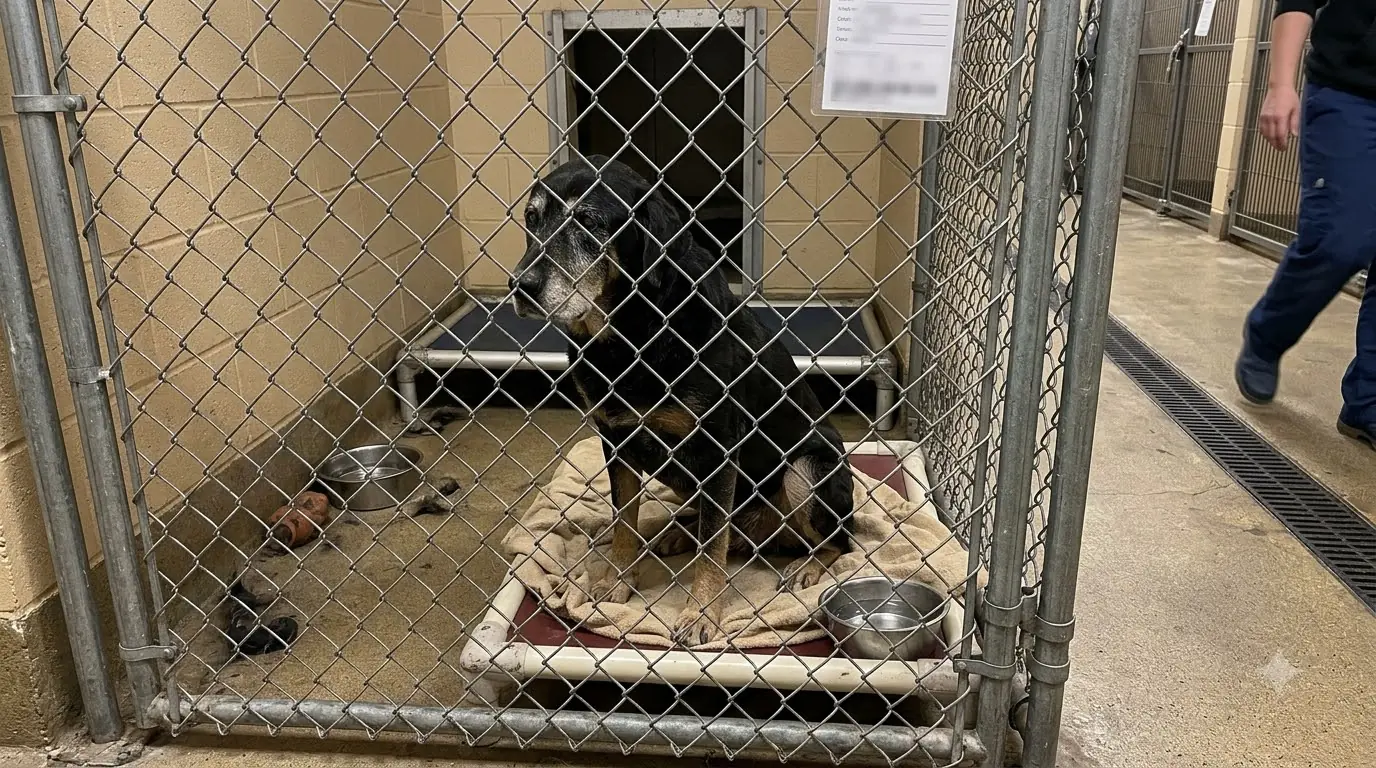
Margaret is now living in a quiet foster home after six weeks in the shelter. Her physical condition is stable, and several treatable problems are already improving. Her cognitive changes, however, will require long-term observation because there is no single laboratory test that can confirm canine cognitive dysfunction.
Canine cognitive dysfunction is an age-related condition that affects the brain in ways that can resemble dementia in people. Dogs may become disoriented, forget familiar routines, sleep during the day and pace at night, have accidents indoors, interact differently with family members, or repeat behaviors without an obvious purpose.
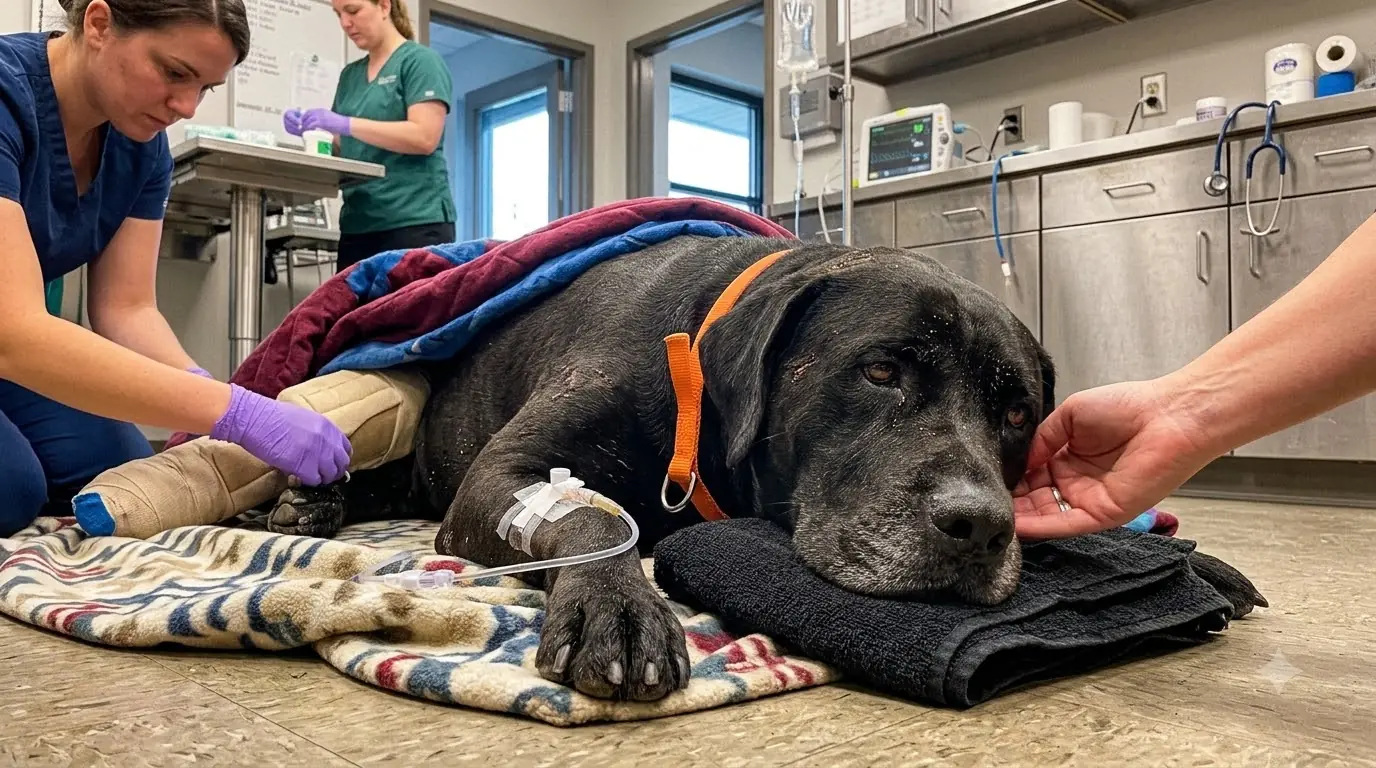
Not every change in a senior dog is caused by cognitive decline. Pain, urinary infection, kidney disease, liver disease, hormonal disorders, hearing loss, impaired vision, seizures, and brain tumors can create similar behavior. For that reason, Margaret’s veterinary team began by investigating conditions that might be treatable.
Her bloodwork showed mild age-related changes but no evidence of advanced kidney or liver failure. Her blood sugar was normal, and testing did not support diabetes. Her thyroid level was reviewed because low thyroid function can contribute to lethargy and behavioral changes, but the results did not indicate clear hypothyroidism.
A urine test identified bacteria, inflammation, and a small amount of blood. A laboratory culture confirmed a urinary tract infection and identified which antibiotic would be most effective.
The infection likely contributed to Margaret’s recent accidents and nighttime restlessness. An older dog who urgently needs to urinate may pace, stand near the wrong door, or appear confused while trying to communicate discomfort.
Margaret began a culture-directed antibiotic and has tolerated it well. She receives each dose with food and has not developed vomiting or persistent diarrhea.
During her first foster week, she needed to go outside every few hours and had two accidents near the hallway. Her caregiver did not correct or punish her. Extra bathroom trips were added, particularly after meals, naps, and drinking.
Margaret now urinates without straining and no longer stops repeatedly to pass only a few drops. The urine looks clearer, and the strong odor present at intake has disappeared.
A repeat culture will be performed after treatment. Senior dogs can appear better before an infection is completely eliminated, so medication will not be stopped early simply because the visible symptoms have improved.
Her drinking is monitored but never restricted. She consumes a moderate amount of water and is not emptying the bowl excessively. Any sudden increase could indicate recurrence of the infection or another medical change.
Margaret’s arthritis is more significant than shelter staff initially realized. X-rays showed chronic changes in both hips, both elbows, and several sections of her lower spine. There was no recent fracture, but the joints were inflamed and her range of motion was reduced.
Pain can strongly affect cognition and behavior. A dog who hurts every time she rises may appear withdrawn, refuse to follow familiar cues, sleep poorly, or become anxious when approached.
Margaret was started on a pain-management plan selected according to her kidney and liver values. Her veterinarian chose a conservative dose and scheduled repeat bloodwork to ensure long-term treatment remains safe.
She also receives a veterinarian-approved joint supplement. Additional therapies may be introduced later, but the team avoids starting many treatments simultaneously because doing so would make side effects and benefits difficult to evaluate.
The foster home has been adapted for her mobility. Nonslip rugs connect Margaret’s bed, bowls, and the back door. A ramp covers the two steps leading into the yard, and baby gates prevent access to the staircase.
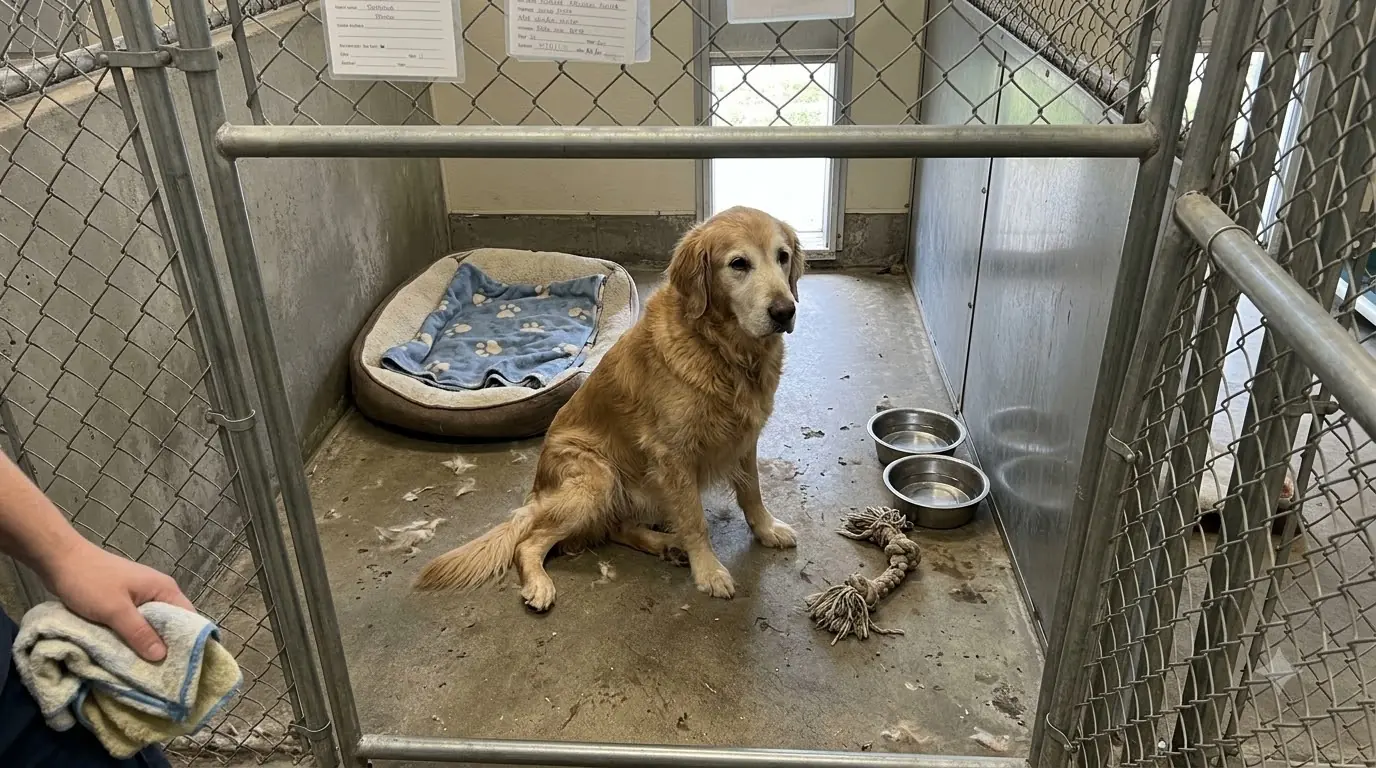
Her bed has a firm orthopedic base with enough padding to protect her hips and elbows. The familiar blue blanket from the shelter rests on top.
During her first morning in foster care, Margaret pulled the blanket into a narrow fold along the left side of the bed. She then carried the rope toy toward her water bowl and placed it beside the wall.
The arrangement closely matched the pattern shelter staff had documented. Her caregiver left everything where Margaret placed it.
Margaret can now stand with less hesitation. She still shifts her weight forward before rising, but she rarely needs a second attempt. Her stride remains short when she first wakes and becomes smoother after several minutes of gentle movement.
Her walks are slow and predictable. She follows the same route around the yard several times daily rather than taking one long walk through the neighborhood.
On her first outing, Margaret stopped at the ramp and appeared unsure how to use it. The caregiver stepped beside her and placed several pieces of food along the surface. Margaret crossed cautiously without being pulled.
She now uses the ramp independently in daylight. At night, a low light marks the edges because shadows and reduced visibility can make depth harder for senior dogs to judge.
A rehabilitation specialist has recommended gentle weight shifts, supported standing, and short controlled walks. The goal is to preserve strength and joint movement without exhausting her.
Margaret has lost muscle over her hindquarters. Some of this likely developed gradually from arthritis and reduced activity before she entered the shelter. Six weeks in a kennel may have added to the weakness.
She is not dangerously thin, but her body composition needs improvement. Her food portions are measured to provide adequate calories without causing weight gain that would place more stress on her joints.
Margaret eats well in the foster home. During her first evening, she smelled the bowl, looked toward the front door, and walked away. The caregiver moved the bowl beside the familiar blanket and sat quietly across the room.
Margaret returned several minutes later and finished half of the meal. By the third day, she was eating both daily servings without hesitation.
Her meals are softened with warm water because she has moderate dental disease. Several teeth are worn, and her gums are inflamed, but no urgent abscess or oral mass was found.
A dental cleaning with possible extractions may eventually improve her comfort. The procedure will wait until the urinary infection has cleared and her overall response to pain treatment is established.
Her appetite and weight are recorded because changes can provide early warning of pain, infection, medication side effects, or cognitive decline. She has maintained her weight and recently gained a small amount of muscle around her shoulders.
Margaret’s hearing is reduced. She responds inconsistently to voices behind her but usually notices footsteps through floor vibration. Her ear canals contained wax and mild inflammation, though no severe infection was present.
The ears were cleaned, and the inflammation is being treated. Some hearing may improve, but age-related loss is likely to remain.
Caregivers approach Margaret within her field of vision and avoid touching her unexpectedly while she sleeps. This has reduced the startled reactions observed during her first clinic examination.
Her vision remains functional, though the lenses of both eyes show age-related clouding. The changes are not currently severe enough to explain all of her disorientation. She can follow movement, locate food, and navigate familiar rooms during the day.
Low-light vision appears less reliable. Margaret sometimes hesitates at dark doorways or stops when shadows cross the floor. Night-lights now illuminate the hall, water bowl, and route to the yard.
The family keeps furniture in consistent positions. Bowls, beds, and gates are not moved unnecessarily. Predictable placement reduces confusion and allows Margaret to rely on memory even if her vision or cognition worsens.
A neurological examination did not find paralysis, severe imbalance, abnormal eye movement, or loss of basic reflexes. Margaret can place her paws correctly and walk without circling continuously.
She sometimes pauses in corners, particularly during the evening. At the shelter, staff found her standing with her face near a wall on several occasions. In foster care, this behavior has occurred twice.
During the first episode, Margaret walked into the space beside a bookcase and remained there. She did not appear panicked, but she seemed uncertain how to turn around.
The caregiver did not pull her backward. She switched on an additional light, spoke softly from the open side, and allowed Margaret time to orient herself. Margaret eventually turned and followed the voice toward her bed.
The second episode lasted less than a minute. Margaret corrected herself without physical assistance.
These incidents support concern for cognitive change, but they are being interpreted cautiously. New surroundings, reduced hearing, shadows, pain, and the recent urinary infection may all affect orientation.
Advanced brain imaging did not show a large mass, recent stroke, or obvious structural lesion. This made several serious causes less likely, but microscopic and degenerative changes associated with cognitive dysfunction may not be visible on routine imaging.
Margaret has not shown generalized seizures. Her foster caregiver records unusual staring, repetitive movement, collapse, facial twitching, or periods when she cannot be interrupted. None has been documented so far.
The veterinary team uses a cognitive assessment questionnaire to track her behavior over time. The caregiver records sleep patterns, accidents, social interaction, activity, anxiety, orientation, and response to familiar cues.
One observation alone cannot establish a diagnosis. A pattern across several weeks is more useful, especially after pain and infection have been treated.
Margaret’s sleep cycle was disrupted when she arrived. She slept heavily during the afternoon and became restless shortly after midnight. She walked between her bed, bowls, and the front door, sometimes repeating the route for nearly an hour.
The foster caregiver established a calm evening routine. Margaret takes her final bathroom trip at the same time, receives a small portion of her meal with medication, and settles in a room with low lighting and quiet background sound.
A short scent activity takes place before bed. Pieces of her approved food are placed beneath three loosely folded cloths near the bed. The activity encourages gentle mental engagement without increasing physical discomfort.
Her nighttime pacing has decreased. She still wakes once or twice, but she can usually be guided outside and resettled within several minutes.
The caregiver avoids scolding her for waking. Anxiety would make it harder for Margaret to orient herself and could worsen the pacing.
On one recent night, Margaret slept for almost six consecutive hours. She remained on her bed with the blanket folded along the left side and the rope toy near the water bowl.
Medication specifically intended to support cognitive function is being considered. The veterinarian wants to evaluate how much improvement occurs after the urinary infection clears and joint pain is controlled before adding it.
A dietary plan containing nutrients that support aging brains may also be appropriate. Any transition will be gradual because maintaining appetite and digestive stability is essential.
Mental stimulation remains gentle and achievable. Margaret practices familiar cues, follows short scent trails, and chooses between two food containers. Activities end before she becomes tired or frustrated.
She appears to remember “sit,” “wait,” and “outside,” though hearing loss means verbal cues are paired with clear hand signals. Her responses are faster when the gesture is given within her field of vision.
Margaret does not show much interest in chasing toys. She sometimes carries the frayed rope several feet, then places it in the same location beside her bowl.
The rope is checked for loose strands that could be swallowed. It is preserved as a familiar object but used only under supervision. A similar safer toy has been placed nearby, though Margaret continues to choose the original.
Emotionally, Margaret remains affected by losing her family and routine. Cognitive decline does not erase attachment, and grief does not explain every medical symptom. Both may be present at the same time.
During her first days, she sat facing the front door whenever a vehicle stopped outside. Her ears moved toward the sound even when she could not hear it clearly.
She did not bark or scratch at the door. She simply remained seated until the sound passed, then returned to her belongings.
The foster caregiver began sitting beside Margaret without trying to redirect her every time. Some moments do not require training. They require company.
Margaret initially accepted petting but rarely requested it. If a hand stopped, she looked toward the door rather than moving closer.
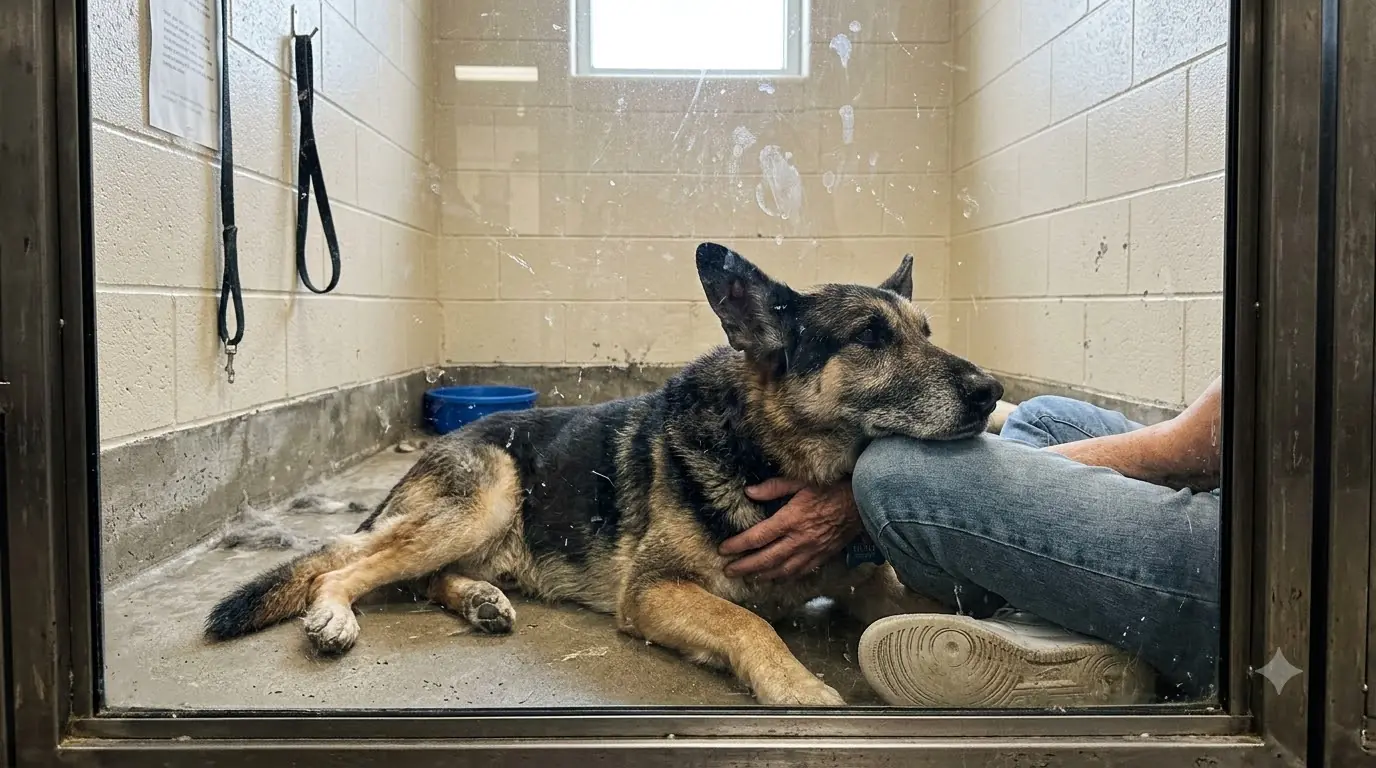
After several days, she approached the caregiver while the woman sat beside the bed. Margaret placed her chin on one knee and remained there for nearly a minute.
She now seeks contact most often in the morning. After arranging the blanket and rope toy, she walks to the caregiver and leans against her leg.
No one knows what the arrangement means to Margaret. It may recreate the position of objects in her former home. It may be a learned sequence that makes the day feel predictable. It may be associated with waiting for breakfast or for the person who once began each morning beside her.
The behavior is not harmful, so it is allowed. The caregiver does not repeatedly “tidy” the bed or return the objects to a more convenient location.
When the blanket must be washed, a second familiar blanket remains with Margaret. The original is returned to the same bed once dry. This prevents every necessary cleaning from becoming a complete change in her environment.
Margaret has begun leaving the arrangement untouched for longer periods during the day. She follows her caregiver into the kitchen, rests on a rug near the table, and returns to the bed later.
One afternoon, she fell asleep in the living room while her blue blanket remained in the bedroom. This was the first time she had chosen another resting place for more than a few minutes.
Her social behavior with unfamiliar people is calm but reserved. Visitors sit and allow her to approach. Margaret usually smells their hands, accepts a gentle stroke beneath the chin, and returns to her caregiver.
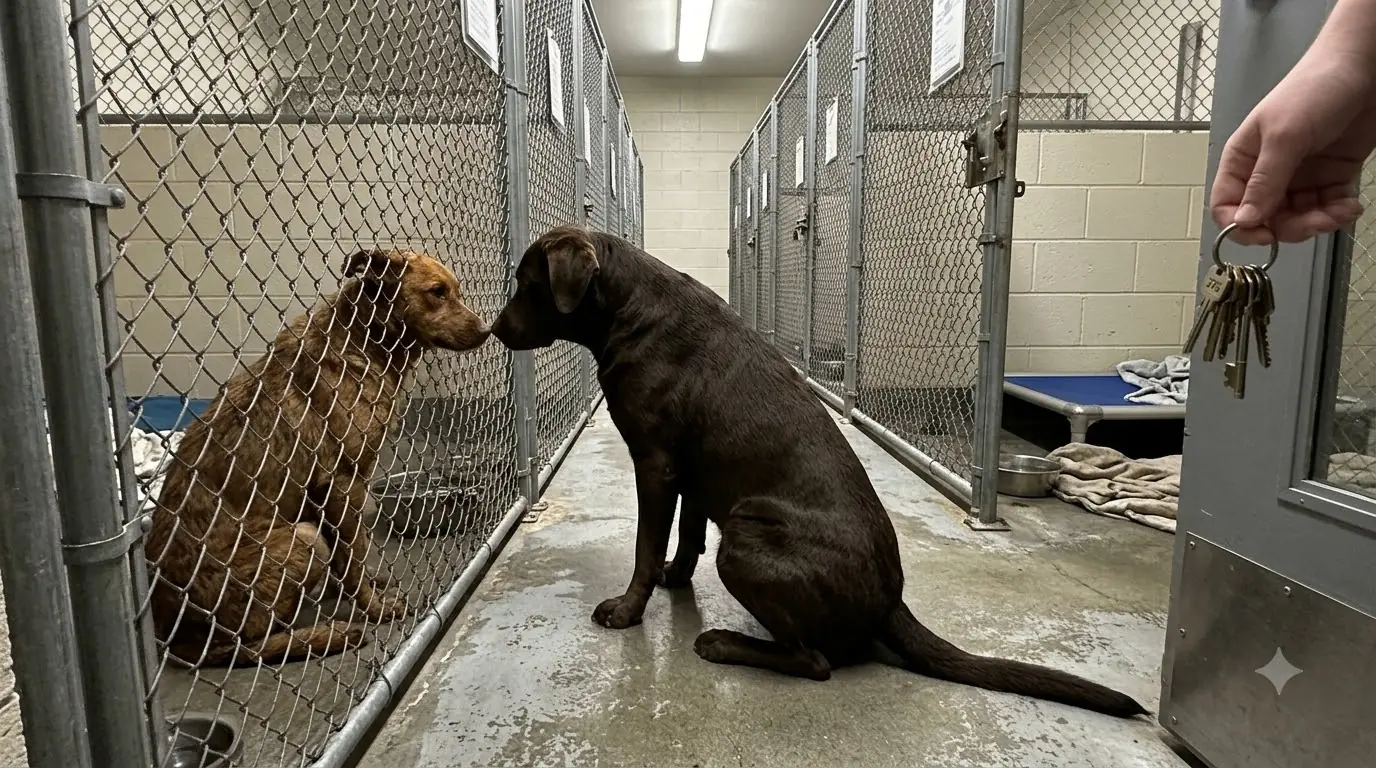
She has observed a calm senior dog through a secure barrier. Her body remained relaxed, and she moved away without barking. A controlled parallel walk may occur once her strength improves.
Because her history with cats and young children is unclear, no assumptions will be made. A quiet adult home or one with older, respectful children may eventually suit her best.
Margaret’s next veterinary visit will include a repeat urine culture, blood pressure check, blood chemistry panel, and assessment of her joint pain. The team will also review the foster caregiver’s cognitive log.
If her nighttime restlessness, disorientation, or repetitive behavior remains significant after treatable medical problems have improved, the diagnosis of canine cognitive dysfunction will become more likely.
Treatment cannot reverse aging changes in the brain, but medication, diet, exercise, enrichment, pain control, and environmental consistency may reduce symptoms and help preserve quality of life.
Progress will not necessarily be continuous. Margaret may have clear days followed by evenings when she becomes confused. Her care plan must be flexible enough to support both.
She is not ready for adoption. The rescue needs to confirm that her urinary infection has cleared, establish a reliable arthritis plan, and understand the degree of cognitive support she requires.
Her future family will need to maintain a predictable routine, avoid rearranging the home unnecessarily, provide frequent bathroom opportunities, and respond patiently if she becomes disoriented.
They must also understand that accidents, pacing, or delayed responses are not stubbornness. Margaret may need extra time to recognize a cue, find a doorway, or remember what happens next.
Today, she rises more comfortably, sleeps for longer periods, and has had no recent urinary accidents. Her appetite is steady, and her nighttime pacing has decreased.
She still arranges the same belongings each morning. The blanket goes to the left side of the bed. The rope rests near the water bowl. Margaret then sits quietly and looks toward the door.
Perhaps she remembers exactly why. Perhaps the sequence remains even when part of the reason is fading.
What matters now is that when Margaret finishes arranging her small world, someone is there to begin the day with her.