Hank Escaped the Cold, but His Heartworm Test Changed the Plan
Reader Theme:
Font Size:
24px
The Dog Beneath the Overpass
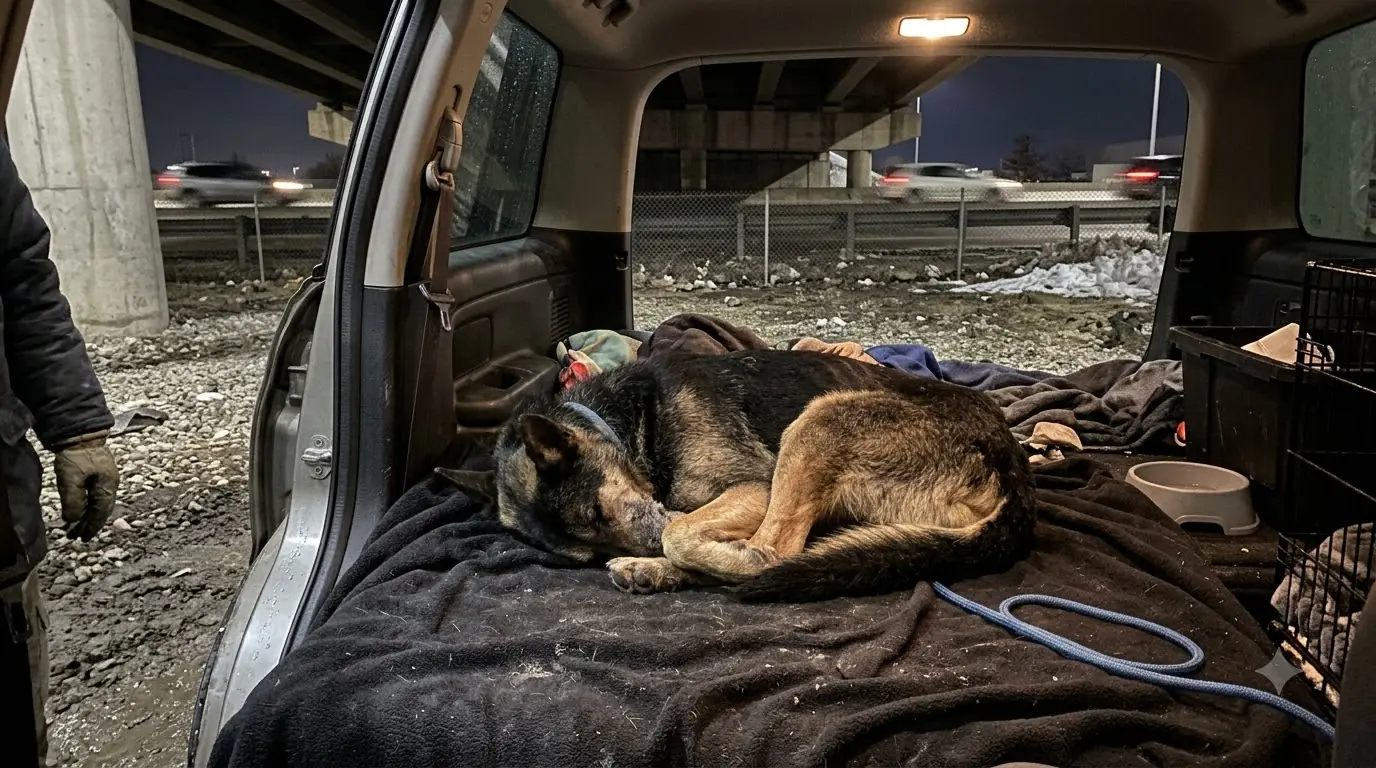
For several weeks, people living near a highway overpass had noticed a large dog appearing beneath the concrete structure.
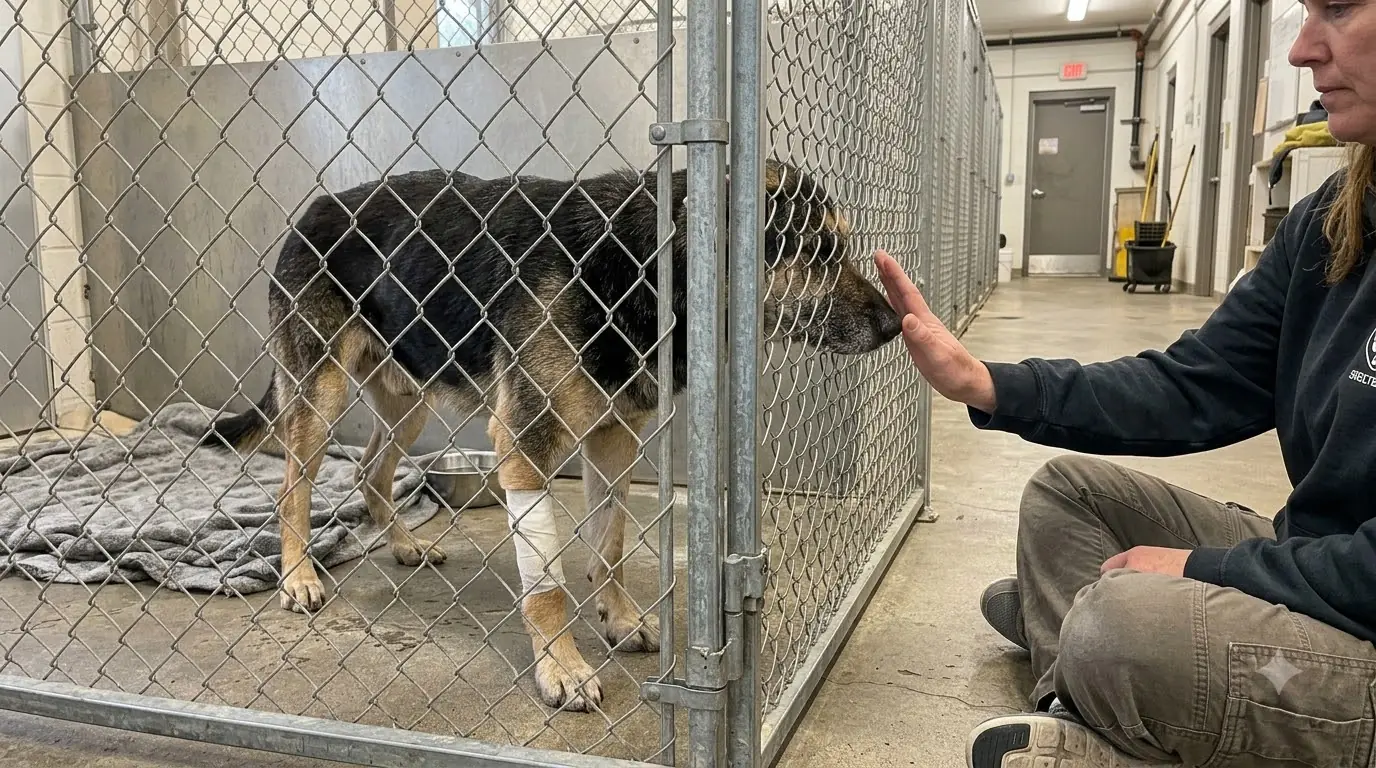
He was eventually known to us as Hank, a 7-year-old German Shepherd mix.
Nobody could establish exactly when he first arrived.
Some residents remembered seeing him earlier than others. What everyone agreed on was that Hank seemed to have selected the overpass as a place where he could remain partially protected from weather while keeping people at a distance.
Traffic passed overhead throughout the day and night.
Hank stayed below.
Local residents occasionally left food and water where he could find them. He learned those locations quickly, but he did not appear to associate the people providing the food with safety.
If someone approached, Hank moved away.
If they continued following him, he increased the distance.
Nobody reported seeing him threaten or charge anyone. His primary response was avoidance.
That distinction mattered.
Hank was frightened, but fear alone could not tell us why.
We had no verified history for him. We did not know whether he had once lived in a home, how long he had been outdoors, or what circumstances had brought him beneath the highway.
There was no responsible way to look at a fearful dog and determine his past.
What we could determine was that winter weather was becoming a problem.
Temperatures were dropping.
Hank was thin.
And the concrete shelter that had helped protect him from rain was not going to provide enough warmth indefinitely.
Building a Routine Instead of Chasing Him
Our rescue team decided that repeatedly attempting to capture Hank would likely make the situation harder.
He had enough mobility to retreat whenever he became frightened, and pursuing him around a highway structure could create additional risks.
Instead, volunteers established a routine.
They chose one feeding location away from active traffic.
Food appeared there at approximately the same time each evening.
The volunteers initially remained well back.
Hank watched them.
Sometimes he waited until they had completely left before approaching.
On other evenings, hunger brought him forward sooner.
Nobody tried to use those early approaches as an opportunity to suddenly grab him.
The objective was consistency.
Food arrived.
Humans stayed predictable.
Nobody chased him.
Then the same thing happened again the next evening.
And the next.
The Fifth Night
By the fifth evening, Hank's behavior had changed subtly.
He appeared sooner after the volunteers arrived.
He remained cautious, but instead of immediately moving deeper beneath the structure, he watched from a shorter distance.
The team placed his food in the familiar location.
Then they waited.
Hank approached.
He stopped several times.
His ears shifted toward sounds from the road above and then back toward the volunteers.
Eventually, he came within the range necessary for the team to safely secure him.
The rescue was deliberately quiet.
There was no celebration around Hank.
No crowd gathered.
Once secured, he was guided carefully toward the waiting vehicle.
The team expected that entering an enclosed space might frighten him.
Instead, something unexpected happened.
Hank climbed inside.
A thick blanket had been spread across the floor.
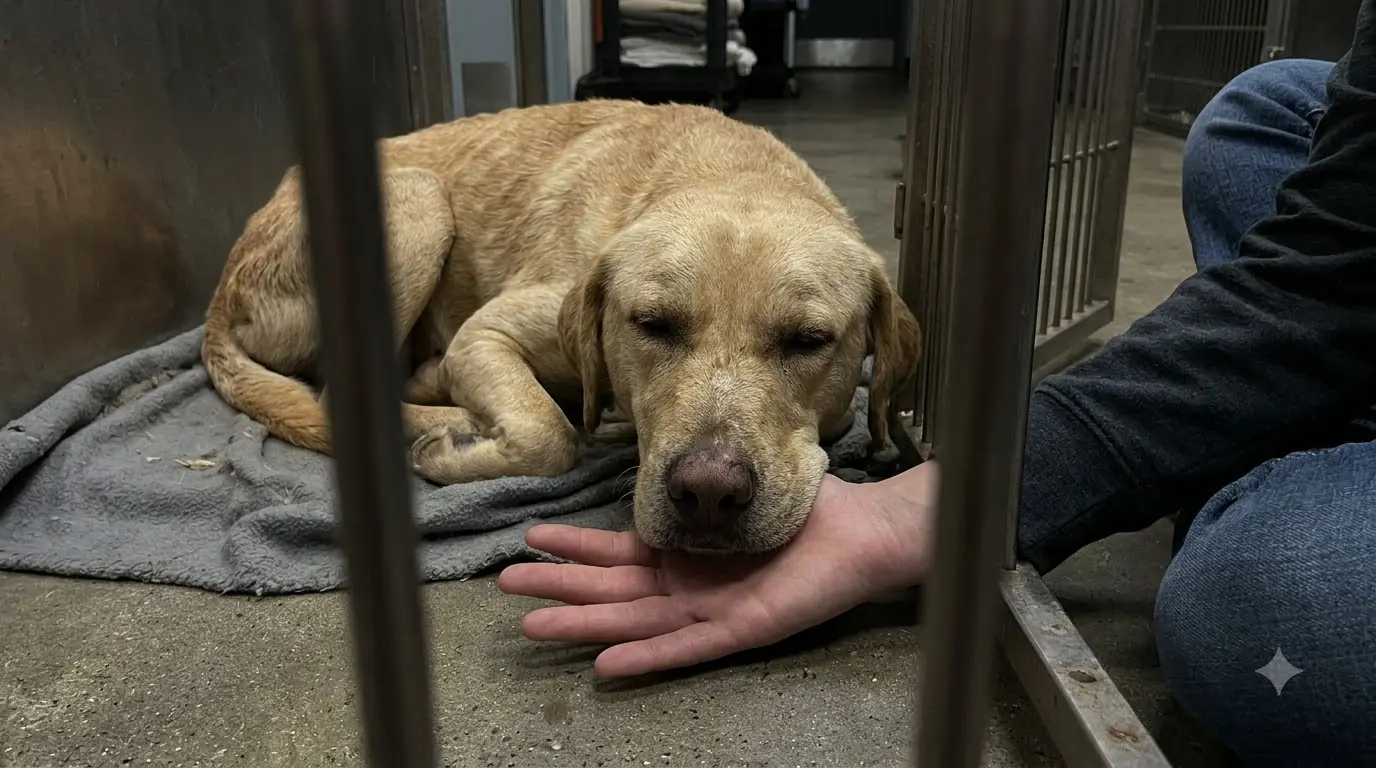
He turned once, lowered himself onto it, and curled tightly into a resting position.
He did not bark.
He did not struggle against the restraint.
He simply closed his eyes.
For the volunteers who had watched him remain constantly alert beneath the highway, that moment was difficult to forget.
Hank seemed exhausted.
His First Veterinary Assessment
Hank was taken for veterinary evaluation as soon as possible.
Because he was an older adult dog with an unknown medical history, the examination needed to look beyond the obvious effects of living outdoors.
His body condition was below ideal.
His ribs and hip structure were easier to feel than they should have been, although he was not so severely emaciated that aggressive nutritional intervention was required.
He was mildly dehydrated.
His coat contained dirt and debris, and areas of the fur were matted.
His paw pads were dry and irritated.
No serious open wounds were found.
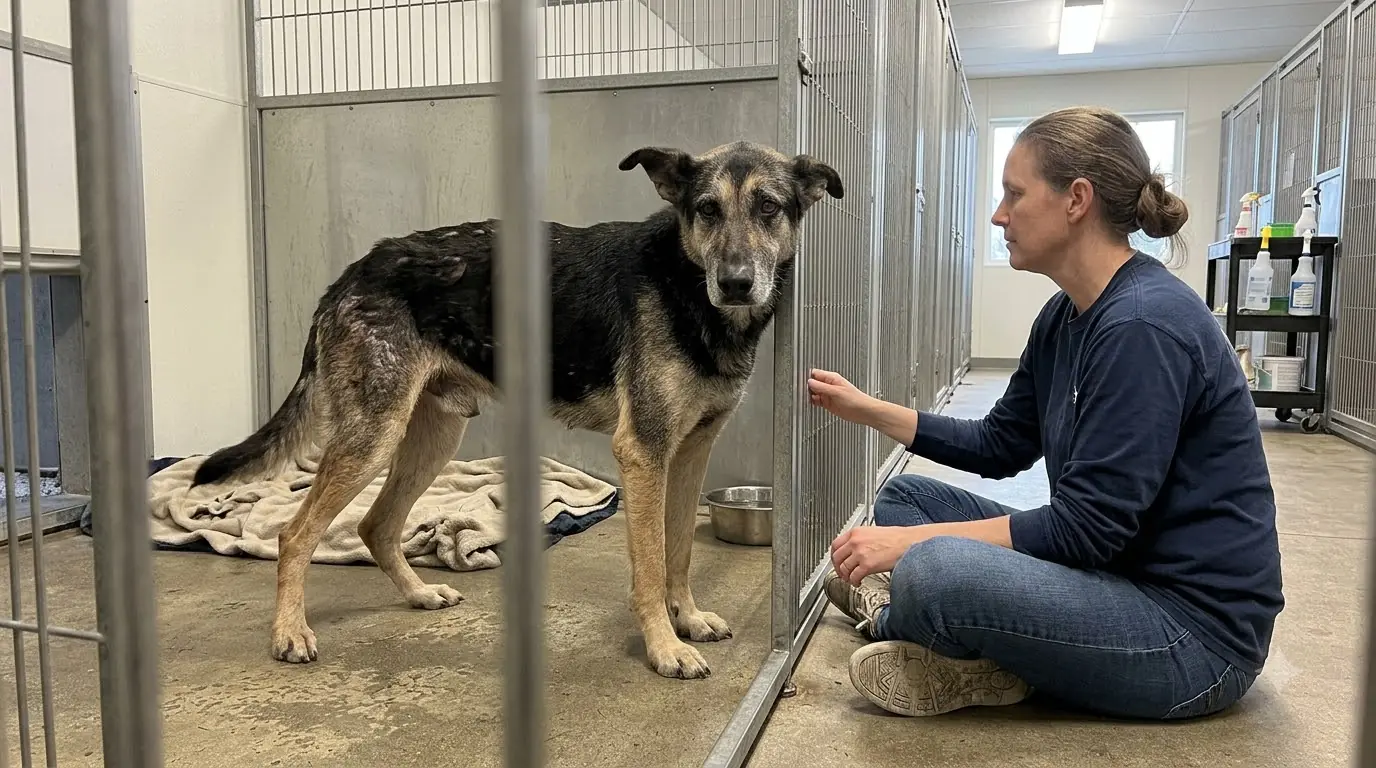
When Hank stood, however, he appeared stiff through his hindquarters.
That stiffness improved slightly after he had taken several slow steps.
At seven years old, orthopedic disease was one possibility, but the team did not assume a diagnosis based on age alone.
His heart and lungs were carefully evaluated.
His resting breathing was comfortable, and he was not in acute respiratory distress.
Because Hank had an unknown preventive-care history and had apparently spent substantial time outdoors, routine infectious-disease screening was particularly important.
That was when another concern appeared.
Hank screened positive for heartworm infection.
What a Positive Test Meant
A positive heartworm screening result did not tell us everything we needed to know.
Heartworm disease is caused by parasitic worms transmitted through mosquito bites. Adult worms can live in the blood vessels associated with the heart and lungs.
The severity of disease varies.
Some infected dogs show few outward signs, particularly earlier in the disease process. Others may develop coughing, exercise intolerance, respiratory changes, or more serious cardiovascular complications.
Hank was not collapsing.
He was not struggling to breathe.
He did not have obvious signs of an immediate heartworm-related emergency.
But that did not make the result unimportant.
Further evaluation was necessary before treatment could be planned responsibly.
Confirming the Findings
Additional testing supported the initial positive screening result.
The veterinary team also performed bloodwork to evaluate Hank's red and white blood cells, platelets, liver values, kidney function, and other parameters relevant to his overall health and future medication decisions.
His bloodwork reflected his recent physical stress and nutritional condition but did not identify organ dysfunction severe enough to prevent the team from moving forward with a treatment plan.
Chest radiographs were also obtained.
The images allowed the veterinarian to evaluate Hank's heart and lungs for changes that could influence treatment and prognosis.
Fortunately, there were no findings suggesting advanced heart failure.
There were mild changes that could be compatible with heartworm disease, but Hank appeared clinically stable.
That was encouraging.
Still, heartworm treatment requires careful planning.
The goal is not simply to kill parasites as quickly as possible.
When adult heartworms die, fragments can affect blood flow through the lungs. For that reason, veterinary treatment protocols include medication, strict activity restriction, careful timing, and monitoring.
The Most Difficult Prescription: Rest
For a frightened dog, exercise restriction presented a unique challenge.
Hank needed short controlled bathroom walks.
He did not need long exploratory walks, running, rough play, or opportunities to become highly excited.
Reducing physical exertion is an important part of heartworm management because increased heart rate and blood flow can raise the risk of complications during treatment.
His caregivers therefore created a quiet routine.
Hank had a comfortable indoor resting area.
He went outside on leash for brief bathroom breaks.
He returned indoors afterward.
Food, water, enrichment, and human interaction were brought to him in ways that did not require strenuous activity.
The dog who had spent weeks navigating an unpredictable outdoor environment suddenly had a very small world.
That was medically necessary.
Our job was to make that small world feel safe.
Food Became Predictable
Hank had eaten irregularly beneath the overpass.
Now meals arrived on schedule.
Because he was underweight, his nutritional intake was calculated with gradual restoration in mind.
He was fed a complete and balanced adult diet in measured portions.
During the first few days, meals were divided so staff could observe his tolerance.
Hank ate well.
In fact, food became one of the easiest ways to communicate predictability.
He began recognizing the routine around mealtimes.
At first, he waited until the person feeding him stepped away.
After several days, he ate while someone remained nearby.
Eventually, he began lifting his head when he heard his bowl being prepared.
His water intake was monitored and remained appropriate.
He urinated normally.
His bowel movements were somewhat inconsistent during his first days, likely influenced by dietary transition and stress, but they became formed and regular once his routine stabilized.
The Stiffness in His Back Legs
Hank's hind-limb stiffness remained noticeable.
Once his immediate medical priorities had been addressed, the veterinary team evaluated his mobility more closely.
Orthopedic examination and imaging showed mild to moderate degenerative changes consistent with osteoarthritis, particularly affecting his hips.
There was no acute fracture.
There was also no indication that emergency orthopedic surgery was necessary.
For many older German Shepherd-type dogs, maintaining mobility requires a combination of healthy weight, appropriate exercise, environmental modifications, and veterinary pain management when necessary.
Hank's situation was temporarily more complicated because his heartworm treatment required significant exercise restriction.
Aggressive physical rehabilitation would have to wait.
His discomfort was managed conservatively under veterinary supervision while the team prioritized safe heartworm treatment.
Fear Did Not Disappear Indoors
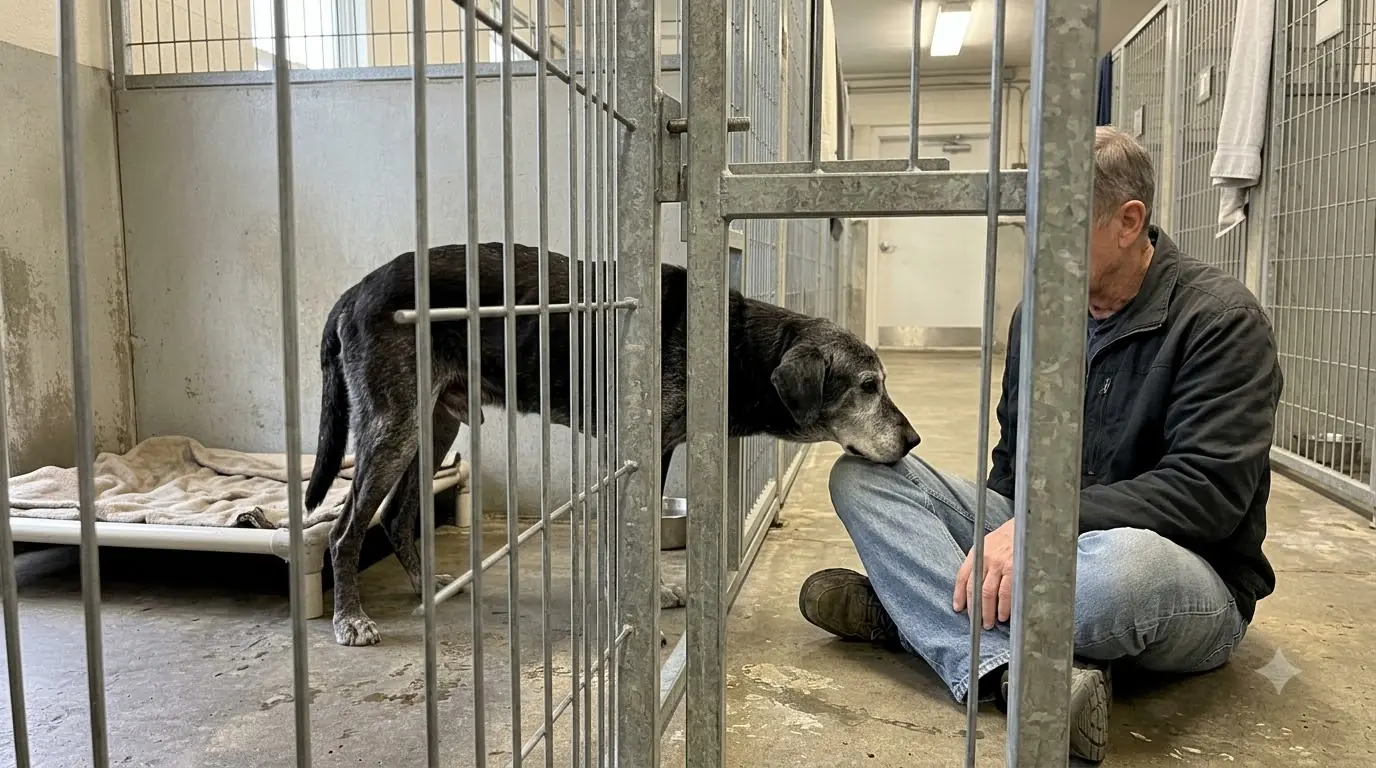
Hank's first night in a warm building did not transform him into a carefree dog.
He remained watchful.
When unfamiliar people entered, he often became still.
He did not immediately seek petting.
He preferred to observe from his bed.
Staff avoided forcing interaction.
Nobody reached into his space simply because he was quiet.
A motionless frightened dog is not necessarily inviting contact.
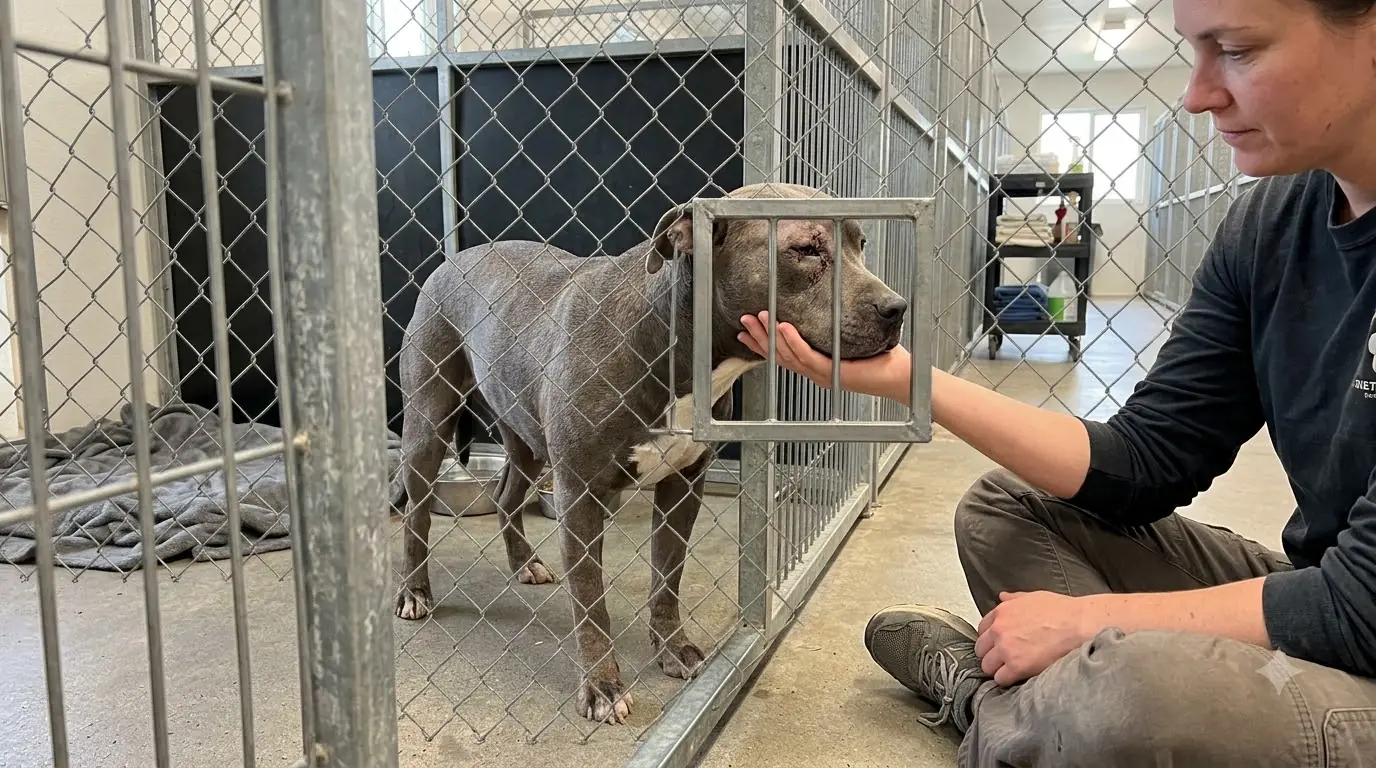
Instead, caregivers sat nearby.
Sometimes they read paperwork.
Sometimes they quietly placed treats near Hank and moved away.
The rescue volunteers who had fed him beneath the overpass were among the first people he appeared to recognize.
His body softened slightly when they entered.
One evening, a volunteer sat several feet from his bed.
Hank watched for several minutes.
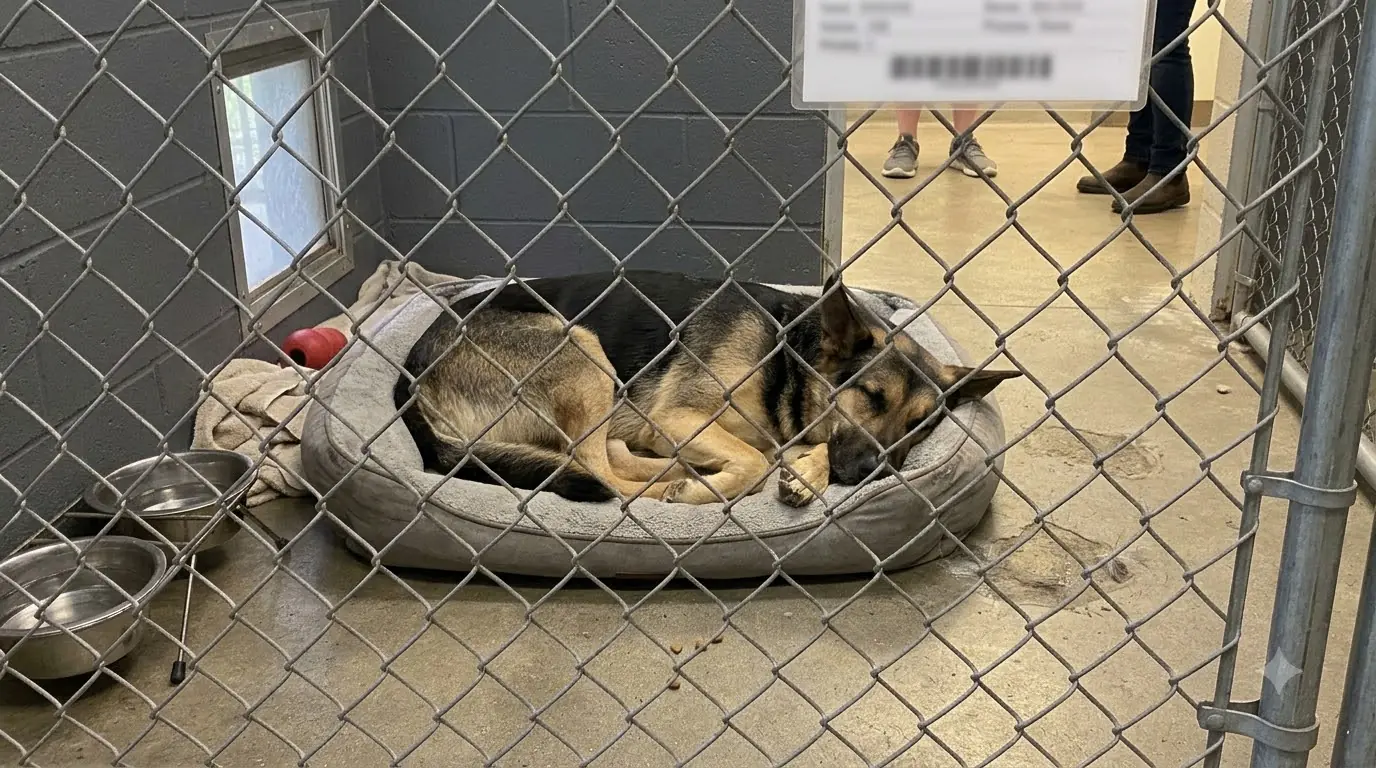
Then he lowered his head again and went back to sleep.
For Hank, sleeping in someone's presence became an early form of trust.
Beginning Heartworm Treatment
Hank's treatment followed a veterinarian-directed protocol designed to reduce risk while addressing the infection.
Before adult heartworm treatment, dogs commonly receive medications intended to address associated organisms and reduce complications as part of the overall protocol.
Hank was also placed on appropriate heartworm preventive medication according to veterinary guidance.
The exact timing of adulticide injections was planned based on his medical evaluation and established treatment recommendations.
Throughout this period, exercise restriction remained essential.
That requirement can be difficult because dogs often feel reasonably well before treatment is complete.
Hank, however, was naturally quiet during his early weeks.
His caution made him less inclined to bounce around the room, although staff still carefully managed every outdoor trip.
Gaining Weight Carefully
Over the following weeks, Hank gained weight gradually.
The change was noticeable but controlled.
His ribs became less prominent.
His coat improved with regular nutrition, gentle grooming, and indoor living.
The goal was not to make him heavy.
Maintaining a lean body condition would ultimately benefit both his cardiovascular health and arthritic joints.
His caregivers recorded his weight during veterinary visits and adjusted portions when appropriate.
As his body condition improved, so did his overall appearance.
His eyes appeared brighter.
His posture became less guarded around familiar people.
He still looked like an older dog who had endured a difficult period outdoors.
But he no longer looked like he needed to conserve every calorie and every movement.
The First Adulticide Treatment
When Hank reached the appropriate stage of his protocol, he returned to the veterinary clinic for adult heartworm treatment.
He received the prescribed injection and was monitored carefully afterward.
Soreness at the injection site can occur, and Hank was kept comfortable with veterinary-directed medication.
His breathing and general condition were watched closely.
The most important period came afterward.
Exercise restriction became even more critical as the adult worms began dying.
Hank returned to a quiet recovery environment.
Bathroom walks were brief.
Visitors were limited.
Exciting situations were avoided.
His caregivers monitored for warning signs such as coughing, difficulty breathing, unusual weakness, collapse, loss of appetite, or other significant changes.
Fortunately, Hank remained stable.
A Frustrating Stage
As the weeks passed, Hank began feeling better emotionally.
That created a problem.
The dog who initially wanted nothing more than sleep had started becoming curious about the world outside his recovery room.
He wanted to sniff longer during bathroom trips.
He began showing interest in other dogs at a distance.
Sometimes his tail moved when a familiar volunteer appeared.
Those were wonderful behavioral milestones.
Medically, however, his activity still had to remain limited.
Caregivers compensated with calm enrichment.
Food-stuffed toys could be enjoyed while lying down.
Scent games were designed to require minimal movement.
Treats could be hidden within a folded towel.
Quiet companionship became part of his daily schedule.
Hank learned that interesting things could happen without running anywhere.
His Next Treatments
At the scheduled point in the protocol, Hank received the remaining adulticide treatments under veterinary supervision.
Again, he was monitored.
Again, strict rest followed.
There were days when he appeared tired.
There were also days when he seemed completely normal and could not understand why his walks remained so short.
The caregivers did not interpret normal energy as permission to abandon the medical plan.
Heartworm recovery depends on patience even when the dog appears outwardly well.
Hank completed this stage without a major respiratory complication.
That was an important milestone, but it did not mean treatment was immediately over.
Follow-up testing would eventually be needed to determine whether the infection had been successfully cleared.
Trust Begins to Look Different
During this long period of restricted activity, something else was happening.
Hank was learning people.
He learned which caregiver brought breakfast.
He learned which volunteer sat quietly rather than trying to touch him immediately.
He learned the sound of the door opening before his bathroom trip.
Eventually, he began walking toward familiar people instead of waiting for them to come to him.
The first time Hank deliberately leaned against a volunteer's leg, nobody made a big reaction.
The volunteer simply rested a hand gently against his shoulder.
Hank remained there.
A few weeks later, this became common.
He discovered ear scratches.
He discovered that brushing could feel good when done slowly.
He discovered that humans sometimes entered his room for reasons other than examinations or medication.
His Sleep Changed Too
Hank had slept almost immediately after entering the rescue vehicle.
That first sleep came from exhaustion.
Later sleep looked different.
It came from security.
He stretched out instead of curling tightly.
His legs extended across the blanket.
Sometimes he slept on his side with his back exposed to the room.
He stopped raising his head at every distant sound.
One caregiver entered quietly one afternoon and found Hank snoring.
The dog who had once lived beneath constant highway noise had apparently decided that indoor silence was something he could trust.
Completing the Restricted Period
As Hank progressed beyond the highest-risk phase of treatment, his veterinarian continued evaluating him.
Activity was not restored all at once.
His heart and lungs were reassessed.
His breathing remained comfortable.
He had not developed a persistent cough.
His appetite remained strong.
His weight had reached a healthier range.
Eventually, the veterinarian allowed a gradual increase in controlled activity.
For Hank's arthritic hips, this transition required additional care.
Weeks of restricted exercise can reduce muscle condition.
Suddenly asking an older dog to take long walks would have been inappropriate.
His walks increased slowly.
Five extra minutes mattered more than five extra miles.
Rebuilding an Older Dog
Hank's rehabilitation focused on function rather than athletic performance.
He needed enough muscle to support his hips.
He needed comfortable movement.
He needed to maintain a healthy weight.
He did not need to become a running companion.
Short walks on level surfaces became part of his routine.
His gait was monitored.
On cooler mornings, he sometimes appeared stiff for the first few steps.
Once warmed up, he moved more freely.
His veterinarian continued evaluating whether pain-management adjustments were needed.
Environmental changes helped too.
Non-slip rugs provided traction.
A supportive bed reduced pressure during rest.
Repeated jumping was discouraged.
These were simple interventions, but for a 7-year-old dog with chronic joint changes, they could make daily life more comfortable.
A Foster Home
Once Hank was medically stable enough, he transitioned into foster care.
His foster home was deliberately quiet.
There was no expectation that Hank would instantly understand household life.
During the first day, he explored only a small area.
He sniffed furniture.
He inspected the water bowl.
Then he returned to his bed.
His foster caregiver allowed him to choose the pace.
That evening, Hank ate dinner and went outside for a controlled walk.
He urinated normally.
Later, he settled in the living room.
Instead of hiding in another room, Hank chose a position where he could watch his caregiver from several feet away.
By the end of the week, the distance had disappeared.
He began sleeping beside the chair.
Learning Household Sounds
Some noises concerned Hank initially.
The washing machine made him leave the room.
The doorbell caused him to stand immediately.
A delivery truck stopping outside captured his full attention.
His foster caregiver did not drag him toward those sounds to “show him” they were harmless.
Hank was allowed to observe from whatever distance felt comfortable.
With repetition and no negative consequence, many of the sounds became ordinary.
The washing machine eventually became irrelevant.
The doorbell still interested him, but recovery came faster.
He learned that cars could pass outside without changing his life.
Follow-Up Heartworm Testing
Months after treatment, Hank returned for follow-up testing according to his veterinarian's schedule.
This was the appointment everyone had been waiting for.
His antigen testing was negative.
That result was encouraging and consistent with successful treatment.
His veterinary team emphasized that Hank would still require year-round heartworm prevention and routine testing as recommended.
Treating heartworm once does not protect a dog from becoming infected again.
Prevention would be part of Hank's medical care for the rest of his life.
His foster caregiver was more than willing to make that commitment.
What We Cannot Say About Hank
We still cannot tell people exactly why Hank ended up beneath that highway.
We cannot say how long he had been without a home.
We cannot say whether somebody deliberately left him there.
We cannot say his fear proves that someone mistreated him.
Those would be assumptions.
What we know is that Hank was living outdoors.
We know residents tried to keep him fed.
We know temperatures were falling.
We know he was frightened enough that rescuers needed several evenings to earn the opportunity to safely secure him.
And we know that once he entered the vehicle, he curled onto a blanket and slept.
Those facts are enough.
Planning His Future
Hank eventually reached the stage where permanent-home planning could begin.
His ideal adopter would need to understand that he was a mature dog with ongoing medical considerations.
Heartworm prevention could never become optional.
His joints would require monitoring.
Maintaining a lean body condition would remain important.
His exercise should be regular but appropriate for his age and orthopedic condition.
Behaviorally, Hank needed patience with unfamiliar situations.
He had become affectionate with people he trusted.
He enjoyed companionship.
He increasingly sought physical contact.
But new people still needed to let him approach at his own pace.
A quiet household would likely suit him better than an environment filled with constant unpredictable activity.
The goal was not to find Hank any home.
It was to find the home capable of giving him the stability he had learned to depend on.
The Dog Who Finally Slept
When people ask about Hank, our team often thinks back to his first night.
Not to the medical test.
Not to the injections.
Not even to the moment he was secured.
We remember the blanket.
Hank had spent weeks beneath an overpass where the world never stopped moving.
Cars passed.
People appeared.
Weather changed.
Food was uncertain.
Safety was uncertain.
Then, after five evenings of patient rescue work, he entered a warm vehicle.
Nobody demanded anything from him.
Nobody forced him to interact.
Hank curled up.
And he closed his eyes.
At the time, we did not know about the heartworms.
We did not know about the arthritis in his hips.
We did not know how long his medical recovery would take.
We simply knew that a tired dog had finally decided it was safe enough to sleep.
Hank Today
Today, Hank is at a healthy, carefully maintained weight.
He eats consistently and drinks normally.
His bathroom habits are regular.
His coat is clean and full.
His heartworm treatment has been completed, and follow-up testing has produced the result his veterinary team hoped to see.
He remains on year-round prevention.
His arthritis has not magically disappeared.
It is a chronic condition that will need lifelong attention.
Some mornings he is stiffer than others.
His caregivers watch those changes and work with his veterinarian to keep him comfortable.
He takes moderate walks.
He rests on supportive bedding.
He no longer needs the extreme exercise restrictions that defined his heartworm treatment.
Emotionally, Hank has changed in ways that cannot be measured on a laboratory report.
He sleeps deeply.
He approaches familiar people.
He leans against legs when he wants affection.
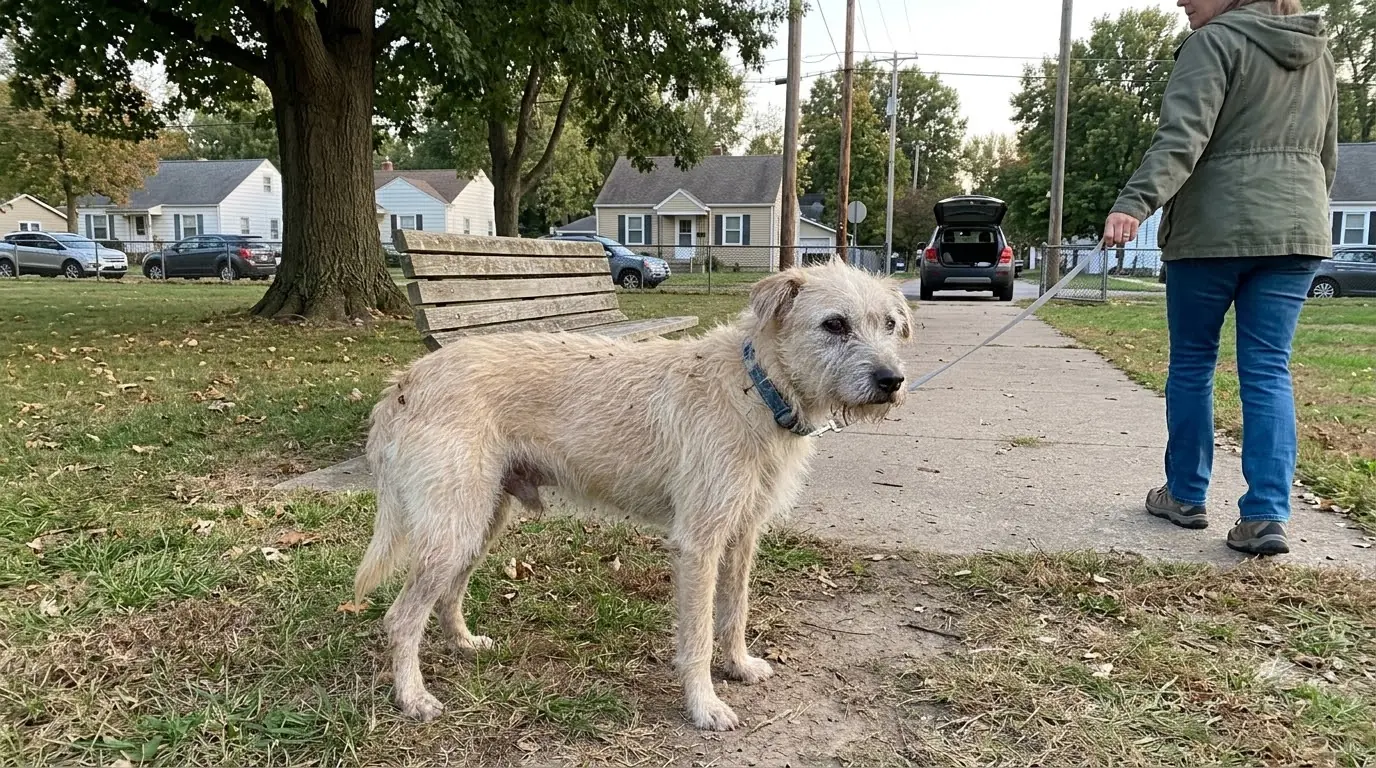
He has learned that a leash can mean a quiet walk rather than capture.
He has learned that bowls are refilled.
He has learned that blankets remain his even after he falls asleep.
There are still moments when an unfamiliar noise makes him pause.
There are new people he prefers to observe before approaching.
That is fine.
Recovery is not measured by whether Hank becomes fearless.
It is measured by whether fear still controls his life.
Increasingly, it does not.
His story did not change because one person rushed beneath an overpass and pulled him out.
It changed because people were willing to wait.
For five evenings, rescuers returned.
They put food in the same place.
They remained predictable.
They allowed Hank to decide when the distance between them could become smaller.
On the fifth night, he made that decision.
Everything that followed—the examination, heartworm diagnosis, careful treatment, months of restricted activity, gradual weight gain, joint management, foster care, follow-up testing, and preparation for a permanent home—became possible because Hank finally came close enough to accept help.
There will always be things about his past we cannot answer.
His future is easier to describe.
Hank needs a safe home.
He needs regular veterinary care.
He needs heartworm prevention.
He needs thoughtful management of his aging joints.
He needs people who understand that trust can take time.
And he needs somewhere warm to sleep.
That last requirement is the easiest one of all.
When Hank curls onto his blanket now, the concrete beneath the highway is far behind him.
There is no need to stay alert for approaching strangers.
There is no need to conserve energy against the cold.
There is no fifth night to wait for.
Hank is already inside.
And when his eyes close now, someone will still be there when they open again.