What Doctors Discovered After Maggie Finally Slept on the Bed
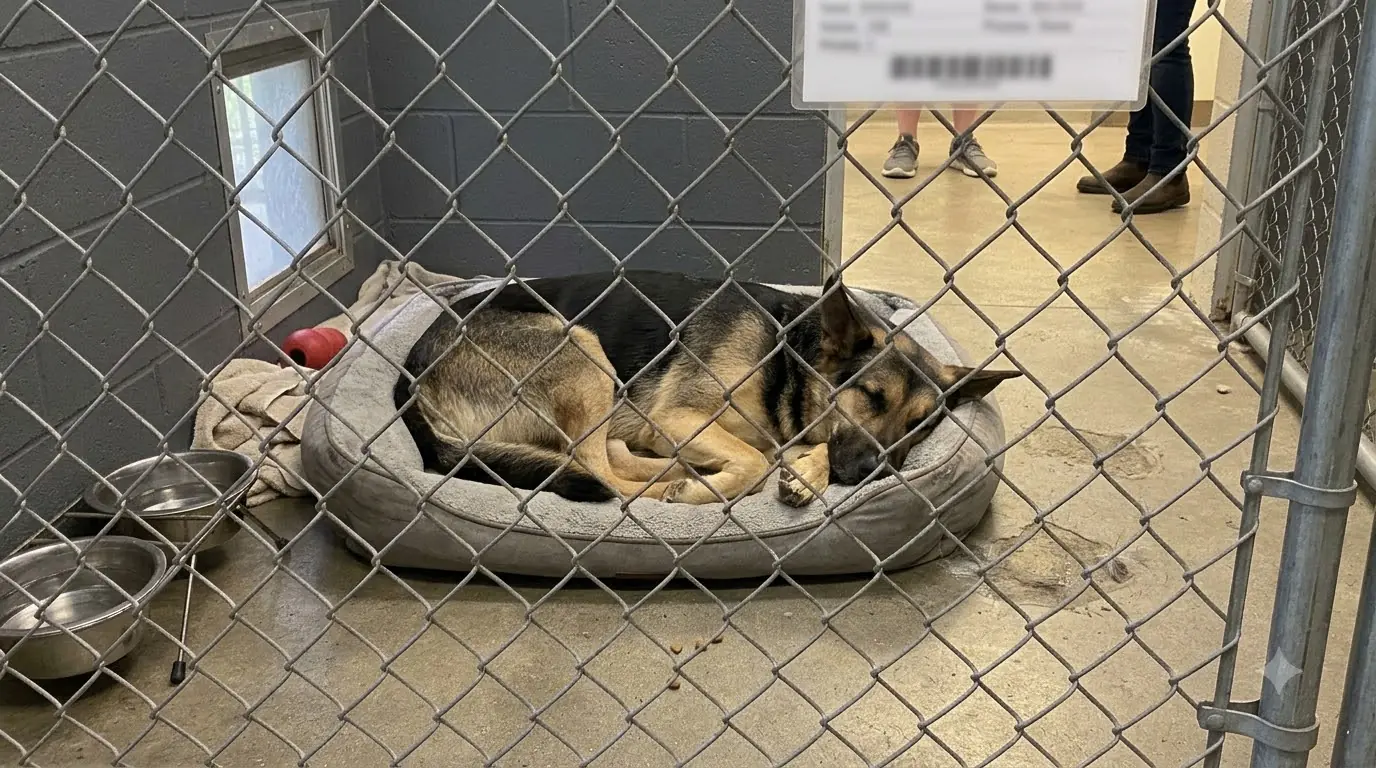
PART 2 — CURRENT CONDITION UPDATE
Maggie is now recovering in a quiet medical foster home after undergoing surgery to relieve severe nerve compression near the base of her spine. She can stand, walk short distances with support, and urinate without a catheter.
Her progress is encouraging, but the veterinary neurology and rehabilitation teams have not declared her fully recovered. Nerve healing can be slow, and some weakness or pain may remain permanently.
Maggie’s fear of soft beds has also changed. She now sleeps on an orthopedic mattress every night, though she still needs time before accepting unfamiliar surfaces.
The shelter first learned about Maggie after animal control responded to reports of a dog moving between vacant lots near an industrial area.
Witnesses had seen her for several weeks but could not approach. Maggie remained near fences and abandoned equipment, leaving only when the area became quiet.
Several people placed food and water nearby. Maggie ate after they moved away.
She wore no collar, and no reliable owner information was available.
Animal control used a humane enclosure and remote monitoring rather than chasing her through traffic. Maggie entered only after several nights of gradual feeding.
When the door closed, she pressed her body into one corner and remained completely still.
She did not bark, lunge, or attempt to bite during transport. Her silence was not interpreted as comfort.
A frightened dog may freeze when escape seems impossible.
At shelter intake, Maggie kept her head low and avoided looking directly at staff. She refused food if anyone remained near the kennel.
The medical team performed the least invasive portion of her examination first. Her heart and lungs sounded normal, her body temperature was within range, and she appeared mildly underweight.
Her coat was dusty and heavily shedding. Several small scars were visible beneath the fur, but no fresh open wound required emergency treatment.
She had overgrown nails, irritated paw pads, and chronic inflammation inside both ears.
Maggie became especially tense when anyone approached her hindquarters. She tucked her pelvis, sat abruptly, and turned her head toward the person.
She did not growl, but her mouth closed and the muscles along her face tightened.
Those signs suggested pain or fear. At the time, staff could not know how much each contributed.
A full orthopedic and neurological examination required medication to reduce anxiety and discomfort.
This was not done merely to make Maggie easier to handle. It allowed the team to examine her safely without forcing her through a prolonged struggle.
Initial X-rays revealed arthritis and abnormal changes where the lower spine meets the pelvis. Her hips also showed mild dysplasia, but the hip changes did not fully explain the weakness observed later.
Maggie still walked independently during intake. She took short steps with both hind legs and occasionally dragged the nails of the right rear paw.
The behavior was subtle. On rough ground, the dragging was difficult to see.
Inside the kennel, smooth flooring made the problem more obvious. Maggie’s right paw sometimes folded so the top touched the floor before she corrected it.
Staff placed nonslip mats along her walking route.
She moved more confidently but continued showing delayed correction of the paw.
The neurological finding suggested that the problem involved more than ordinary arthritis.
Maggie’s reluctance to use the soft bed initially appeared behavioral.
The shelter provided a low mattress with no raised sides. Maggie smelled it, stretched her neck toward the surface, and immediately stepped backward.
When staff placed food in the middle, she refused to retrieve it.
She slept on the concrete directly beside the bed.
Several explanations were possible. Maggie may never have encountered that type of surface. A previous bed may have been associated with confinement, punishment, or pain.
The mattress could also have felt unstable beneath weak hind legs. Soft surfaces require small balance adjustments that can be difficult for a dog with nerve compression.
The team did not invent a specific traumatic history.
There was no verified information showing that Maggie had been beaten, kept in a crate, or punished for using furniture.
What they could observe was that the bed caused avoidance, and forcing her onto it increased fear.
The shelter volunteer, Elena, began working with Maggie every morning.
Elena entered the kennel area quietly and sat sideways outside the gate. She did not call Maggie repeatedly or hold food near her face.
During the first sessions, she placed one treat on the concrete several feet from the bed.
Maggie waited until Elena moved away before eating it.
Over time, the treats formed a gradual path toward the mattress. One rested beside the edge, another on the seam, and later one sat several inches onto the fabric.
Maggie controlled the pace.
If she refused a step, Elena made the next session easier rather than leaving food beyond Maggie’s ability to approach.
The first time Maggie placed one front paw on the bed, she immediately withdrew.
Elena did not praise loudly or move closer. She remained still and allowed the interaction to end.
The next morning, Maggie repeated the movement.
Several days later, she stood with both front paws on the mattress while her hind legs remained on the concrete.
The surface compressed under her weight. Maggie froze, then stepped back.
The volunteer changed the setup. A firmer pad was placed beneath the mattress to reduce movement, and a nonslip mat covered the approach.
Maggie tolerated that arrangement better.
She began resting her chin on one corner while lying on the floor.
Staff did not remove the concrete option or block the space beside the bed. Choice remained part of the learning process.
One morning, Elena found Maggie lying with her chest on the mattress and hindquarters on the floor.
The following week, Maggie climbed entirely onto the bed.
She turned slowly, lowered herself, and remained there after Elena left.
The next morning, staff entered the kennel room and found her curled in the center. Her body rested on one side, her breathing was slow, and her muscles were loose.
For the first time since arriving, Maggie did not lift her head when the outer door opened.
No one wanted to wake her because deep sleep had been rare.
Shelter recordings showed that she usually rested lightly. Barking, footsteps, metal gates, and cleaning equipment caused her head to rise repeatedly throughout the night.
The bed, predictable routine, pain treatment, and familiarity may all have helped her sleep.
When Maggie woke and attempted to stand, staff noticed a significant change.
Her hindquarters lifted slowly. Both legs trembled, and the right rear paw folded beneath her.
She corrected the paw after several seconds, took two steps, and sat again.
The veterinary team examined her that morning.
Maggie showed pain when pressure was applied near the lumbosacral region, the area where the lower spine joins the pelvis.
Her right hind-leg reflexes were reduced. Sensation remained present, but her response was slower than expected.
She also resisted lifting her tail and appeared uncomfortable when attempting to squat.
Staff reviewed earlier notes and video. Toe dragging, shortened steps, sitting during walks, and reluctance on unstable surfaces had occurred intermittently from intake.
The signs were becoming more frequent.
The veterinarian recommended advanced imaging and consultation with a neurologist.
Ordinary X-rays show bones well but cannot fully display the spinal cord, nerve roots, discs, and other soft tissues.
A CT scan and MRI were discussed. The neurologist selected imaging based on the location of Maggie’s signs and the information needed for surgical planning.
Maggie underwent MRI under general anesthesia after bloodwork and cardiopulmonary evaluation.
Her anesthesia plan accounted for fear, pain, body condition, and the need to position her safely.
The imaging revealed degenerative lumbosacral stenosis, sometimes called cauda equina syndrome.
The disc and surrounding tissues near the base of the spine had changed and narrowed the space available for important nerve roots.
Arthritic bone and thickened supporting structures added to the compression.
These nerves help control movement and sensation in the hind legs, tail function, and aspects of bladder and bowel control.
Dogs with lumbosacral disease may show pain when rising, reluctance to jump or climb, hind-leg weakness, toe dragging, difficulty lifting the tail, altered posture, or trouble controlling elimination.
The severity varies.
Maggie still had deep sensation and could walk, which were favorable signs. However, her weakness was progressing, and she had begun showing difficulty maintaining a normal squat.
The neurologist found no evidence of a spinal tumor on the imaging. No recent fracture was present.
The changes appeared chronic and degenerative rather than caused by one new injury.
Conservative treatment was considered.
Some dogs with milder signs improve with restricted activity, medication, weight management, and rehabilitation.
Maggie had already received pain treatment and controlled movement. Her neurological deficits continued progressing.
The degree of compression and risk to bladder function made surgery the recommended option.
The planned procedure would remove part of the bone and tissue pressing on the nerves. The goal was decompression, not replacement of damaged nerves.
Even after pressure is relieved, nerves need time to recover. Tissue compressed for a long period may not return completely to normal.
Risks included infection, bleeding, anesthesia complications, continued pain, scar formation, instability, worsening weakness, loss of bladder control, or failure to improve.
The rescue organization reviewed the diagnosis, prognosis, cost, aftercare, and Maggie’s overall welfare.
Surgery offered the best chance of preserving independent movement and preventing further deterioration.
The rescue approved it.
Elena visited before Maggie left the shelter. She sat outside the kennel in the same position used during bed training.
Maggie approached the gate and placed her nose near Elena’s hand.
She did not seek prolonged petting. Elena rested her fingers against Maggie’s chest briefly, then stopped.
The orthopedic bed could not travel into the sterile operating area, but a clean blanket carrying Maggie’s scent accompanied her to the hospital.
Medication for anxiety was given before transport. The dose had been tested previously so the team understood how Maggie responded.
She traveled inside a secure crate with nonslip padding.
At the hospital, staff moved her directly into a quiet room rather than asking her to wait near unfamiliar animals.
The neurology team used low-pressure handling whenever possible. Necessary procedures still occurred, but they were prepared in advance to reduce repeated restraint.
Maggie’s bloodwork showed no organ problem that prevented anesthesia.
Her urinary testing did not reveal an active infection. This mattered because spinal surgery and potential postoperative bladder support could increase complications if bacteria were already present.
During surgery, the neurologist created an opening over the compressed region and removed tissue contributing to pressure around the nerve roots.
The area was inspected carefully. No foreign material or mass was found.
The procedure relieved the mechanical narrowing, but the appearance of the nerves confirmed that compression had been present for a substantial period.
Maggie remained stable under anesthesia.
After surgery, she recovered in a padded enclosure with continuous neurological, respiratory, cardiovascular, and pain monitoring.
She was initially disoriented and attempted to move before her hind legs could support her.
A technician prevented her from falling without pinning her forcefully.
The familiar blanket was placed near her head after the surgical team confirmed that it would not interfere with cleanliness or monitoring.
Maggie smelled the fabric and lowered her muzzle onto it.
Pain relief was administered on a schedule.
The team assessed facial tension, breathing, posture, appetite, response to touch, ability to settle, and movement.
Vocalization alone would have been an unreliable measure.
A urinary catheter was used temporarily because Maggie could not safely walk outside and the team needed to monitor urine production.
The catheter also prevented her from repeatedly struggling to stand with a full bladder.
It was removed as soon as appropriate to reduce infection risk.
The first postoperative neurological examination showed that Maggie could move both hind legs. The right remained weaker.
She retained sensation and responded to toe pressure.
These findings were encouraging but did not guarantee an uncomplicated recovery.
Swelling after spinal surgery can temporarily affect neurological function. The team watched for declining sensation, worsening paralysis, severe pain, or loss of bladder control.
During the first night, Maggie rested poorly. Hospital sounds caused her to lift her head, and she attempted to turn despite discomfort.
Staff lowered visual stimulation and grouped care. A technician remained nearby without constantly touching her.
Maggie eventually slept with her nose against the familiar blanket.
The following morning, she was supported into a standing position using a rehabilitation harness.
Her front legs bore weight. Both hind feet touched the nonslip mat, but the right paw folded immediately.
A technician corrected the placement and supported part of her body weight.
Maggie stood for several seconds, then sat.
The session ended before fatigue caused a fall.
Later that day, she took three assisted steps.
Each movement was slow and uncoordinated. Her right leg crossed slightly toward the center, and the paw needed repositioning.
The team did not judge the surgical outcome after one day.
Nerves heal more slowly than skin or muscle. Improvement may unfold across weeks or months.
Maggie’s appetite was limited after anesthesia. She smelled food but turned away.
Medication for nausea was provided, and a small portion of warmed food was offered later.
She ate several bites from a shallow dish while remaining on her chest.
The team avoided hand-feeding every meal once she could eat independently. Constant pressure around food can increase aversion.
By the second morning, Maggie finished approximately half of a measured portion.
She kept the meal down and drank normally.
Her incision remained clean, dry, and closed. A small amount of expected swelling was present.
She wore protective equipment to prevent licking. The device was selected to limit access without creating additional fear or affecting her ability to rest.
Activity restriction was strict.
Maggie could not jump, climb stairs, run, twist, or move freely through a large area.
Bathroom trips used a support harness and a short leash on level, nonslip ground.
The first trip after catheter removal required patience.
Maggie stood with assistance but did not urinate. She appeared tense and repeatedly looked toward the hospital door.
The team returned her to the enclosure rather than forcing a prolonged walk.
During the next attempt, she squatted with support and produced a normal stream.
This indicated that bladder function remained intact.
Her bladder was checked afterward to ensure that she had emptied adequately.
Incomplete emptying can create discomfort and increase infection risk.
Maggie continued urinating independently. No catheter was needed again.
Bowel movements were delayed after anesthesia, medication, reduced intake, and limited movement.
Her abdomen remained soft, and she did not strain.
She passed a small, normally colored stool after eating more consistently.
After several days, Maggie could walk a short distance with the harness supporting her hindquarters.
She remained weak but improved enough to leave intensive hospitalization.
The rescue selected a foster home experienced with neurological rehabilitation and fearful dogs.
The home belonged to Elena, the volunteer who had taught Maggie to approach the shelter bed.
This placement reduced the number of entirely unfamiliar people involved in her recovery.
Before discharge, Elena attended training with the rehabilitation team.
She learned how to use the harness, support bathroom posture, inspect the incision, position Maggie’s paws, perform prescribed exercises, and recognize emergency changes.
She also learned what not to do.
Maggie was not to be lifted by the legs, pulled by the tail, dragged across floors, or forced through pain.
No exercise could be added simply because a video online suggested it.
Her rehabilitation plan was individualized.
The foster home’s primary recovery area was on one level.
Baby gates blocked stairs. Nonslip runners created a continuous path between the recovery pen, water, and back door.
A low ramp covered the single step into the yard.
Furniture was arranged so Maggie could not attempt to jump onto a couch.
Her recovery pen provided enough room to stand, turn, and lie comfortably without allowing uncontrolled movement.
The orthopedic bed had a firm base. Elena chose a surface similar to the modified shelter bed that Maggie had learned to trust.
The familiar blanket was placed on top.
When Maggie arrived, she remained inside the transport crate for approximately twenty minutes.
Elena opened the door and sat several feet away.
Maggie eventually moved forward with assistance. She smelled the bed but did not step onto it.
Despite having used the shelter bed, the new mattress, room, and physical condition created a different experience.
Elena did not assume previous progress transferred automatically.
She placed a treat at the edge and guided Maggie onto a nonslip mat beside it.
That first night, Maggie slept on a padded floor surface next to the mattress.
The setup protected her body without forcing her onto an unfamiliar bed.
During the second day, she rested her head on the bed’s edge.
On the third night, Elena found her chest and front legs on the mattress while the supported hindquarters remained beside it.
With careful assistance, Maggie moved completely onto the bed.
She turned once rather than twice because rotation remained difficult.
Then she lowered herself and slept.
Elena kept the room quiet and checked Maggie without waking her unnecessarily.
Deep sleep supports physical and emotional recovery. Constantly touching a resting dog to confirm affection can interrupt that process.
Maggie’s rehabilitation began with simple goals.
She needed to stand safely, place each paw correctly, take controlled steps, maintain bladder function, and protect the incision.
Several times daily, Elena used the harness to help Maggie rise on a nonslip mat.
The duration remained brief. If Maggie’s legs trembled excessively or her posture collapsed, the session ended.
Paw-placement exercises involved gently correcting the right hind foot when it folded. The goal was to help the nervous system receive accurate sensory information.
Elena did not bend the toes repeatedly or hold the leg in uncomfortable positions.
Gentle weight shifts encouraged Maggie to distribute pressure through both hind legs.
The movement was small enough that an observer might barely notice it.
Effective rehabilitation does not need to look dramatic.
Maggie’s short walks initially covered only the distance to the yard and back.
Elena supported the hindquarters while allowing Maggie to move her legs independently.
Carrying all her weight would have prevented useful practice. Providing too little support could have caused falls.
The level changed according to fatigue.
During the first week, Maggie’s right paw dragged after several steps. Elena ended the walk before the skin became scraped.
A protective boot was used only when recommended and fitted correctly. Poorly fitted equipment can alter gait or create pressure injuries.
Her nails were kept short to improve traction.
The fur between the pads was trimmed carefully.
Maggie’s incision was checked at least twice daily. Elena looked for redness, heat, swelling, discharge, odor, missing sutures, or separation.
She did not press repeatedly around the surgical area.
The skin healed without infection. No abnormal fluid pocket developed.
Even after the incision looked closed, activity remained restricted. Bone and deeper tissues require more time than surface skin.
Medication included pain control and support prescribed by the neurology team.
Elena recorded each dose immediately. She did not increase medication on stiff mornings without consultation.
No human pain relievers were used.
Maggie tolerated treatment without persistent vomiting, diarrhea, dark stool, or severe appetite loss.
Her appetite increased steadily. She ate two measured meals and accepted small amounts of food during rehabilitation exercises.
Her body condition improved from mildly underweight toward ideal.
The team avoided rapid weight gain because extra pressure would burden the spine and hips.
Fresh water remained available. Maggie initially drank less because standing was difficult.
A wide bowl was positioned within comfortable reach without requiring her to twist.
Elena tracked intake and urine.
Maggie continued emptying her bladder normally. She had one accident when the support harness was not attached quickly enough.
Elena did not scold her.
Reduced mobility, medication, urgency, and the time required to reach the yard made the accident understandable.
Bathroom opportunities were scheduled more frequently.
No recurrent accidents occurred after the routine changed.
Maggie’s ears were treated during recovery as well.
Both canals contained yeast and bacterial overgrowth, with the left more inflamed.
Chronic ear pain can intensify fear of approaching hands and affect balance or comfort.
A culture guided treatment.
Cooperative-care exercises helped Maggie accept medication. She learned to rest her chin on a folded towel while Elena lifted one ear briefly.
The process was broken into small steps.
If Maggie lifted her head, Elena paused whenever medically safe.
The infection improved. Head shaking decreased, and Maggie no longer turned away every time a hand moved near her neck.
Her ears will require continued monitoring for allergies, moisture, or recurrent inflammation.
Maggie’s emotional behavior remained closely connected to physical comfort.
During the first foster week, she startled at cabinets closing, footsteps in the hallway, and the sound of the support-harness buckles.
Elena softened predictable noises where possible. She did not attempt to eliminate every ordinary household sound.
Maggie had a covered resting area and could see the room’s entrance.
Visitors were postponed during the earliest recovery period.
Elena sat near the pen without constantly speaking or reaching inside.
Maggie began following her movements with less tension.
On the fifth day, she placed one front paw against the pen gate while Elena sat outside.
Elena rested an open hand near it.
Maggie moved her paw until it touched Elena’s fingers.
The interaction lasted several seconds.
No one treated it as proof that all fear had disappeared.
Trust develops through repeated experiences in which a dog’s signals are noticed.
Maggie’s bed remained central to that process.
During early rehabilitation, getting onto and off the mattress required assistance. Elena used the same cue and movement sequence each time.
She positioned the harness, waited for Maggie to stand, guided one step forward, and allowed the dog to lower herself.
The bed never became a place where painful procedures occurred.
Ear medication, incision checks, and exercises took place on a separate mat whenever possible.
This helped preserve the mattress as a resting area rather than making it predict handling.
After the first week, Maggie began approaching the bed voluntarily following bathroom trips.
She still paused at the edge to judge the surface.
Once confident, she stepped onto it and turned carefully.
Her deep sleep became more frequent.
At the shelter, staff had been moved by the first morning they found her curled in the middle of the mattress.
In foster care, Elena noticed another change.
Maggie began sleeping on her side with both hind legs extended.
This position suggested improved comfort and reduced need to remain ready to flee.
She sometimes moved her paws while dreaming.
Elena avoided photographing every sleeping moment from close range. The room’s monitoring camera provided necessary observation without repeatedly waking her.
Maggie’s neurological progress continued.
At the two-week recheck, she could take more steps before the right paw dragged.
Her reflexes remained reduced but improved. Pain near the surgical site was lower.
She placed more weight through the right leg.
The neurologist was cautiously encouraged.
The team did not promise full recovery. Chronic nerve compression may leave lasting deficits.
The rehabilitation plan expanded after the incision and deeper tissues reached appropriate healing stages.
Maggie began controlled stepping over very low foam obstacles. The exercise encouraged deliberate paw lifting.
Elena moved beside her with the support harness. Only a few repetitions were performed.
A balance pad was introduced later, but its softness resembled the unstable surfaces Maggie had once feared.
The rehabilitation specialist allowed her to examine it without stepping on.
Food was placed near the edge. Maggie touched it with one paw and moved away.
The team did not force the exercise simply because it might be physically useful.
A firmer surface provided similar training at a level she could tolerate.
Several sessions later, Maggie placed both front feet on the balance pad. Her hind legs remained on stable ground.
This mirrored her early progress with the shelter bed.
The care team recognized that emotional confidence and physical rehabilitation could develop through the same respectful process.
Underwater treadmill therapy was considered after the incision had fully healed.
Water can reduce weight-bearing pressure while allowing controlled leg movement, but not every fearful dog tolerates the equipment.
Maggie was introduced to the empty treadmill first.
She entered with support and left immediately.
During later sessions, a small amount of water was added slowly. Maggie remained tense but accepted food.
The session ended before panic.
Water depth and duration increased gradually over several visits.
Maggie eventually walked for several minutes with the therapist supporting her.
Her right leg moved more consistently in the water.
The therapy remained one component of rehabilitation, not a guaranteed cure.
At home, walks extended slowly from the yard to a short section of sidewalk.
Maggie wore a secure harness with a support handle and backup connection.
She froze when a truck passed. Elena increased distance and allowed her to watch.
No one dragged her forward.
Maggie accepted food after the truck disappeared and resumed walking.
A quiet route and low-traffic schedule reduced overwhelming exposure.
Her foster home does not take her to dog parks, crowded stores, festivals, or busy restaurant patios.
Public socialization is not a requirement for recovery.
Maggie’s world can expand through safe experiences rather than maximum exposure.
Her response to unfamiliar people remains cautious.
Visitors enter, sit sideways, and ignore her initially. They do not extend a hand into her resting area.
Maggie usually watches from the bed.
During the first visit from another shelter volunteer, she remained lying down for twenty minutes.
Then she stood, walked several supported steps, and smelled the visitor’s shoe.
She returned to Elena without accepting touch.
The visit was considered successful. Maggie remained able to make choices and recover.
On a later visit, she allowed the volunteer to rub her chest briefly.
She has not shown unprovoked aggression. She has growled once in foster care.
The growl occurred when an unfamiliar person moved toward her bed while she was sleeping.
Elena immediately increased distance and changed the visitor instructions.
The growl was not punished. It communicated discomfort before Maggie felt forced to escalate.
A baby gate now prevents anyone from entering the recovery area without supervision.
Maggie’s bed remains protected.
Her behavior with other dogs has been evaluated from a distance.
She watched a calm adult dog through a secure barrier. Her posture lowered initially, but she did not bark or lunge.
The other dog turned sideways and smelled the ground.
Maggie eventually did the same.
A parallel walk occurred after the neurology team approved the distance. Both dogs remained several yards apart.
Maggie noticed the dog but continued moving with support.
Direct play remains inappropriate while her spinal recovery continues.
Her history with cats is unknown.
The rescue does not make assumptions based on breed or quietness during illness.
A future home with another animal would require careful matching and management.
Young children could accidentally fall against Maggie, disturb the bed, or touch a painful area. An adult home or one with older respectful children will likely be more suitable.
Maggie’s long-term medical needs include spinal monitoring, weight management, controlled exercise, arthritis care, and prompt evaluation of neurological changes.
Warning signs include worsening toe dragging, inability to stand, sudden severe pain, loss of tail movement, urinary or fecal accidents unrelated to access, inability to empty the bladder, or reduced sensation in the feet.
Any rapid deterioration requires veterinary attention.
Scar tissue or continued degeneration could cause future compression.
Some dogs require additional imaging or another procedure. Others maintain good function with rehabilitation and medical support.
Maggie’s progress will be assessed over months rather than days.
At her most recent neurology visit, she walked into the examination room with the harness attached but without continuous lifting.
Her right step remained slightly shorter than the left. The paw corrected itself more quickly when placed incorrectly.
She could stand long enough for the neurologist to complete much of the examination without another person carrying her weight.
Bladder function remained normal.
The surgical area was comfortable, and no evidence suggested immediate recurrent compression.
The neurologist reduced some restrictions while continuing to prohibit jumping, uncontrolled running, and stairs.
Maggie’s rehabilitation sessions now include longer controlled walks, slightly higher step obstacles, and gentle strengthening.
Rest days remain part of the plan.
More exercise is not automatically better. Fatigue can worsen coordination and increase fall risk.
Elena records Maggie’s movement, appetite, sleep, medication, elimination, and behavior.
Short videos allow the team to compare gait over time.
She also records meaningful emotional changes.
Maggie now approaches the bed without food placed on it. She follows Elena into the kitchen. She rests while household sounds occur.
One afternoon, Elena moved the orthopedic bed several inches to clean beneath it.
When Maggie returned to the room, she stopped and stared at the changed position.
Previously, an unexpected difference might have caused prolonged avoidance.
Elena placed the mattress back temporarily, then moved it only one inch during the next cleaning.
Maggie noticed but stepped onto it.
Over several sessions, she learned that small changes did not make the bed unsafe.
The goal was not to create a rigid world in which nothing ever moved. It was to teach flexibility in manageable amounts.
Maggie’s adoption status remains on medical hold while her long-term mobility and support needs become clearer.
Elena has expressed interest in adopting her permanently.
The rescue is evaluating the home, finances, backup care, transportation, and ability to continue rehabilitation.
Affection alone cannot manage a neurological condition.
A permanent family must provide secure flooring, appropriate activity, medication when needed, weight control, follow-up visits, and rapid response to changes.
Elena has already created a backup plan. Two relatives have learned to use the support harness and understand Maggie’s warning signs.
The primary veterinarian and neurology hospital share her records.
A ramp allows vehicle access without jumping.
These practical preparations make permanency more realistic.
Maggie’s prognosis is cautiously positive.
She entered surgery while still able to walk and with sensation intact. Those factors generally support a better chance of functional improvement than waiting until complete paralysis.
Her right hind leg may remain weaker. She may always require rugs, ramps, controlled exercise, and occasional harness support.
Success does not require a perfectly normal gait.
It requires enough comfortable function for Maggie to move, eliminate, rest, explore, and participate in life without uncontrolled pain.
By those measures, she is progressing.
Her emotional recovery follows a similar definition.
Maggie may never become a dog who runs happily toward every stranger or sleeps comfortably in every unfamiliar place.
She does not need to.
She needs the ability to recognize safe people, communicate discomfort, recover from manageable stress, and rest without remaining on constant alert.
Recently, Elena entered the foster room after an early appointment.
Maggie was asleep in the middle of the orthopedic bed.
The vacuum had been used elsewhere in the house, a truck had passed outside, and morning light entered through partially open curtains.
Maggie had heard some of those sounds and remained asleep.
Her body rested on one side. The once-weaker right leg extended over the edge of the mattress.
Elena stopped in the doorway.
At the shelter, staff had gathered quietly the first time they saw Maggie sleeping on a bed. Nobody wanted to wake her because the moment seemed fragile.
This time, Elena did not need to gather anyone.
She moved through the room normally, prepared breakfast, and opened the back door.
Maggie woke several minutes later, stretched, and placed all four paws beneath her body.
She rose without assistance.
Her right leg trembled once, then steadied.
Maggie walked from the bed to the nonslip runner and waited for Elena to attach the harness.
The mattress behind her was no longer an object she feared or a rare place she could use only when the world was perfectly quiet.
It had become her bed.
The concrete floor was still available beside it.
Maggie simply no longer chose to sleep there.