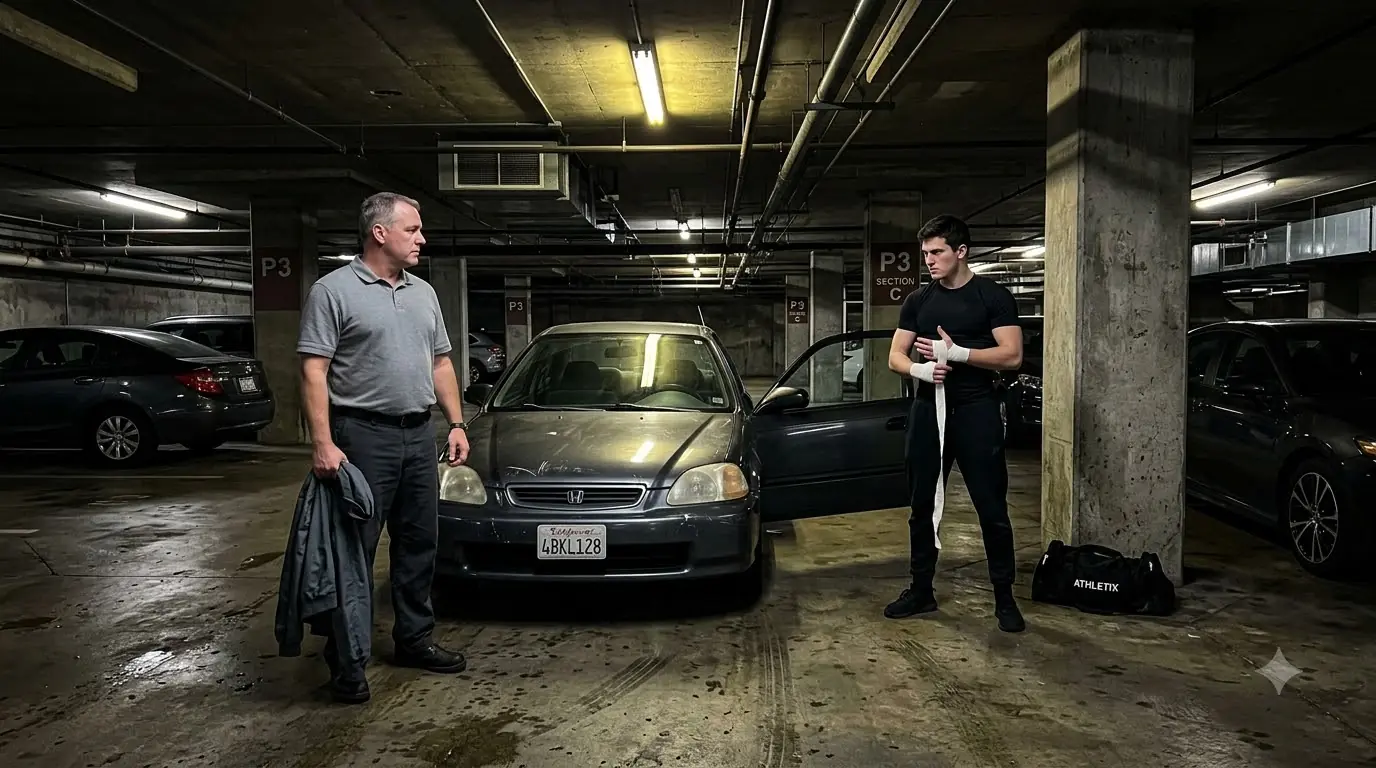
The Man Who Stayed Beside Rocky’s Kennel Came Back Before Surgery
Reader Theme:
Font Size:
24px
The Man Who Stayed Beside Rocky’s Kennel Came Back Before Surgery
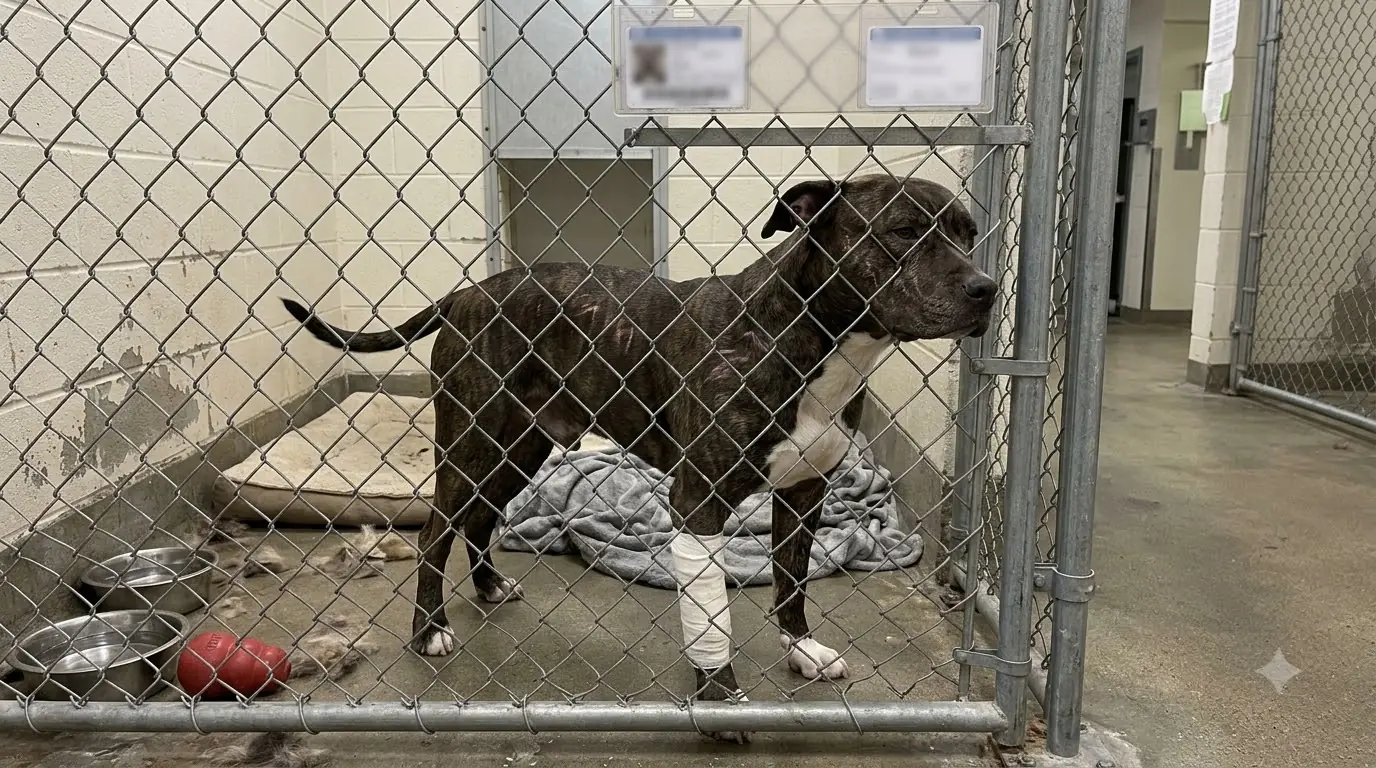
PART 2 — CURRENT CONDITION UPDATE
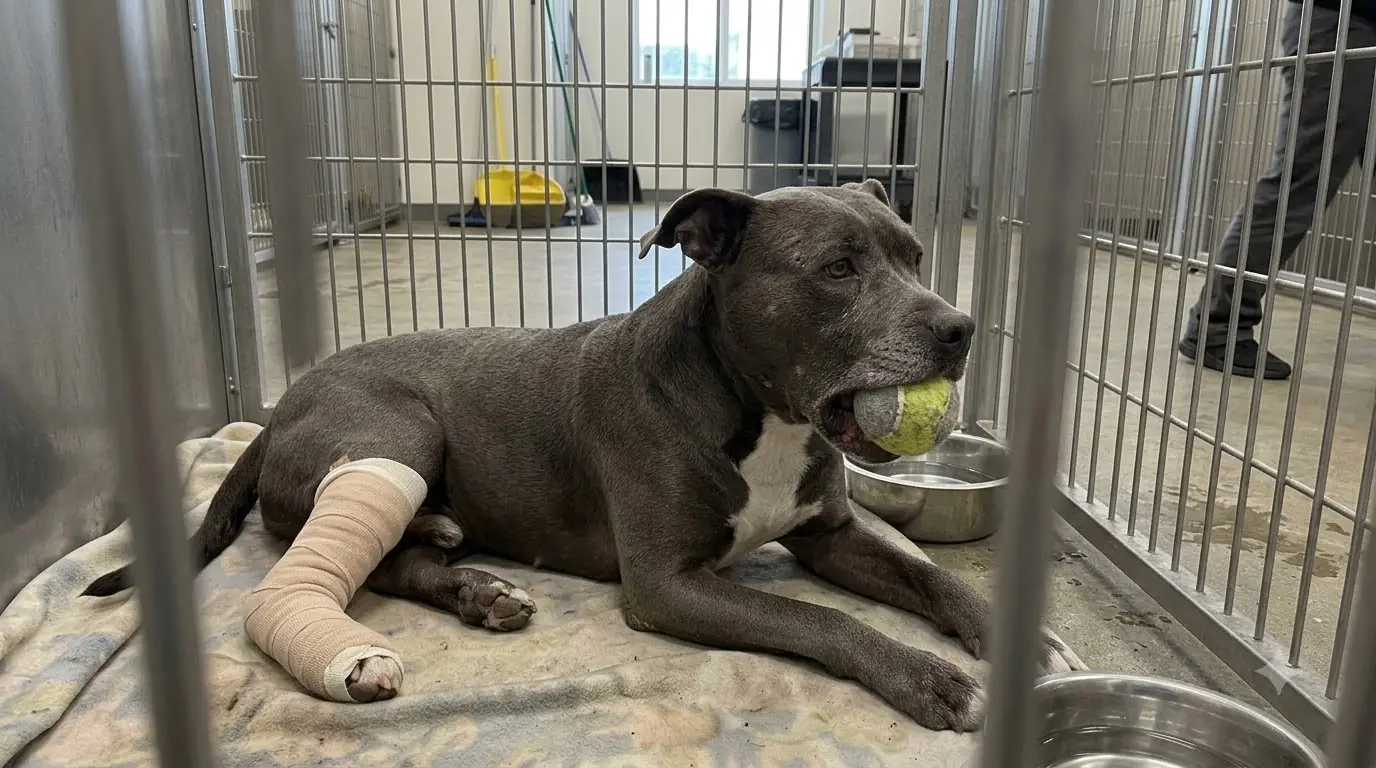
Rocky is now recovering in a foster home after surgeons determined that his damaged front leg could not be repaired without leaving him vulnerable to chronic pain and recurring infection.
His leg was amputated above the injured joint.
The decision was not made because Rocky was a shelter dog or because amputation was the easiest option. His veterinary team reviewed radiographs, bloodwork, cultures, the condition of the surrounding tissue, and the likelihood that reconstructive surgery could provide a comfortable, functional limb.
The old fracture had healed badly. The elbow was unstable, sections of bone were infected, and the muscles surrounding the joint had already weakened after months of limited use.
Trying to preserve the leg would have required several operations, prolonged confinement, implanted hardware, and an uncertain chance of success. Even if the bone healed, the damaged joint could have remained painful.
Removing the limb offered Rocky the most reliable path toward a life without constant pain.
He is currently walking independently for short distances, eating normally, and learning how to balance on three legs. His incision is healing without signs of infection, although his activity remains restricted and his long-term recovery is still being monitored.
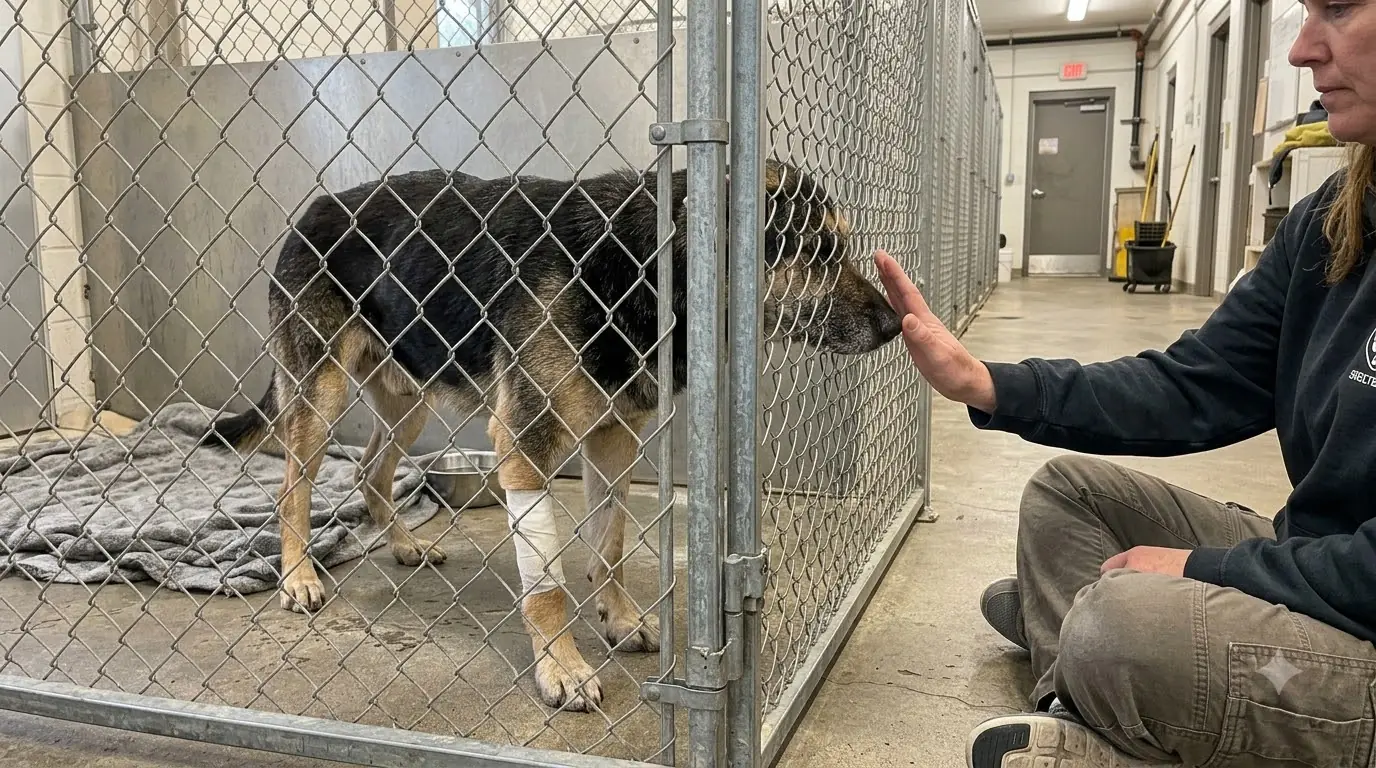
Daniel—the man who sat beside Rocky’s kennel—has become his medical foster caregiver.
Their first meeting had lasted nearly an hour, but Rocky’s story began before Daniel ever entered the shelter.
Animal control officers found Rocky near a row of closed warehouses after a delivery driver reported seeing an injured dog sheltering beneath a loading platform.
Rocky had apparently been moving through the industrial area for several days. Workers left water and food near the platform, but he disappeared whenever vehicles approached.
No one witnessed how his leg was injured.
There was no reliable evidence that he had been used for fighting, deliberately harmed, or abandoned by a specific person. His scars raised questions, but scars alone could not reveal what had happened to him.
Some were small and irregular. They could have come from fences, untreated skin infections, encounters with other animals, or years without consistent care.
The shelter refused to create a dramatic history that could not be verified.
What staff could see was serious enough.
Rocky placed almost no weight on his left front leg. The lower portion hung at an abnormal angle, and a contaminated wound near the elbow released a small amount of fluid.
He was thin but not severely emaciated. His paw pads were rough, several nails were broken, and his coat contained areas of irritation.
Despite his condition, Rocky did not run when the animal control officer approached slowly.
He remained beneath the platform with his head lowered and watched the food placed several feet away. The officer used a long lead to avoid crawling into the narrow space or frightening him into traffic.
Rocky smelled the loop, stepped forward, and allowed it to settle around his neck.
When he attempted to walk, the injured leg touched the ground once. He immediately lifted it and shifted his weight backward.
The officer supported his chest with a towel sling while guiding him toward the transport vehicle.
Rocky did not growl or snap.
That did not mean he felt safe or comfortable. Injured dogs may freeze or suppress warning behavior when overwhelmed.
The officer moved carefully and avoided handling the damaged joint.
At the shelter clinic, Rocky received pain medication before the team attempted a complete examination.
His temperature was mildly elevated. Bloodwork showed inflammation and a moderate increase in white blood cells, raising concern about infection.
The wound was cleaned, covered, and sampled for bacterial culture.
Rocky tolerated the initial procedures with low-stress handling and medication. He repeatedly turned his head toward the injured limb, but he did not attempt to bite.
A basket muzzle was introduced before the painful examination as a safety measure. It was not used as punishment or because of his breed.
Any dog experiencing severe orthopedic pain may react defensively.
Rocky placed his nose into the muzzle after food was offered through the front. The team completed the examination as efficiently as possible.
Radiographs revealed that his injury was not recent.
The bones around the elbow showed an old fracture with severe displacement. New bone had formed irregularly around the damaged area, but the joint had never regained normal alignment.
Parts of the bone appeared moth-eaten on the images, a pattern that can occur with infection. Small fragments had separated from the main structure, and the soft tissue surrounding the joint was swollen.
The shelter veterinarian suspected chronic osteomyelitis, an infection involving bone.
Additional samples were collected while Rocky was sedated. The wound was flushed, damaged superficial tissue was removed, and the leg was stabilized temporarily.
The team began antibiotics selected for likely bacterial causes while waiting for culture results. Treatment would be adjusted when the laboratory identified the organism and its medication sensitivity.
Rocky woke on a thick floor mat with the leg supported.
A staff member remained nearby as the sedative wore off. When Rocky lifted his head, his eyes moved around the room before settling on the person beside him.
His tail tapped once against the blanket.
That small movement became familiar during his first week at the shelter.
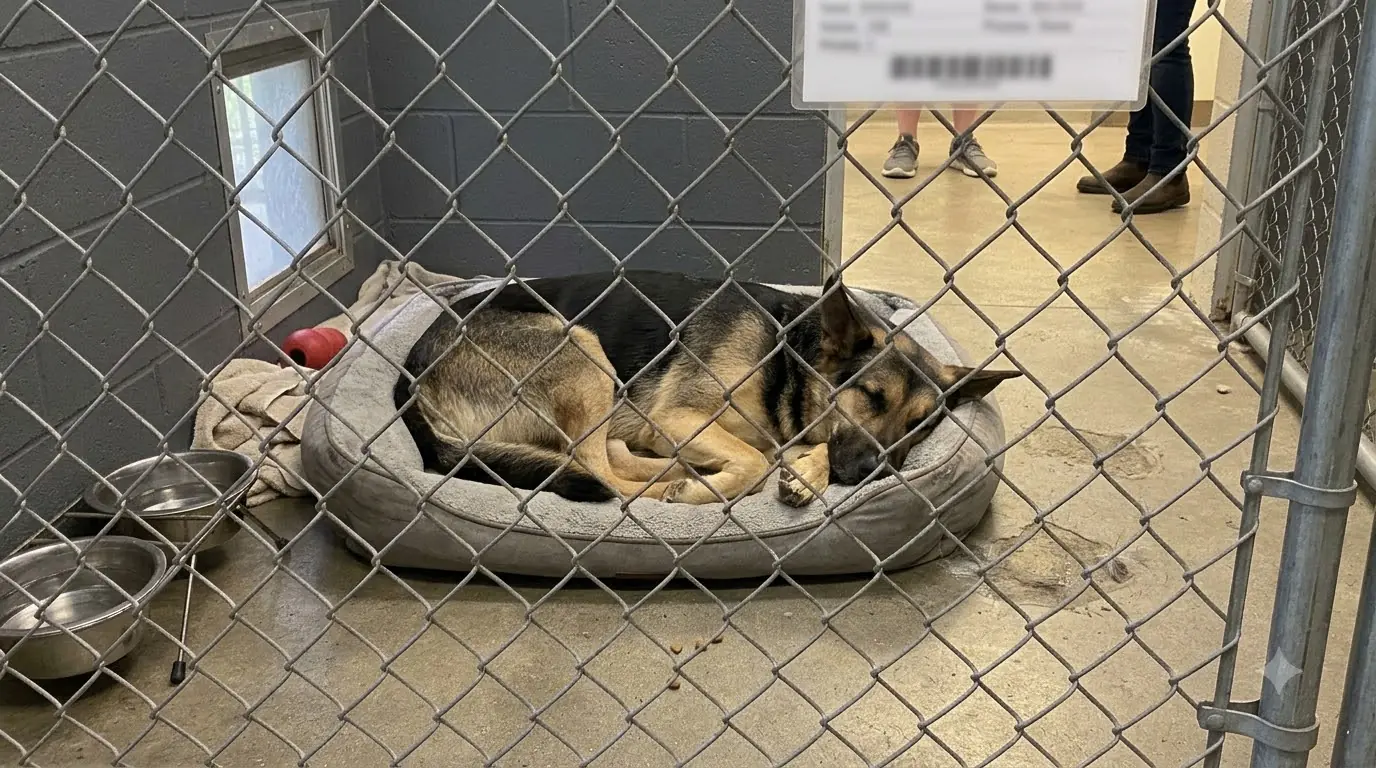
Whenever someone approached his kennel, Rocky slowly pushed himself upright. Rising required effort because almost all of his front-body weight shifted onto one leg.
Dogs carry a greater proportion of their weight through the front limbs than the rear. Losing use of a front leg can therefore be physically demanding, especially for a muscular dog.
Rocky still stood to greet people.
Staff placed nonslip mats throughout his kennel and kept his water, bed, and food close together. He did not need to cross wet concrete or turn sharply to reach essential resources.
His bandage was checked several times daily for slipping, odor, moisture, swelling, or damage.
Rocky learned the treatment routine quickly.
A technician presented a food-filled toy while another person examined the bandage. If Rocky stiffened, stopped eating, turned sharply, or attempted to move away, the team paused whenever medically safe.
His quiet nature was never treated as permission to ignore discomfort.
Pain medication reduced his panting and helped him sleep, but the injured leg remained unusable.
During short bathroom walks, Rocky moved with a slow three-legged gait. He occasionally lost balance when turning and leaned into the support harness.
His right front paw began carrying nearly all the weight normally divided between two limbs.
The veterinary team limited unnecessary walking to protect that remaining leg.
Rocky’s appetite improved after pain control began. He ate measured portions of a balanced diet and accepted most medications inside a small amount of food.
His water intake and urination remained normal.
He tested negative for heartworm disease and common tick-borne infections. His kidney and liver values were adequate for anesthesia, although the team continued monitoring him while he received medication.
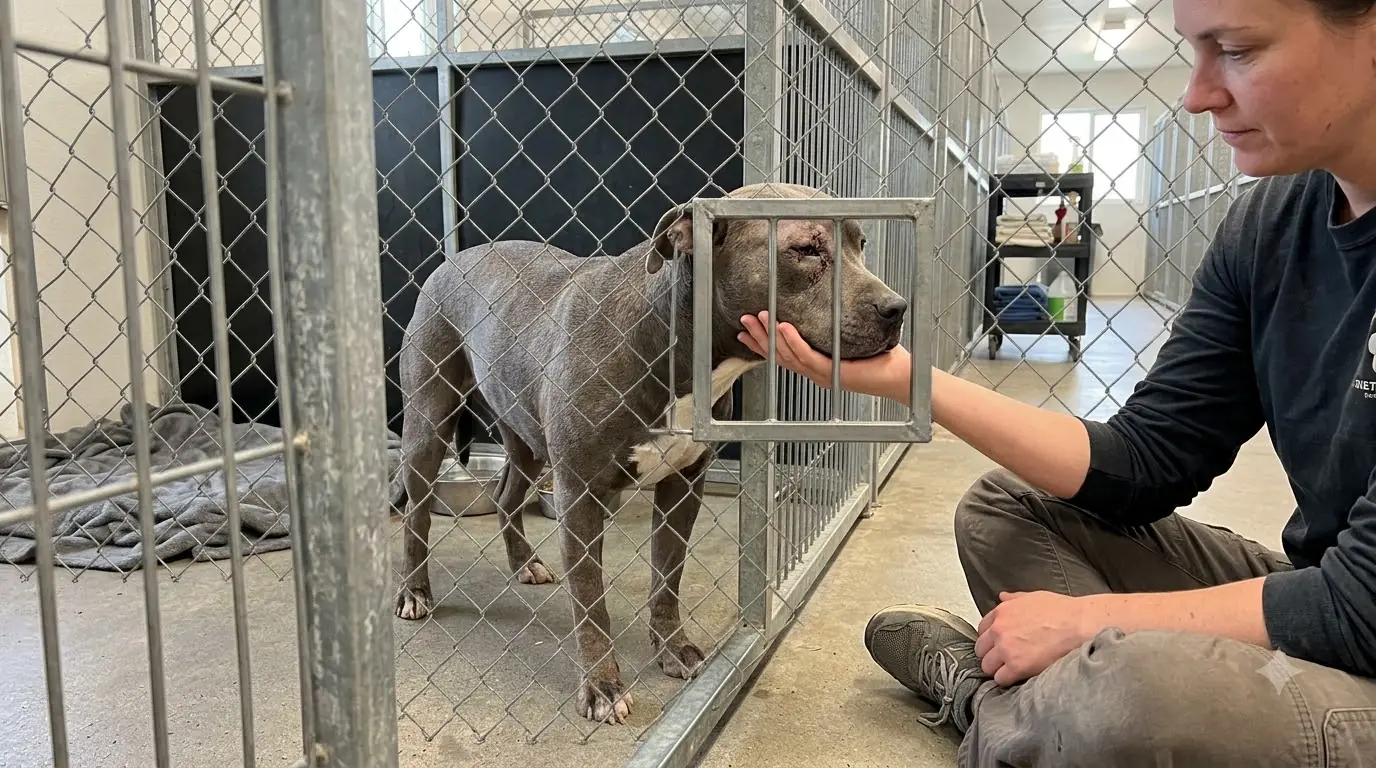
The scars across Rocky’s shoulders, chest, and muzzle were examined.
None required emergency treatment. Most were fully healed, and several areas of hair loss were linked to skin inflammation rather than scar tissue.
Skin samples identified a bacterial infection associated with irritation and poor coat condition. No contagious mange mites were found.
Rocky received medicated bathing and treatment selected by the veterinarian.
His ears contained debris and mild inflammation but no severe infection. His teeth showed moderate wear and tartar.
Those concerns mattered, but the damaged leg remained the priority.
The shelter contacted an orthopedic surgical team to review Rocky’s images.
One possible approach involved removing infected and unhealthy tissue, realigning the joint, and attempting to stabilize the bones with plates or other implants.
However, the infection complicated every stage of reconstruction.
Hardware placed in or near infected bone can become colonized by bacteria. Multiple procedures might have been necessary to remove damaged tissue, control infection, rebuild the joint, and revise or remove implants.
Rocky would have faced months of strict restriction.
Even successful bone healing could not restore a normal elbow. The cartilage and joint surfaces had already been severely damaged.
Chronic arthritis, reduced range of motion, implant failure, recurring infection, and ongoing pain remained significant possibilities.
The second option was amputation.
Amputation would remove the primary source of infection and eliminate the nonfunctional painful limb. Recovery would still require surgery, careful pain management, rehabilitation, and protection of Rocky’s remaining legs.
It would also permanently change how his body carried weight.
The specialists considered Rocky’s age, body condition, temperament, other joints, spine, and overall health.
Radiographs of his right front leg showed no major structural disease. His hips had mild changes but remained functional. He had no neurological deficit preventing him from balancing.
At five years old, Rocky had the physical potential to adapt well.
His larger build created additional strain, so maintaining a lean body condition would be essential.
The team recommended amputation as the option most likely to provide consistent comfort.
Before approving surgery, the rescue organization requested a second review of the images and discussed whether infection could be controlled while preserving the limb.
The second specialist reached the same conclusion.
The leg was already functionally lost. Rocky carried it off the ground and could not use it for balance. Attempting reconstruction would expose him to repeated procedures without a reasonable expectation of creating a comfortable limb.
The rescue approved the amputation.
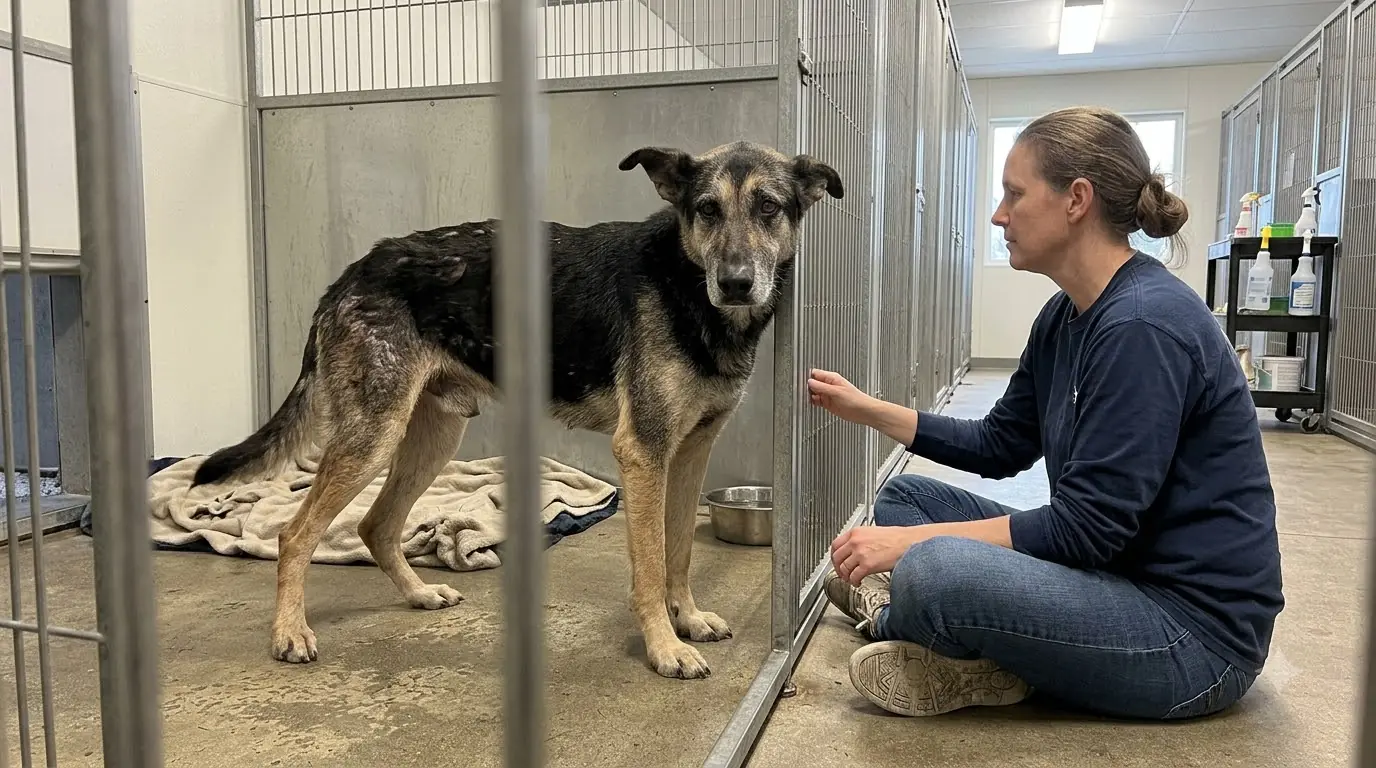
During these consultations, Rocky remained in a kennel near the quieter end of the building.
Visitors could see the bandage before they noticed much else.
Some paused and spoke to him. Rocky rose whenever he heard voices, but many people continued toward kennels containing dogs who could walk normally.
Shelter staff did not interpret those visitors as cruel. Adopting an injured animal can involve financial, physical, and emotional responsibilities that not every household can accept.
Rocky usually watched people leave without barking.
After several minutes, he lowered himself onto the bed again.
One afternoon, Daniel entered the kennel room after meeting another dog.
He noticed Rocky standing behind the gate with his injured leg raised.
Daniel asked a staff member whether he could sit nearby. The staff member explained that Rocky was friendly during observed interactions but was in pain and should be allowed to choose whether to approach.
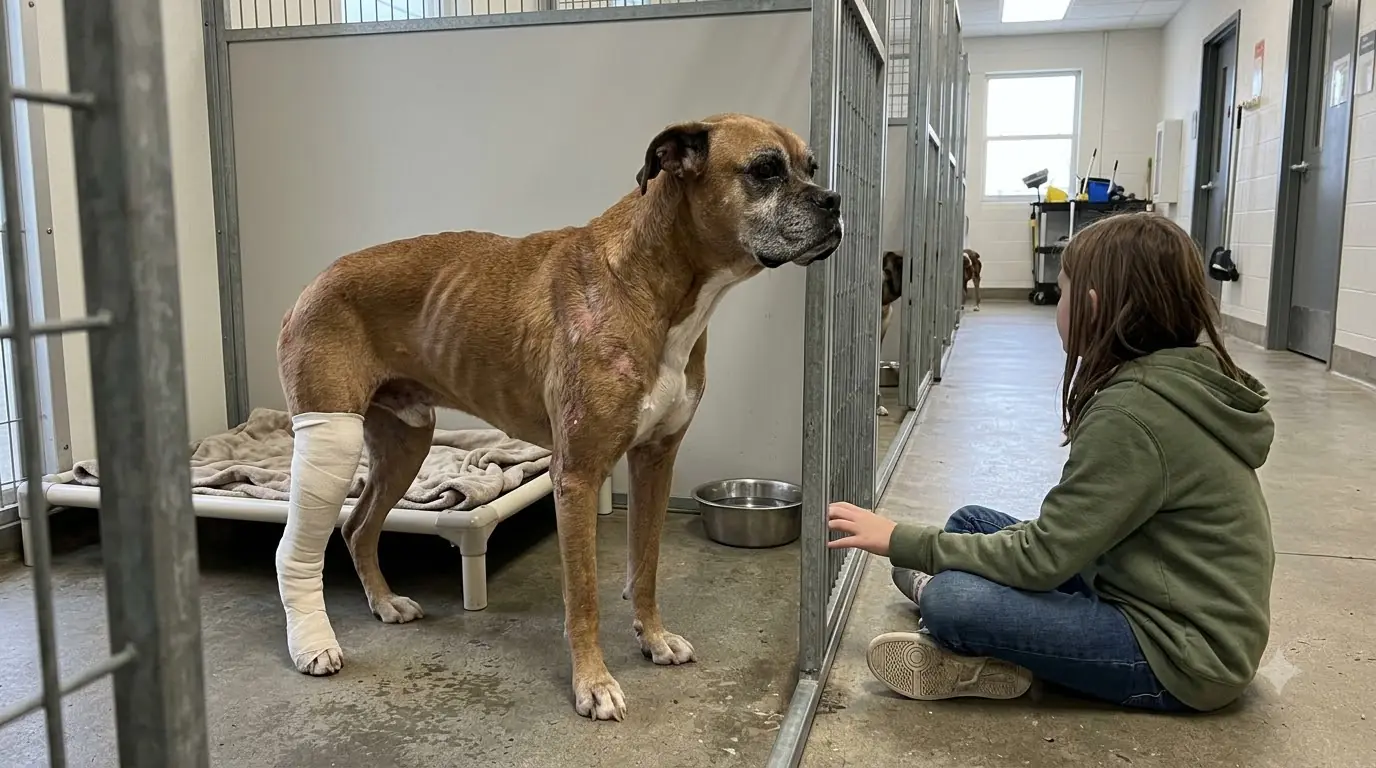
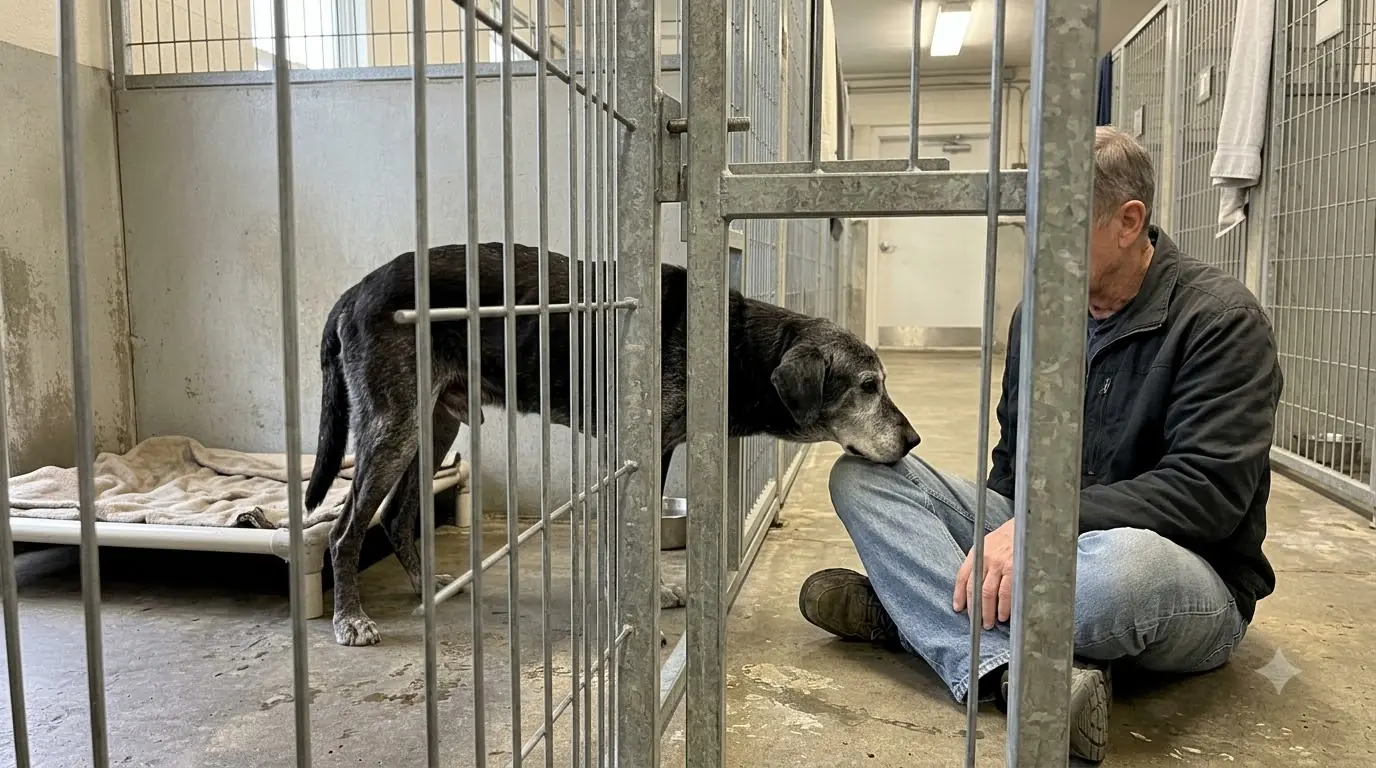
Daniel sat sideways beside the kennel.
He did not place his fingers through the bars or lean directly over Rocky. He rested his hands on his knees and looked toward the opposite wall.
Rocky remained near the back of the enclosure for several minutes.
Then he stepped off the bed.
He moved slowly, setting his right front paw carefully before bringing his rear legs forward. When he reached the gate, he smelled Daniel’s shoes and coat.
Daniel spoke in a quiet voice.
Rocky shifted closer and rested his head against the bars beside Daniel’s arm.
The position allowed contact without requiring Rocky to stand for long.
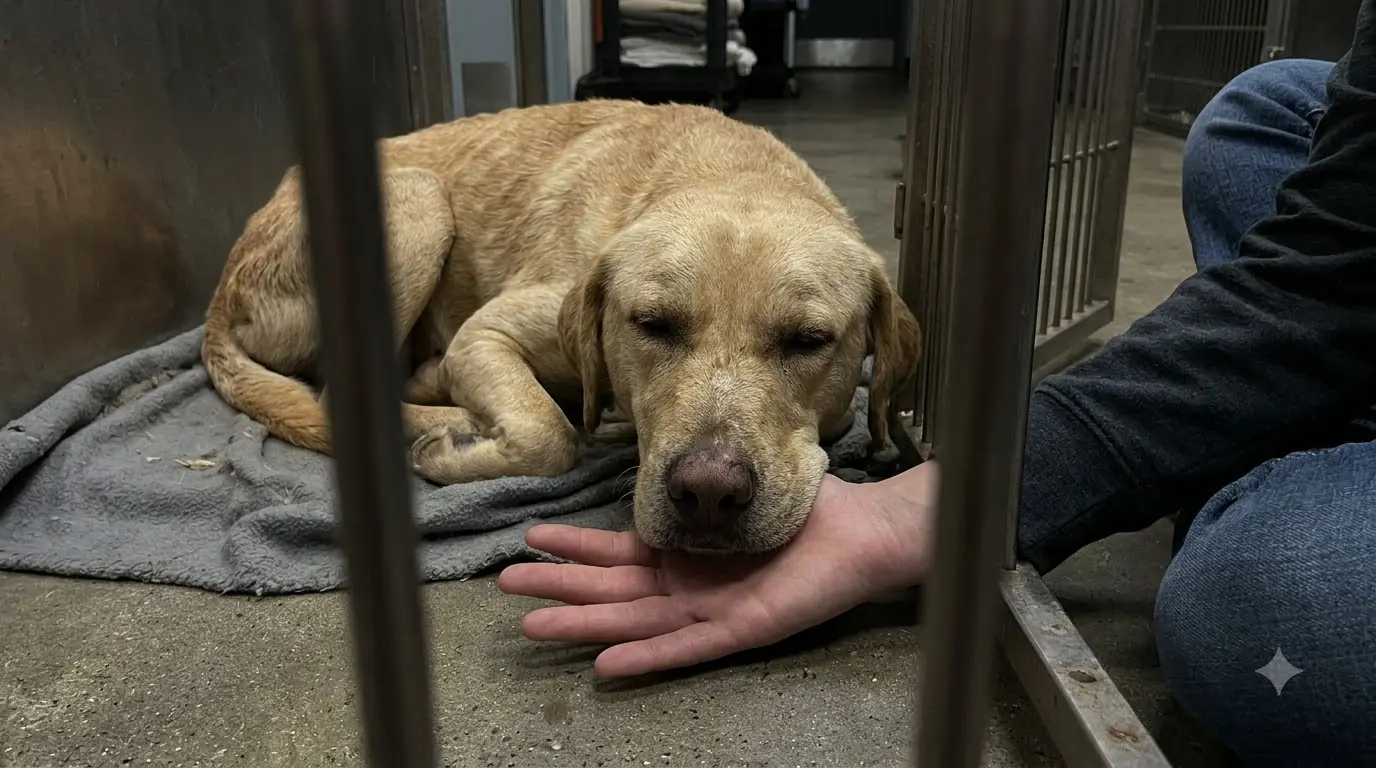
Daniel remained there.
When Rocky lowered himself to the floor, Daniel stayed seated. When Rocky lifted his head again, Daniel continued talking.
Almost an hour passed.
Daniel eventually asked for more information about the injury. Staff explained that Rocky would likely need an amputation and that the shelter had not yet evaluated him fully for adoption.
Daniel did not promise immediately to take him home.
He asked practical questions.
How long would recovery take? Could Rocky manage stairs? Would someone need to be home constantly? What expenses might continue after surgery? How would a three-legged dog enter a vehicle? Could he safely live with another dog?
The shelter could answer some questions but not all of them before surgery and behavioral evaluation.
Daniel went home with written information.
Rocky attempted to follow when he stood. As Rocky turned beside the gate, his right paw slipped and his chest dipped toward the floor.
A staff member used the support harness to steady him.
Daniel stopped but did not rush into the kennel. Once Rocky regained balance, Daniel left quietly.
The following morning, he returned.
Rocky was being prepared for transport to the surgical hospital. His food had been withheld according to anesthesia instructions, and his activity was limited.
When Daniel entered the room, Rocky raised his head before the man reached the kennel.
He pushed himself upright and wagged his tail.
Daniel sat beside him again.
This visit lasted only twenty minutes because the transport schedule could not be delayed. Before Rocky left, Daniel asked whether the rescue needed a medical foster home after surgery.
His own home had three steps at the front entrance but none from the attached garage. The main living area, a bathroom route, and the fenced yard could all be reached without using stairs.
Daniel worked partly from home. His adult sister lived nearby and could serve as backup.
He owned no other pets, and no young children lived in the household.
The rescue began its standard foster screening rather than approving the placement based solely on the emotional meeting.
A home assessment identified slippery flooring in the hallway and kitchen. Daniel installed secured nonslip runners.
He moved a low orthopedic bed into a quiet corner and blocked access to the staircase with a mounted gate.
A ramp was added beside the two shallow steps leading from the patio into the yard, even though the garage route remained available.
He also arranged a safe vehicle setup with a secured crate and a loading ramp.
Meanwhile, Rocky underwent surgery.
The surgical team confirmed the plan after examining him under anesthesia. The infected tissue extended through the damaged joint, and the old fracture could not be reconstructed into a useful limb.
The surgeon amputated the left front leg at a level that allowed healthy tissue to cover the surgical site.
Samples from deeper tissue were submitted for culture and examination. This helped determine whether infection remained elsewhere and whether additional antibiotic treatment was necessary.
Rocky remained stable throughout anesthesia.
Long-acting local pain control was used as part of a broader plan that included several types of medication. Combining appropriate medications can provide better comfort while reducing reliance on a single drug.
After surgery, Rocky recovered in a padded hospital enclosure.
A technician monitored his breathing, heart rate, temperature, incision, mental state, and pain indicators.
When he first attempted to rise, his body tipped toward the missing-limb side.
This reaction was expected. Rocky’s brain had spent years using four limbs and months compensating for one painful leg. Although he had not placed much weight on the damaged limb, its presence still influenced his balance.
The technician supported his chest and helped him settle.
Rocky’s pain was assessed repeatedly. The team watched his posture, breathing, facial muscles, willingness to move, response to touch, ability to sleep, and interest in food.
Tail wagging was not used as proof that he felt no pain.
Friendly dogs can wag while frightened or uncomfortable.
During the first evening, Rocky appeared restless and panted despite the room’s comfortable temperature. His pain plan was adjusted.
He relaxed after treatment and slept for more than an hour without repeatedly repositioning himself.
The incision remained dry and closed.
A soft protective cone prevented Rocky from licking the area. Staff checked that the cone did not press against the surgical site or interfere with eating and drinking.
He ate a few bites that night and finished most of a small meal the following morning.
His first supported walk occurred on a nonslip surface.
A rehabilitation harness was placed beneath his chest and abdomen. Rocky pushed up with his right front leg, brought his rear legs beneath him, and stood for several seconds.
He leaned heavily toward the surgical side.
The handler provided enough support to prevent a fall without lifting him completely off the ground.
Rocky took two steps.
His movement was awkward but purposeful. He reached the outdoor area, urinated normally, and returned to the enclosure.
The session ended before exhaustion.
The team expected rapid early improvement because Rocky had already been moving mostly on three legs before surgery. However, removal of the painful weight changed his center of gravity, and anesthesia temporarily affected coordination.
He needed practice, not pressure.
During the next two days, Rocky learned to widen the position of his remaining front paw when standing. His rear legs moved slightly farther apart to improve balance.
Turns remained difficult.
He initially tried to pivot quickly, causing his chest to swing toward the missing-limb side. Handlers guided him through wider, slower curves.
He did not fall.
Rocky’s culture identified bacteria responsive to one of the antibiotics selected by the veterinary team. Treatment continued according to the laboratory result.
His inflammatory values began improving.
The surgeon found no evidence that infection had spread beyond the removed tissue, but Rocky still needed the complete prescribed course and follow-up testing.
Stopping antibiotics early because the incision looked better could allow infection to recur.
Daniel visited the hospital only when the medical team believed Rocky was ready.
The reunion occurred in a quiet consultation room with Rocky supported by a harness.
Daniel sat in the same sideways position he had used at the shelter.
Rocky entered slowly, paused, and then moved toward him.
He rested his head against Daniel’s knee.
Daniel kept one hand against Rocky’s chest without touching the incision. Rocky remained standing for less than a minute before lowering himself onto the padded floor.
Daniel sat beside him through the discharge lesson.
The hospital team demonstrated how to inspect the incision, administer medication, position the harness, help Rocky rise, guide him through doorways, and recognize signs requiring urgent care.
Those signs included sudden collapse, pale gums, difficulty breathing, uncontrolled pain, repeated vomiting, refusal of all food and water, active bleeding, rapidly increasing swelling, discharge, fever, incision separation, or inability to stand.
Daniel practiced with supervision.
He initially placed the harness too close to the surgical area. The technician corrected the position and had him repeat the setup until it no longer rubbed.
Rocky was discharged into medical foster care after he could rise with light support, take short walks, urinate independently, eat, and rest comfortably on oral medication.
At Daniel’s house, the transport crate was carried into the garage before its door was opened.
Daniel attached the support harness and allowed Rocky to look around.
Rocky did not rush forward.
He smelled the rubber mat, stepped out with his right front paw, and paused when the floor changed beneath him.
The secured runner prevented slipping.
Rocky followed Daniel into the recovery area and examined the bed. He circled it once before lying down with his surgical side facing the wall.
For the first several nights, Daniel slept on a couch nearby.
He did not invite Rocky into bed or allow him to wander through the house. The restricted area protected the incision and prevented an attempt to climb stairs or jump onto furniture.
Rocky’s first week followed a quiet routine.
He received medication on schedule and went outside for brief bathroom trips. Meals and water were placed at a comfortable height so he did not need to lean too far forward.
Because one front limb now carried his entire front-body load, reaching downward into a deep bowl temporarily affected his balance.
A stable, moderately raised feeding station helped.
Daniel measured Rocky’s meals carefully.
Keeping Rocky lean would be one of the most important protections for his remaining joints. Extra weight would increase force through the right shoulder, elbow, wrist, and paw with every step.
Food used for medication and rehabilitation was counted within his daily intake.
Rocky initially attempted to move faster than his body could manage whenever Daniel entered the room.
His tail began wagging, and he pushed up before his feet were positioned correctly.
Daniel learned to pause outside the gate until Rocky settled. He then entered, attached the harness, and helped him stand slowly.
The goal was not to discourage Rocky’s affection. It was to prevent excitement from causing a fall.
On the fourth day, Rocky walked from his bed to the back door with only light contact from the harness.
He stumbled while crossing the threshold but recovered without striking the floor.
Daniel shortened the next trip and added a textured mat over the transition.
Rocky’s incision was checked morning and evening. Mild bruising and swelling decreased gradually.
No heat, odor, discharge, or separation developed.
He wore his protective cone whenever Daniel could not directly supervise him. A recovery shirt was not used because fabric could rub the incision and conceal changes.
Rocky’s appetite remained good.
He drank normally and urinated without difficulty. Pain medication briefly softened his stool, so the veterinary team adjusted supportive care without changing prescription doses casually.
No human medication was given.
After several days, Rocky began sleeping through most of the night.
He sometimes woke and looked toward the surgical side of his body. On two occasions, he turned as though attempting to lick the absent leg.
Dogs can experience altered sensations after amputation. These may include tingling, discomfort, or awareness that appears connected to the missing limb.
Rocky could not explain what he felt, so the team monitored behavior rather than assuming every movement represented severe phantom pain.
His medication plan already addressed nerve-related discomfort. The episodes decreased and did not interfere with eating, walking, or sleep.
At his first recheck, the incision was healing normally.
Rocky entered the clinic under his own power with the harness attached as a precaution. He still leaned slightly toward the missing-limb side when standing but corrected his balance faster than he had at discharge.
His remaining front paw showed no swelling or injury.
The rehabilitation team introduced controlled exercises only after the surgeon approved them.
Rocky practiced standing squarely on a nonslip mat for a few seconds at a time. Daniel used food held at nose level to encourage a neutral posture.
The treat was not moved high enough to make Rocky rear upward or low enough to pull him off balance.
Gentle weight shifts taught him to adjust through the right shoulder and both rear legs.
Short straight-line walks helped build endurance.
Tight circles, jumping, running, rough play, and stairs remained prohibited.
Rocky tired quickly during the first sessions. His breathing increased after only a few minutes, and the muscles of his right shoulder trembled.
Daniel ended each session before fatigue affected safety.
Exercise increased in small increments.
More activity was not automatically better. Overworking the remaining front leg could create strain just as Rocky was learning to depend on it.
Massage and range-of-motion exercises were directed toward appropriate muscles and joints, not the healing surgical site.
Daniel followed the rehabilitation plan instead of adding exercises from social media videos.
Rocky’s scarred skin also continued improving.
Medicated bathing reduced redness and odor. New hair began filling some previously thin areas.
The old scars remained visible, especially across his shoulders and muzzle.
Daniel did not cover them for photographs or present them as proof of a particular kind of abuse.
They were simply part of Rocky’s body.
Visitors to the foster home were introduced gradually.
Rocky greeted adults with a loose posture and wagging tail, but Daniel used a gate during the first minutes so Rocky could not lose balance while trying to reach them.
Guests were asked not to hug him, lean over him, or handle his surgical area.
Rocky preferred chest rubs and often placed his head against a person’s knee.
He showed no aggression during these meetings.
However, the rescue continued a complete behavioral assessment. A dog’s friendliness toward adults does not automatically predict behavior around children, cats, dogs, food, toys, or unfamiliar handling.
Rocky met a calm female dog during a parallel walk after his surgeon approved the activity.
The dogs began several yards apart and walked in the same direction. Rocky looked toward her, wagged, and attempted to increase his pace.
Daniel slowed him.
After both dogs displayed relaxed body language, the distance decreased. They smelled one another briefly and continued walking.
No direct play was allowed.
Rocky’s altered balance could make body slams, wrestling, or fast turns unsafe during recovery.
A second meeting took place in a fenced yard with both dogs leashed initially. Rocky remained social and responsive, though he became tired before the other dog.
The rescue concluded that he might live with a carefully matched dog after slow introductions and thoughtful play management.
His response to cats remains unknown.
The rescue will not label him safe with cats without an appropriate assessment.
Rocky also met two older children under close supervision. They sat quietly and allowed him to approach.
He rested his head beside one child’s shoe but became excited when both stood simultaneously.
Because a three-legged dog can be knocked off balance and may also accidentally bump a small child, any future home with children would need calm behavior and active adult supervision.
Rocky’s comfort around people continued to deepen.
During his early days at Daniel’s house, he watched every movement. If Daniel left the room, Rocky raised his head and waited at the gate.
By the third week, Rocky could remain asleep while Daniel worked in the kitchen.
He began carrying a soft toy from his bed to the edge of the recovery area. He did not yet play vigorously, but he held it between his paws and chewed gently.
One morning, Daniel opened the gate after attaching the harness. Rocky walked past him into the hallway, then turned and returned.
He pressed his head against Daniel’s leg in the same way he had leaned against the shelter gate.
This time, there were no metal bars between them.
Daniel lowered one hand to Rocky’s chest.
Rocky remained there until his legs grew tired, then walked back to the bed and lay down.
At the two-week surgical recheck, Rocky’s sutures were removed.
The incision was fully closed, and his bloodwork no longer showed the same degree of inflammation. The veterinarian instructed Daniel to complete the remaining antibiotic course and continue monitoring for swelling, pain, fever, or drainage.
Deep infection can recur even when the skin looks healthy.
Rocky’s activity restrictions were reduced gradually, not eliminated.
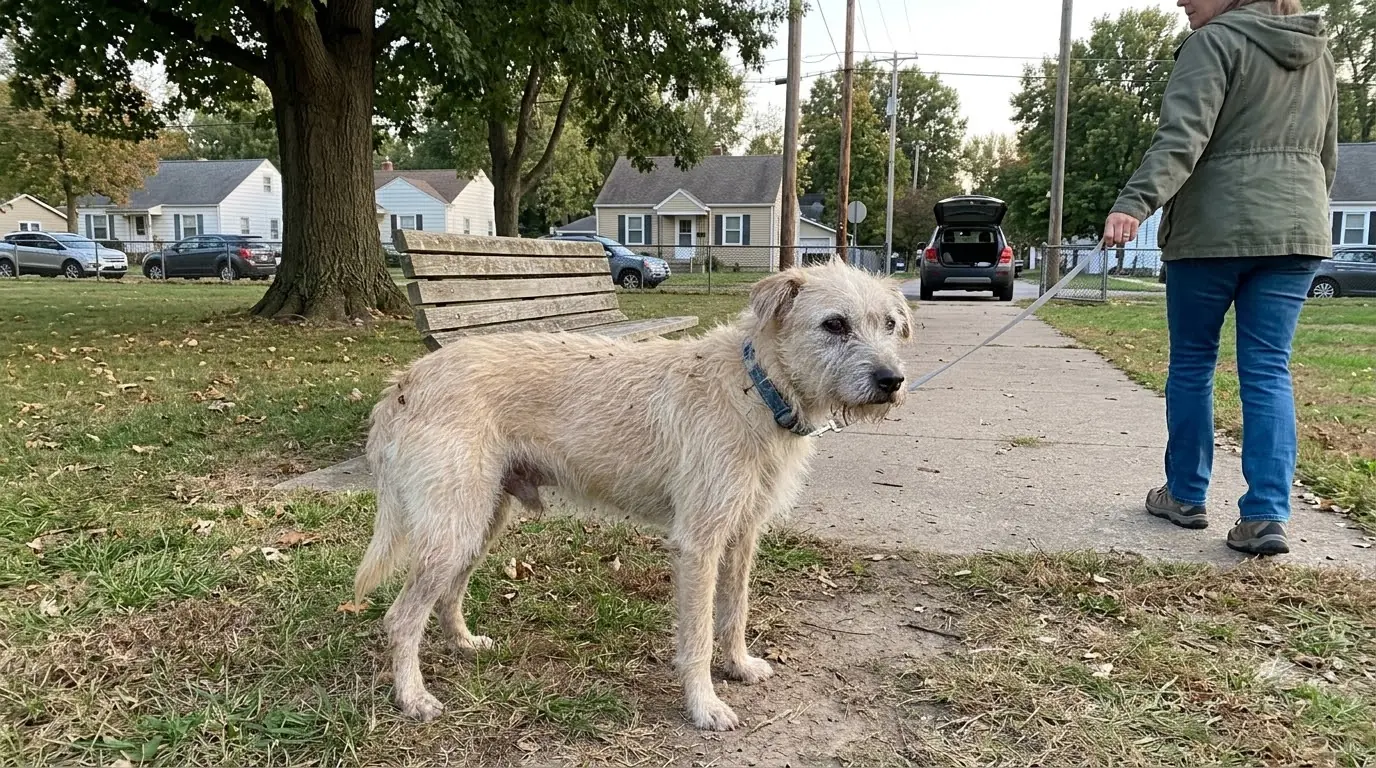
He began taking short walks beyond the yard.
Daniel selected level routes with good traction and avoided hot pavement, crowded paths, loose dogs, and long distances.
Rocky wore a well-fitted harness with a secure leash connection. A second safety connection was used during the transition from the house because a sudden pull could disturb his balance.
At first, Rocky stopped every few yards.
Some pauses allowed him to smell. Others occurred because his right shoulder was tired.
Daniel learned to distinguish curiosity from fatigue by watching Rocky’s breathing, posture, paw placement, and willingness to continue.
When Rocky’s steps shortened or his body began leaning, the walk ended.
He now manages a relaxed walk around the block on cool mornings.
He does not move as quickly as many dogs his age, and he should not be forced to match them.
His remaining front nails are maintained carefully. Excessively long nails can change paw placement and increase strain.
The pads are checked for cracks or scrapes because that single paw has less opportunity to rest during movement.
Rocky’s body weight has increased slowly toward an appropriate level.
He remains lean enough that his ribs can be felt beneath a light tissue covering. Daniel records his weight at veterinary visits and adjusts food only with professional guidance.
Maintaining muscle is important, but excessive bulk is not the goal.
A comfortable three-legged dog benefits from controlled strength, stable joints, and a healthy body condition—not unnecessary weight.
Rocky may eventually use a mobility device during unusually long outings, but he does not currently require one for ordinary household movement.
A front-wheel cart is not automatically appropriate for every amputee. Poorly fitted equipment can restrict natural movement or create new pressure points.
The rehabilitation team will recommend support only if Rocky’s endurance or remaining joints make it useful.
Long-term care will focus on protecting his right front limb and spine.
Daniel will monitor for limping, swelling, heat, paw injuries, reluctance to rise, changes in posture, reduced activity, or new sensitivity.
Rocky will need regular veterinary examinations even when he appears comfortable.
Dogs often compensate quietly before obvious lameness develops.
His home environment will continue using rugs on slippery floors. Gates will limit unnecessary stair use, and ramps will remain available for vehicles and raised entrances.
Rocky should not jump repeatedly from furniture or truck beds.
These precautions do not mean his life must be inactive.
Once fully healed, he can enjoy walks, scent games, training, and controlled social activity. Mental enrichment is especially useful because it does not require constant high-impact movement.
Daniel hides food beneath lightweight cups and inside folded towels. Rocky searches slowly, moving his nose from one location to another.
He has learned to touch Daniel’s palm with his nose and place his chin on a towel for cooperative handling.
The chin-rest behavior helps during examinations. Rocky can lift his head to communicate that he needs a pause whenever the procedure is not urgent.
His shelter experience showed that he was willing to tolerate handling, but the goal is not merely tolerance.
Giving Rocky predictable cues and choices helps reduce stress and makes future care safer.
Daniel has applied to adopt him permanently.
The rescue has not finalized the adoption solely because Daniel visited often or formed an emotional connection.
They reviewed the home, veterinary plan, financial responsibilities, transportation, work schedule, backup care, and Rocky’s continuing medical needs.
Daniel understands that the surgery does not eliminate every future expense.
Rocky may require rehabilitation, joint-support planning, treatment for arthritis, skin care, dental care, and evaluation of any change affecting his remaining legs.
Pet insurance may exclude the preexisting injury and related complications. Daniel has created a separate emergency fund and identified a veterinary clinic able to continue Rocky’s care.
His sister has learned how to position the harness and assist Rocky through doorways.
A neighbor has been introduced as an additional emergency contact, though that person will not administer medication without written instructions.
The rescue has approved Daniel as Rocky’s foster-to-adopt caregiver.
Finalization is expected after Rocky completes his next orthopedic and rehabilitation review.
At his latest appointment, Rocky walked from the parking area to the clinic without being lifted.
He used the ramp to exit the vehicle, paused at the bottom, and adjusted his feet before moving forward.
Inside the examination room, he placed his head against the technician’s leg.
His right shoulder showed stronger muscle support, and the paw remained correctly positioned. The surgical site was comfortable, with no evidence of recurrent infection.
Rocky still tires after extended activity, and his turns remain wider than those of a four-legged dog.
Those differences may continue permanently.
They do not prevent him from moving comfortably through his home, reaching the yard, eating, playing gently, or seeking affection.
The veterinary team considers his progress very good.
Daniel brought Rocky back to the shelter once after the medical team approved the visit. The purpose was to complete paperwork and allow staff who had treated him to see his recovery.
Rocky entered through a quiet side door rather than walking through the crowded kennel hallway.
He recognized several people and greeted them with his familiar slow tail wag.
When Daniel sat down, Rocky moved beside him and rested his head against his knee.
He no longer had to press through a gate.
The staff member who had watched their first meeting remained nearby.
During that first hour, no one knew whether Daniel would return or whether Rocky’s leg could be saved. Rocky had been a scarred dog behind metal bars, balancing painfully on three limbs while visitors passed.
Now he was still a three-legged dog—but no longer a dog waiting alone.
His missing limb was not the happy ending. Surgery had been necessary because prolonged injury and infection left no comfortable alternative.
The meaningful change was that Rocky no longer had to live with the painful leg, and his recovery did not end when he left the operating room.
It continued through medication schedules, secured rugs, short walks, careful feeding, rehabilitation exercises, veterinary rechecks, and a person willing to learn what his care required.
That afternoon, Daniel sat on the shelter floor one more time.
Rocky leaned against him for several minutes. Then he lifted his head, turned carefully, and walked toward the exit.
Daniel rose and followed.
For nearly an hour during their first meeting, the man had stayed because Rocky could not go with him.
This time, Rocky was the one leading the way home.